23 October 2026, 14:38
Loading...
Dukovany expansion should take precedence over Temelín in Czechia

Martin Voříšek
25 April 2015, 14:32
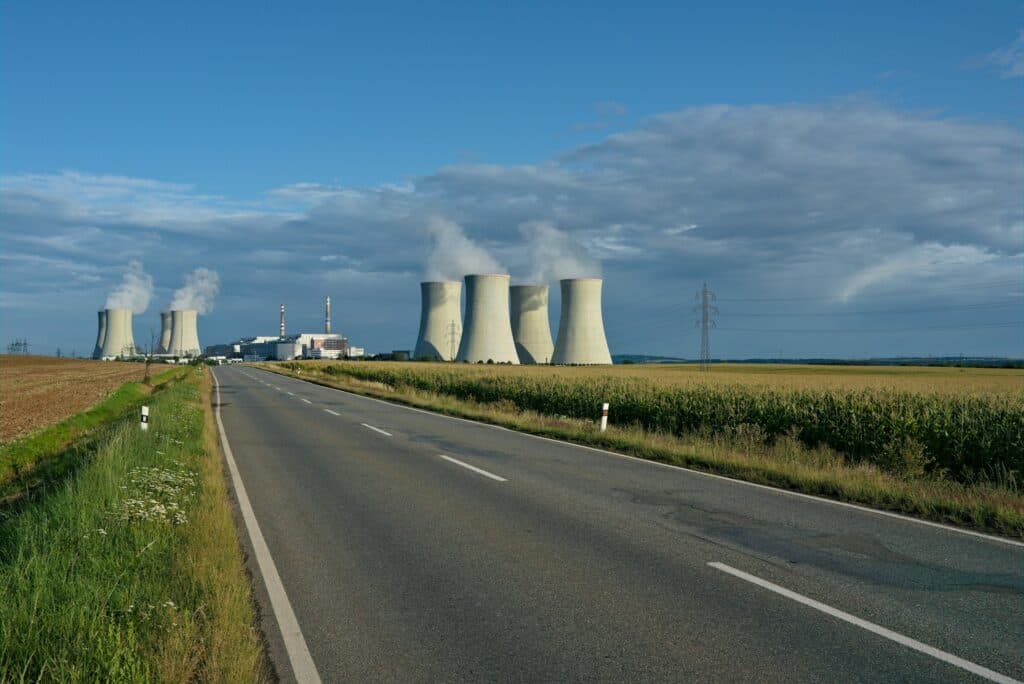
The story of the expansion of nuclear capacity in the Czech Republic has taken another turn. According to the latest reports, the construction of a new unit at the Dukovany nuclear power plant appears likely to take place before the completion of a unit at Temelín. However, according to CEO Daniel Beneš, a decision on launching the tender will not be made until next year at the earliest.
While the latest plans had called for two new units to be built at Temelín NPP, the current situation is more favourable to completing one nuclear unit at Dukovany and one at Temelín.
According to the head of ČEZ, work on developing nuclear energy in the Czech Republic is ongoing. Efforts are now focused mainly on the Dukovany nuclear power plant, where much work still needs to be done in connection with the expansion. Preparations are also under way to extend the licence for the existing units.
The first tender for the Temelín expansion was cancelled
One tender for the Temelín expansion was held in previous years, but it was cancelled before its proper conclusion due to the situation on the electricity market and uncertainty over the future direction of Europe's energy sector. The main „sticking point“ in the negotiations was guarantees of the investment's return, which were to be secured using a contract-for-difference model.
The original plans envisaged expanding the Temelín nuclear power plant with two new units, which were to more than double its capacity. Installed capacity was to rise from the current 2000 MW to more than 4000 MW. The new units were to be completed in 2025 and operated for 60 years.
The EU's current direction is considered crucial, as it is promoting a new form of energy sector in Europe through the Energy Union. This will be key to the discussion on price guarantees for the new units.
Nuclear energy has been going through a difficult period over the past several years, which began with the accident at Japan's Fukushima plant. The accident became something of an impetus for launching Germany's Energiewende energy policy, whose main aim is to move away from nuclear power.
In general, the construction of new nuclear capacity is complicated and most projects face long delays, as can be seen, for example, in the completion of Mochovce NPP or England's Hinkley Point C.
Translation disclaimer
This article is a machine translation of the Czech original and has not yet been fully reviewed. In case of any doubt, please refer to the Czech version.
Sdílejte článek prostřednictvím:
You might also like
23 October 2026, 11:01
23 October 2026, 06:34