27 October 2026, 06:15
Loading...
Germany expects approval of thousands of kilometers of new power lines following faster procedures

David Vobořil
7 May 2024, 06:38
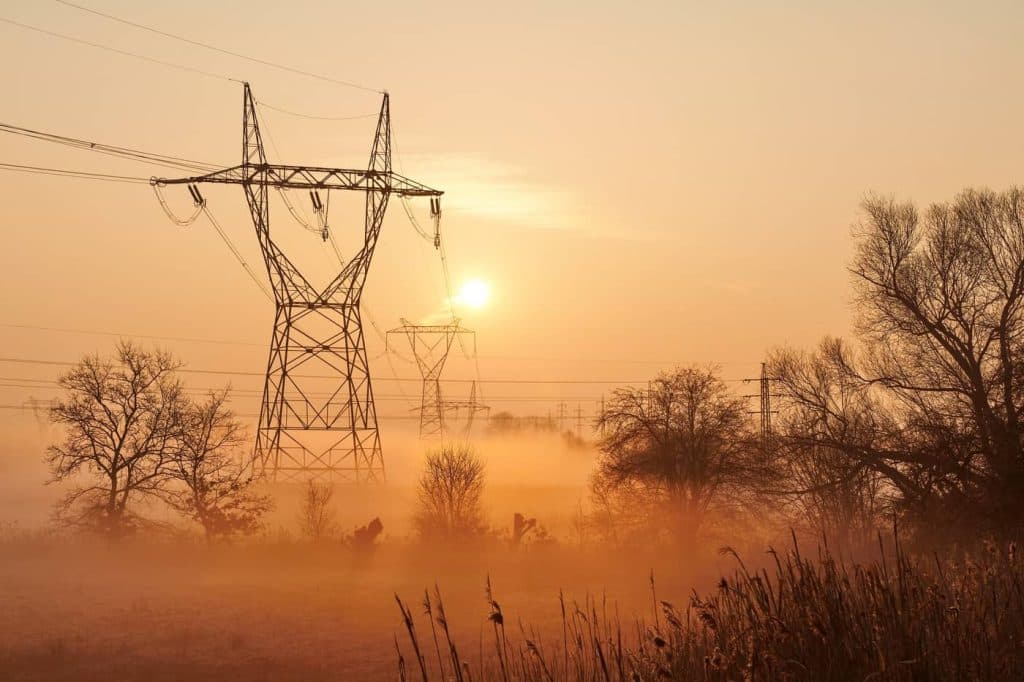
Germany’s grid regulator expects a significant increase in approved transmission lines this year and next, paving the way for faster construction. This is expected to result from changes to the legislative procedures for approving and building new lines, which are intended to significantly reduce bureaucracy. The expansion of the transmission grid is key to transforming Germany’s energy sector.
Germany’s grid regulator (BNetzA) expects the approval process for transmission lines to speed up significantly, according to internal documents seen by news magazine Der Spiegel. According to Der Spiegel, BNetzA expects more than 1 870 kilometers of new transmission lines to be approved this year, followed by around 1 600 kilometers next year.
Germany has previously struggled to approve and build transmission lines quickly. Last year, 600 km of lines were approved, roughly a third of the length expected to be approved this year.
Germany urgently needs new transmission lines to make full use of its renewable energy sources and prepare for the planned huge increase in their installed capacity. The German government has therefore tried several times to speed up the approval process. This time, it seems, successfully.
Grid bottlenecks lead to renewable generation curtailment
Bottlenecks in Germany’s transmission grid drive up the cost of measures to stabilize the grid. Germany’s single bidding zone means that, from a market perspective, trading volumes are not limited by the capacity of transmission lines.
Combined with the uneven distribution of generation sources and consumption, this means that German transmission system operators spend billions of euros annually on so-called redispatch. In 2022, the cost exceeded 4 billion euros, while last year it was around 3 billion euros, despite an increase in the volume of measures.
Redispatch occurs when generation sources at locations other than those originally scheduled to supply electricity to the grid are activated to prevent the overloading of components of the power system. These measures are costly because the original generators must be compensated for being unable to supply energy to the grid, while the generators activated in their place must also be paid for the electricity they produce.
Generation from German renewable sources, particularly wind farms in the north of the country, has to be curtailed because industrial centers are mainly located in the south and west. The underdeveloped transmission grid means that power plants near areas of high electricity consumption have to be brought online instead of renewable sources. Last year, Germany curtailed 19 TWh of renewable energy generation, equivalent to approximately 4% of Germany’s total annual electricity generation.
Translation disclaimer
This article is a machine translation of the Czech original and has not yet been fully reviewed. In case of any doubt, please refer to the Czech version.
Sdílejte článek prostřednictvím:
You might also like
26 October 2026, 19:59
26 October 2026, 14:24