
7 October 2026, 19:33
Loading...
December turning point: EVs in the EU overtake petrol cars for the first time
Vojtěch Kříž
29 January 2026, 10:26
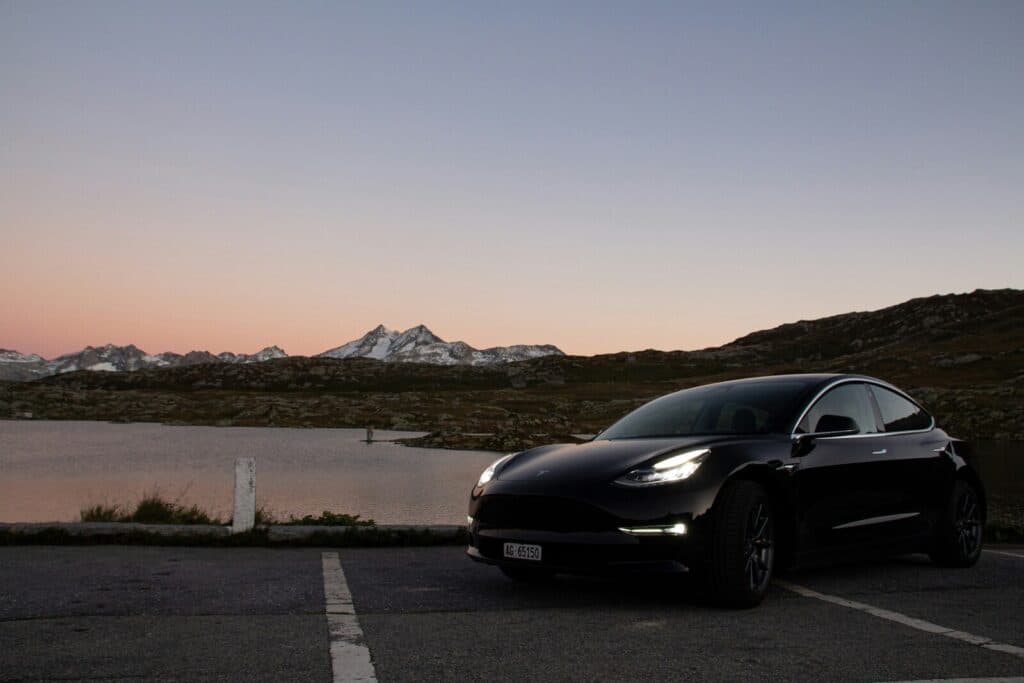
According to statistics from the European Automobile Manufacturers’ Association (ACEA), more battery electric vehicles were sold than petrol cars in December 2025. Year on year, sales of “standard” petrol cars fell by 19% towards the end of last year.
According to data from ACEA, total car sales in the EU rose by 1.8% in 2025. This modest increase means, however, that figures remain far below pre-pandemic levels. A total of 10 822 831 cars were sold in the EU in 2025. Of these, 1 880 370 were battery electric vehicles (BEVs) – a year-on-year increase of 29.9%; 1 015 887 were plug-in hybrids – a year-on-year increase of 33.4%; 3 733 325 were electric hybrids – a year-on-year increase of 13.7%; 2 880 298 were petrol cars – a year-on-year decrease of 18.7%; 960 024 were diesels – a year-on-year decrease of 24.2%; and 352 927 cars were classified as “other” (LPG and similar powertrains).
A significant milestone came in December, when 217 898 battery electric cars were sold, compared with 216 492 petrol cars. This was the first time sales of battery electric vehicles surpassed those of petrol cars. In Czechia, however, petrol cars still dominate: 9 574 petrol cars and just 1 219 BEVs were sold in December.
A blip or a new trend?
The gradual rise in the popularity of electric cars is clearly visible. The increase partly coincides with the EU’s proposed “Automotive” package. Among other things, it proposes replacing the 2035 ban on the production of cars with internal combustion engines with a 90% reduction in emissions, with the remaining 10% to be offset either through the use of low-carbon steel produced in the EU or biofuels. The package could therefore, in theory, keep cars with conventional powertrains in the running.
The automotive sector has opposed the ban and many other restrictions several times, including by arguing—as the head of Stellantis in Europe recently put it—that there is no natural demand for these cars in the EU.
China’s advance or a more complex story?
The rise of Chinese electric cars, especially those made by BYD, has been discussed in the public arena for some time. Last year, the brand sold more BEVs than Tesla for the first time. According to data from BYD, it sold 187 657 cars in Europe last year (it is worth bearing in mind that not all of them were BEVs, as BYD also makes plug-in hybrids). This is still just a “drop in the European ocean”, but for the company it represents a year-on-year increase of 268.6%—in 2024, it sold just 50 912 cars in Europe.
China’s largest carmaker, SAIC Motor (which owns the MG brand, among others), also increased its sales by around 25%, selling 305 717 cars. Tesla, by contrast, saw sales fall by almost 27% year on year to 238 656 cars.
It will be very interesting to see in 2026 whether the current trend in BEV sales continues.
Translation disclaimer
This article is a machine translation of the Czech original and has not yet been fully reviewed. In case of any doubt, please refer to the Czech version.
Sdílejte článek prostřednictvím:
You might also like

7 October 2026, 16:15

7 October 2026, 11:20