20 October 2026, 15:34
Loading...
Geneva Motor Show 2016: hybrid and electric news from around the world
Tomáš Jirka
7 March 2016, 18:11
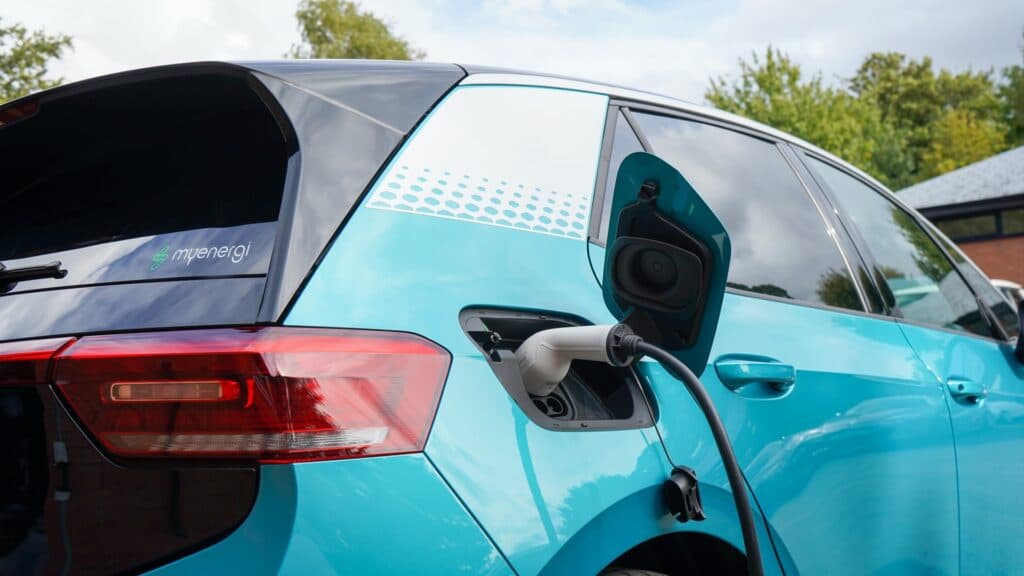
From 3 to 13 March 2016, Geneva is hosting one of Europe’s largest motor shows, and although carmakers’ interest in exhibiting at major events has declined considerably in recent years (Leipzig and Brno were cancelled for this reason), it has brought us plenty of interesting developments in electric vehicles and hybrids.
According to the National Action Plan for Clean Mobility, drawn up by the Ministry of the Environment in 2015, the government aims to have 250 000 electric vehicles (including plug-in hybrids) on Czech roads by 2030. It intends to support this with a purchase subsidy of up to CZK 200 000 and financial support for building charging infrastructure (at least 700 fast-charging stations and 600 in locations expected to have a higher concentration of electric vehicles, such as shopping centres, are planned – we will cover this in subsequent articles).
Subsidies for purchasing electric vehicles with zero local emissions are already commonplace in Britain and France, while from July 2016 they will also be subsidised by up to €5000 in Germany. This could also create a fairly large market for young used cars, which are relatively popular in Czechia for private use.
Audi: Q2 urban crossover
Audi unveiled the small Q2 crossover only with petrol and diesel engines, but given the vehicle’s focus (a stylish urban crossover competing with models such as the Mini Countryman, Mercedes-Benz GLA and Infiniti QX30), it is a great shame that it has not (so far, hopefully) adopted technology from the A3 e-tron (plug-in hybrid), or even from the A1 e-tron concept (series plug-in hybrid), or perhaps a modest modification of the all-electric drivetrain from the group’s e-Golf.
Audi is preparing to build the all-electric Q6 over the next few years as a rival to Tesla’s Model X, but the Q2 is precisely the kind of vehicle in which electric drive makes great sense. Given its price and size, it will mostly be a second vehicle for wealthier customers (families), rather than one spending its life on long journeys across Europe.
The Q2 is built on the modular MQB platform, sits below the A3 in size (it is 4.2 metres long) and weighs 1205 kg. Since Audi plans to sell at least 70 000 vehicles per year (prices are not yet known), the powertrain range is fairly conventional: the 1.0 TSI (85 kW), 1.4 TFSI with cylinder deactivation, 2.0 TFSI (140 kW), and the sporty SQ2 with a 2.0 TFSI producing around 160 kW. Information about a purely sporty RS Q2 equipped with the 2.5 TFSI five-cylinder has not yet been confirmed. Diesel options will include the 1.6 TDI (85 kW) and 2.0 TDI (110 and 140 kW). Apart from the entry-level engine, all-wheel drive, implemented unusually for Audi via a Haldex inter-axle clutch, and a DSG automatic gearbox will be available as options.
BMW: luxurious hybrid 740e iPerformance
BMW recently unveiled new colour combinations for the futuristic i8 and, drawing on experience from the i8 and i3, brought its plug-in hybrid flagship to Geneva: the 740e iPerformance. This designation will identify plug-in hybrid drive and technological kinship with the i-series models across all models.
For the first time in the history of the 7 Series, a two-litre four-cylinder will sit under the bonnet. Total system output is 240 kW and 500 Nm (top speed is the customary 250 km/h and the vehicle reaches 100 km/h in 5.5 to 5.7 s depending on the version), at an expected price of more than €90 000. However, the NEDC-cycle consumption figure of 2.1 litres per 100 km cannot be relied upon too much.
The battery has a capacity of 9.2 kWh, which should allow the vehicle to travel between 37 km (740Le xDrive iPerformance) and 40 km depending on the version, figures that are not entirely unrealistic.
Besides the 740e, BMW also brought the new M2 and M760Li, the latter with a 6.6-litre V12 producing 440 kW. It could therefore be said that BMW offers an alternative for those who want the classic prestige and top 7 Series, as well as for those who simply want its comfort and for whom the dynamics of a motorway cruiser are not an absolute priority. The question remains how well the four-cylinder has been insulated, but after the experience with the three-cylinder engine in the i8, this should not be a problem.
Honda: prices for the NSX supercar
Honda spent quite a long time developing the supercar hybrid NSX in Ohio and has only now revealed its price: €180 000 in Germany is more than the legendary Porsche 911 Turbo or Audi R8 cost, and approaches the price of a McLaren 570S. It is not yet expected to be available at every showroom, but only at the largest ones, with orders opening in April and deliveries in autumn. We will therefore only be able to judge its success later, but it is certainly not a “people’s Ferrari” like the first-generation NSX.
Hyundai: the Ioniq vehicle family
Hyundai unveiled the Ioniq models in Geneva, built on an entirely new platform: hybrid, plug-in hybrid and all-electric versions of an aerodynamically shaped (drag coefficient Cx is 0.24) competitor to the Toyota Prius and Nissan LEAF, somewhat reminiscent of the Chevrolet Volt/Opel Ampera, which should arrive in the Czech Republic this autumn.
The hybrid and plug-in hybrid versions with a dual-clutch automatic gearbox are powered by a 1.6 GDI direct-injection petrol unit operating on the Atkinson cycle, producing 77 kW and 147 Nm, but their electric motors and batteries differ. The purely hybrid version has a 32 kW electric motor and total system output of 104 kW and 265 Nm, which already sounds respectable and translates into a top speed of 185 km/h. The lithium-polymer battery located beneath the rear seats has a capacity of 1.56 kWh.
The plug-in hybrid version has a 45 kW electric motor and an 8.9 kWh battery. According to the press release, this should enable the vehicle to travel 50 km, a figure that is probably not far from reality, especially in urban driving.

The all-electric version is equipped with an 88 kW electric motor producing 295 Nm, enabling a top speed of 165 km/h. The battery has a capacity of 28 kWh, which under the not entirely realistic NEDC cycle translates into a range of 250 km – in real-world use, 150 km should be easily achievable and 200 km with economical driving.
The vehicle also includes systems that are now fairly common: autonomous emergency braking (AEB – Autonomous Emergency Braking), lane-keeping assist (LKAS -Lane Keep Assist System), blind-spot detection (BSD – Blind Spot Detection), rear cross-traffic alert (RCTA – Rear Cross Traffic Alert) and adaptive cruise control (SCC – Smart Cruise Control). Wireless mobile-phone charging and AndroidAuto or Apple CarPlay connectivity may be particular highlights.
Prices are not yet known, but a look at the Korean carmaker’s other models gives a fairly promising impression, with the option to choose a vehicle from the Ioniq family according to how it will be used.
Kia: hybrid Niro with Ioniq technology
Kia, in cooperation with Hyundai, brought the hybrid Niro, a 4.4-metre crossover that can be expected to use further drivetrain versions from the Ioniq family since it stands on the same platform. For now, however, it is entering the market only in its basic hybrid form. The main difference is its worse drag coefficient of Cx = 0.29 and, due to its taller body and greater weight, lower performance and higher consumption.
As Kia also offers the electric Soul, it has sufficient experience in improving drivetrain efficiency. The vehicle therefore also includes the Kia’s Eco-DAS (Driver Assistance System), which uses navigation-system data to anticipate upcoming situations (for example, when it is suitable to recharge the battery through recuperation and when it is better to let the vehicle coast = PEC /Predictive Energy Control/ and CGC /Coasting Guide Control/) and also advises the driver on how to reduce consumption.
In development, Kia also focused on reducing noise inside and outside the vehicle, increasing interior comfort and practicality, and reducing weight without affecting safety, which is further enhanced by systems developed jointly with Hyundai.
Prices and the market launch date are not yet known, but 2016 is expected, along with the possible introduction of a plug-in hybrid version. Kia also unveiled the Optima SportsWagon, unfortunately without any information on the use of hybrid/plug-in hybrid technology from the Optima liftback in this stylish estate car as well.
Koenigsegg Regera versus Bugatti Chiron
One of the motor show’s main new products was the two-tonne Bugatti Chiron, with an 8.0 W16 engine and four turbochargers producing more than 1100 KW (1500 hp). It was originally speculated to be a future hybrid hypercar in the style of the Porsche 918, McLaren P1 and LaFerrari. However, Bugatti arrived with conventional technology, so it is possible that among the future production run of 500 units, the carmaker is leaving room for a special edition with hybrid technology in the style of the Veyron SuperSport, as even the speedometer is marked up to 500 km/h.
Christian von Koenigsegg, following last year’s concept, unveiled the production version of his Regera at the same venue, with output of 1120 kW and torque of 2000 Nm from a mid-mounted 5.0 V8 and three electric motors. This led to the decision that the vehicle would use the unique Direct Drive system instead of a conventional transmission, meaning only a hydraulic clutch.
The Regera, weighing just 1590 kg including fluids thanks to extensive use of carbon fibre, reaches 100 km/h in 2.8 s, 200 km/h in 6.6 s and 300 km/h in 10.9 s. This sounds literally incredible compared with the Chiron’s 13.5 s, although the Chiron is 21 km/h faster with its top speed of 420 km/h.
The vehicle, priced close to CZK 60 million and already subject to 37 orders, is technically a plug-in hybrid with a battery operating at 800 V and a capacity of 4.5 kWh, though there is no need even to think about operating savings.
Lexus: futuristic LC500h
Lexus brought the production version of the futuristic and certainly design-interesting, stocky (4.76 metres long, 1.92 m wide and 1.35 m high) LC500h coupé to Geneva. Unlike the conventional LC500, it is not powered by the same naturally aspirated V8 unit, but by a 3.5 V6 (known, for example, from the GS 450h, though it has undergone several changes). Total output is even higher, at 350 kW (the combustion engine produces 230 kW and the electric motor 162 kW), allowing the vehicle to reach 100 km/h in under 5 seconds. Top speed is limited to 250 km/h, while it can run solely on electricity up to 140 km/h.
The powertrain system is entirely new: the Lexus Multi Stage Hybrid System, which includes four “fixed” gear ratios in the conventional gearset of the CVT transmission Lexus uses in its hybrids. The reason is to provide a more dynamic shifting sensation in a sports model, with the added option of manually shifting through 10 gears. The only shame is that we are still waiting for any plug-in hybrid Lexus…
Lexus also brought the LF-FC flagship concept, which could replace the long-running LS sedan and compete with the aforementioned 740e, also thanks to gesture control and autonomous driving in the stylish body of a large grand tourer.
Nissan: intelligent mobility vision and LEAF with a 30 kWh battery
Nissan unveiled the updated LEAF, which is already nearing the end of its life cycle, with a 30kWh battery promising an official range of up to 250 km and an improved NissanConnect EV remote vehicle-management system at the GSMA Mobile World Congress in Barcelona. It therefore prepared a different surprise for Geneva: intelligent mobility concepts.
“The Intelligent Mobility vision is a project through which we want to bring a safer and more sustainable future to customers around the world,” says Carlos Ghosn, Nissan’s chief executive.
Thanks to the LEAF (we will bring you its test in the coming days), Nissan is the leader in the electric vehicle market, with more than 200 000 units sold (which have travelled over 2 billion kilometres). At the same time, it is investing in autonomous driving, which is expected to appear in production vehicles by 2020 as part of the Nissan Intelligent Driving. project.
The Nissan Intelligent Driving system is expected to appear in test vehicles as early as 2016 and in the Qashqai model in 2017, with Nissan having tested these cars since 2013. Its main goal is to increase comfort and safety during daily commuting in the first version, Piloted Drive 1.0, available at low speeds in a single lane.
The Intelligent Mobility programme also includes Nissan Intelligent Power, featuring a new X-Tronic transmission and the all-electric four-seat IDS concept with a 60kWh battery, which could foreshadow the second generation of the Nissan LEAF with fully autonomous driving capability.
Nissan is also working on “integrating the vehicle” into today’s society through its Nissan Intelligent Integration programme, supporting the construction of charging stations and electric-vehicle sharing in cities.
Opel: Bolt finally coming to Europe as the Ampera-e
The first-generation Chevrolet Volt, called the Opel Ampera in Europe, was not a major success, so it was a big question whether the new Chevrolet Bolt would also come to Europe. This was especially so after its unveiling, when it appeared that Chevrolet was heading in the right direction and would offer an urban electric vehicle even specifically adapted for car-sharing through cooperation with, for example, Uber.
Ultimately, the new electric “hatchback” will be available in Europe from next year. The carmaker is keeping technical details under wraps for now, but only rebranding can be expected. The car will thus (hopefully) retain its 60kWh battery, weighing 435 kg and mounted in the floor, with a theoretical range of 320 km. This is certainly not unrealistic, as it is not measured under the NEDC cycle.
The vehicle’s maximum output is 150 kW with 360 Nm of torque, allowing it to reach 96 km/h in 7 seconds; due to its urban focus, top speed is limited to 146 km/h.
In the US, the base price of this crossover is $37 500, so the question is how much of a “people’s car” it will be in Europe and whether it will face the same fate as the first generation. It must be added, however, that compared with its rivals it has a considerable advantage from the outset thanks to its large battery and powerful motor.
Renault: extravagant new Scénic
Following the introduction of the new Espace and Mégane, France’s Renault is “on a roll” and brought the new Scénic to Geneva, a vehicle that certainly cannot be denied an interesting design. Compared particularly with German rivals, it is damn extravagant, all the more so in the optional two-tone version
The new Scénic is 4.4 metres long, making it a conventional compact MPV, but in keeping with the current crossover trend it has received higher ground clearance (now 170 mm), offset by enormous 20-inch wheels. According to the press release, these will be standard on all versions, which sounds more like a typographical error. However, it should be noted that tyre dimensions are 195/55, so customers need not say goodbye to comfort at first glance, even though air suspension is certainly not planned at the Scénic’s price point.
Although it is an MPV whose interior draws inspiration from the Mégane and Espace, it does not have three separate split rear seats (as Citroën has, for example, in its Picasso models), but a conventional 40/60 bench. It therefore appears that beauty has prevailed over practicality this time, while most families would appreciate split seats more than concept-car-style designer wheels.
Like most newly introduced vehicles, the Scénic will offer many interesting safety systems: lane-keeping assist, adaptive cruise control, a reversing camera, automatic high-beam switching, active parking assist and even pedestrian detection. The interior will also offer massage seats, a head-up display and Bose audio.
Unfortunately, as with the Q2, the engine range is conventional (and mirrors the Mégane), even though Renault has electric technology through its cooperation with Nissan and uses it, for example, in the Zoe and Twizy. The only petrol engine will be a 1.2 TCe producing 74 or 96 kW, while there will be five diesel engines (despite diesel engines not enjoying particularly strong public popularity in France lately): the 1.5 dCi producing 70 or 80 kW, the 1.6 dCi producing 96 and 120 kW, and at the end of the year also the hybrid dCi 100 Hybrid Assist.
Škoda: hybrid Superb and VisionS
Škoda is not the showcase for new technologies within the VW Group hierarchy, so although it unveiled a concept for a seven-seat SUV with hybrid drive (a 1.4 TSI and two electric motors with total output of 166 kW), its first hybrid model will be the Superb in 2019, as Škoda CEO Bernhard Maier said shortly after the motor show opened. However, it should be added that the first electric Superb (first generation) was built as early as 2009 at Brno University of Technology, so it is somewhat disappointing that we will have to wait so long even for plug-in hybrid technology, given that the carmaker promised it for 2016 in 2014.
The large SUV, due in the second half of this year (and therefore not likely to be far removed from the VisionS concept), is also expected to use plug-in hybrid technology, which new Škoda models could share, for example, with the group’s Passat GTE.
A fully electric vehicle will arrive even later. Although the carmaker tested all-electric Octavias as early as 2012, it now claims the technology is not yet ready for fully electric cars, even though, for example, the Citigo could share it with the VW Up!
Tesla: Model X in the flesh
Tesla Motors is not a conventional exhibitor at motor shows, but it is displaying the Model X. in Geneva. It has already received so many orders that it is even possible to buy a place in the queue, as production vehicles are facing ever-greater delays. Other carmakers are also preparing electric SUVs, as this boom is very similar to the arrival and success of the Porsche Cayenne more than a decade ago.
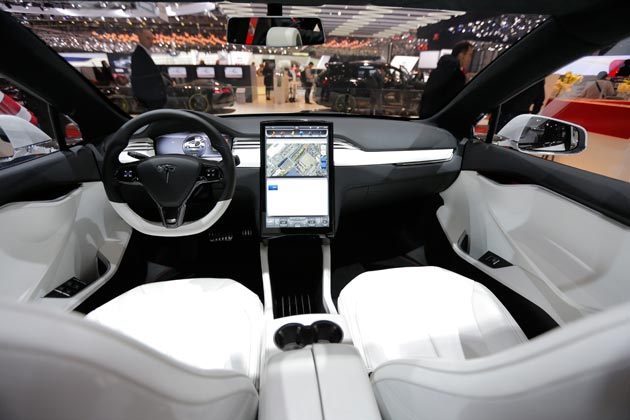
The vehicle was originally presented as an SUV, but it is already clear that it is a crossover not intended to leave the tarmac – it is more about prestige and luxury, as also illustrated by the interior with the familiar giant “iPad” and upward-opening rear doors.
The entry-level version is the 70D, with all-wheel drive and a 70 kWh battery that enables the vehicle to travel up to 400 km. Its top speed is 225 km/h and it accelerates to 100 km/h in 6.2 seconds.
Above it sits the 90D version, which can travel up to 480 km and reach a top speed of 250 km/h, while reaching 100 km/h in 5 seconds. The more powerful P90D only surpasses the 90D in acceleration, which the Ludicrous Speed package reduces to around 3.4 s to 100 km/h.
In addition, J. B. Straubel, head of technical development at Tesla Motors, spoke about the Model 3 and Model Y, which should be on the market at the end of 2017, although based on experience to date, probably later. The carmaker is reportedly currently focusing solely on reducing costs (and the cost of all necessary components continues to fall), as it has already resolved performance, range and other technology through the previous S and X models. The Model 3 should be an Audi A4-sized sedan and the Model Y a crossover built on the same platform, and together they should showcase new Tesla Motors technologies.
Toyota: C-HR, “Prius in Juke clothing”
Toyota unveiled the small C-HR SUV, using Toyota Prius technology and with styling not far removed from last year’s concept, as the small SUV and crossover market is growing faster than any other. Thanks to its appearance, the C-HR will compete for customers primarily with the Nissan Juke, both with conventional powertrains and the option of a CVT automatic transmission or all-wheel drive, as well as using the hybridHSD system from the Toyota Prius, with output increased to 90 kW. This is missing from the Nissan line-up and from all other competitors in the segment. Whether it will include a plug-in hybrid version, as the Prius introduced last year, remains uncertain for financial reasons, although the vehicle is prepared for it.
The first units will be delivered at the beginning of 2017. According to chief engineer Hirojuki Koba, however, it cannot be expected that all Toyotas will adopt this design language in future, although there is a certain resemblance to the hydrogen-powered Mirai and the new Prius.
The vehicle also includes the Toyota Safety Sense system, comprising a pre-collision safety system, lane-departure warning system, traffic-sign recognition system, automatic high beams, pedestrian recognition and adaptive cruise control.
Volvo: majestic S90 and V90
Volvo is literally flourishing under its Chinese owner and prepared a presentation in Geneva of the new S90 (replacing the S80) and V90 (replacing the V70), which represent its move into a higher vehicle class to compete more effectively with the BMW 5 Series and Audi A6 alongside the Mercedes E-Class, as well as its kinship with the XC90.
The base price of the sedan is just over CZK 1 million and the estate costs CZK 100 000 more, using the 110 kW D3 diesel four-cylinder. This is the only engine not found in the related XC90, which starts with the 140 kW D4 due to its greater weight.
Thanks to shared technology with the XC90, we will also see a plug-in hybrid version designated T8. This still means four cylinders under the bonnet, but working with two electric motors: 34 kW and 150 Nm at the front, and 65 kW and 240 Nm at the rear, powered by a 96-cell lithium-ion battery with a capacity of 9.2 kWh.
Volvo, as a leader in safety systems, has also adapted the 90 Series for the use of autonomous-driving systems, including detection of large animals.
Translation disclaimer
This article is a machine translation of the Czech original and has not yet been fully reviewed. In case of any doubt, please refer to the Czech version.
Sdílejte článek prostřednictvím:
You might also like


20 October 2026, 12:55
20 October 2026, 10:49

20 October 2026, 06:13