
17 October 2026, 13:09
Loading...
German electric carmakers record first sales increase in four years

Marek Kršák
12 February 2025, 06:21
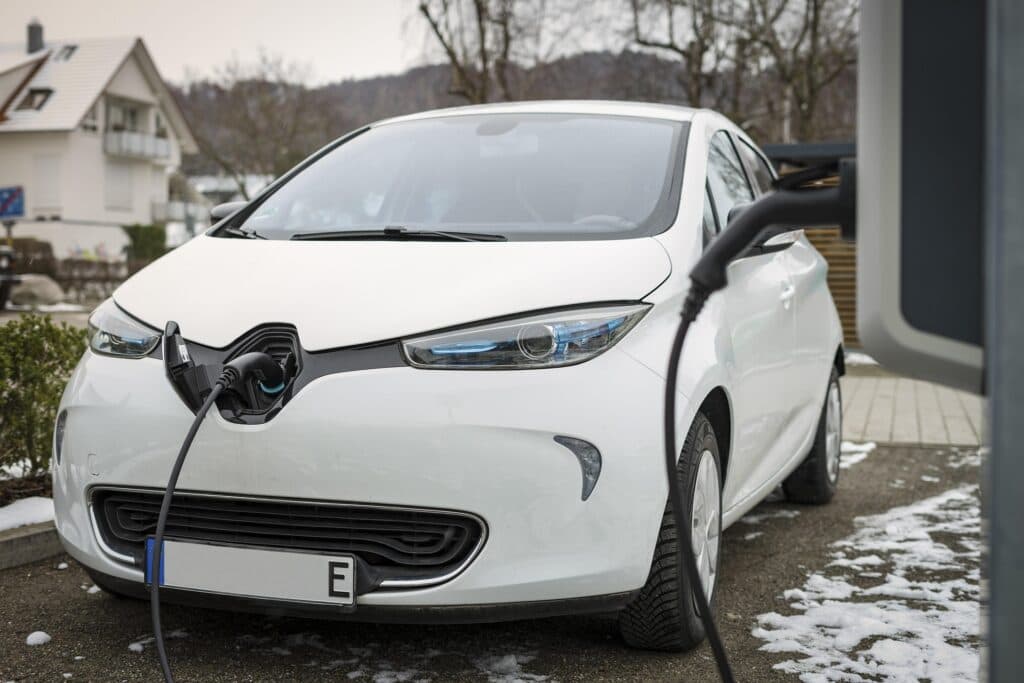
The German automotive industry, which has faced significant problems in recent years, is now getting a second wind thanks to increased electric vehicle production and sales. This is reflected in figures for the number of newly registered cars in January 2025. Government support and investment in infrastructure, combined with rising demand from corporate customers, are playing a key role.
With 340,800 vehicles produced, the first month of 2025 was the strongest on record in terms of car production. This represents a 13% increase compared with the same period last year. It means Germany has produced more cars than in the same month of the previous year for the first time since 2020. Carmakers seem to be getting back into shape, and the market is slowly stabilising.
Electric cars outnumber hybrids, but new registrations have fallen
Electric vehicle production in Germany rose by 7% in 2024 to a record 1.35 million units. Battery electric vehicles (BEVs) are seeing particularly strong growth, with production up 11% to 1.06 million units. Plug-in hybrid (PHEV) production, by contrast, fell by 6% to 0.29 million vehicles. In 2025, electric car production is estimated to rise by 24% to 1.67 million units.
The number of newly registered vehicles was lower in January 2025 than in January 2024. Demand for electric cars is nevertheless trending upwards. Electric cars posted the strongest year-on-year growth, with 54% more registered than in the previous year. Hybrid cars followed, with registrations up 23% in January. Industry and governments expect electric cars to dominate the automotive market in the future. The share of all low-emission vehicles registered in Germany in January 2025 exceeded 5%.
The future of Germany's automotive industry is a hot topic
According to Sandra Wappelhorst of the International Council on Clean Transportation (ICCT), government measures such as expanding charging infrastructure, income-based purchase subsidies and attractive leasing programmes could further boost demand for electric cars.
The vast majority of German political parties included support for electric mobility in their platforms ahead of the election. The only exception is the Alternative for Germany (AfD) party. Federal elections are scheduled for 23 February.
The conservative Christian Democrats, running alongside their Bavarian sister party, the CSU, plan to scrap the ban on cars running on fossil fuels from 2035. The party supports expanding charging infrastructure for electric cars, but also invokes “technological openness”, including towards e-fuels.
The AfD also supports reversing the phase-out of cars running on fossil fuels from 2035 and wants to protect the production of internal combustion engine cars for as long as possible to safeguard jobs. The party also wants to end public funding for electric vehicle charging infrastructure and leave decisions about the right technology for cars to the market rather than the law.
The centre-left Social Democrats (SPD) propose cutting taxes on the purchase or leasing of electric cars, expanding charging stations and capping grid charges to make charging more affordable. The party opposes fining carmakers for failing to meet EU emissions targets, arguing that manufacturers need money to develop EVs.
The Greens take a stricter approach to ensuring that carmakers commit to electric vehicles. They support a ban on cars running on fossil fuels from 2035 and believe that carmakers should be fined for missing CO2 targets, but could be given more time to pay, with the funds used for European initiatives supporting the electric vehicle sector.
Hopes are pinned on the renewal of corporate fleets
Almost two-thirds of all new registrations in Germany are company vehicles, showing how significantly demand for electric cars can be influenced by vehicles owned or leased by businesses.
It is no coincidence that the European Commission is already preparing a new law in this area, directly aimed at supporting the electrification of corporate fleets. The proposal is part of the broader Net-Zero Industry Act, which aims to strengthen the competitiveness of European carmakers.
According to Brussels-based Transport & Environment (T&E), such a law could guarantee demand for more than 2.1 million electric cars in 2030, with Germany and France expected to offer the greatest potential.
European companies are expected to favour domestic car brands, which would help German manufacturers meet their emissions targets for 2030. Germany is Europe's most important car market and ranks third globally, after China and the US.
Translation disclaimer
This article is a machine translation of the Czech original and has not yet been fully reviewed. In case of any doubt, please refer to the Czech version.
Sdílejte článek prostřednictvím:
You might also like




16 October 2026, 10:16