6 November 2026, 14:13
Loading...
Toyota on the road to dominance: New batteries could revolutionize the electric vehicle industry

Marek Kršák
13 July 2023, 11:31
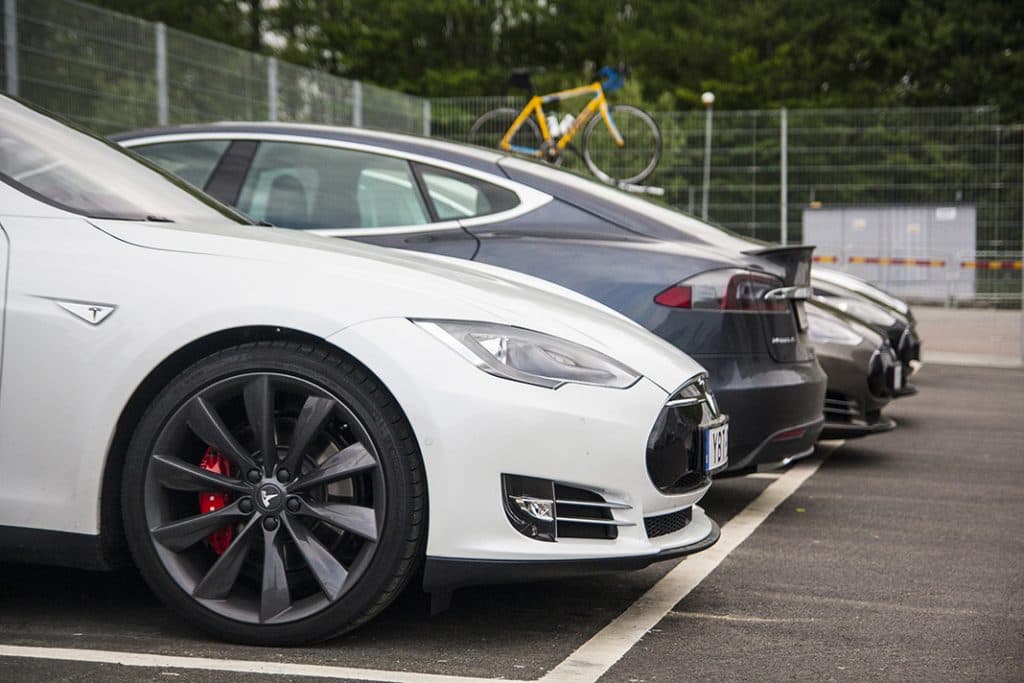
Toyota recently unveiled plans to radically reduce the size, cost and weight of batteries for its electric vehicles, by as much as half. The announcement came after a breakthrough in solid-state battery technology.
The Japanese automaker, one of the leading experts in battery production, said last week that simplifying the manufacturing process for battery materials would reduce the cost of its long-awaited next-generation technology.
"We are trying to radically change the situation with both our liquid and solid-state batteries, because current batteries are too large, heavy and expensive," said Keiji Kaita, president of Toyota's Carbon Neutrality Research and Development Center. "In terms of potential, we will aim to cut all of these factors in half," he added.
These ambitious statements came after the world's largest automaker by sales surprised investors last month with a plan to commercialize its solid-state battery technology in electric vehicles as early as 2027. Toyota is developing the next generation of batteries in collaboration with Panasonic through their joint battery venture.
Promising prospects for charging speed, capacity and safety
Experts consider solid-state batteries the most promising technology for addressing the most common problems with electric vehicle batteries, including charging times, battery capacity and the risk of fire. Solid-state batteries replace the liquid component of a battery (the electrolyte) with a solid one, and use lithium metal instead of graphite in the anode. Graphite is the current standard in lithium-ion batteries.
However, this technology is still very expensive and difficult to manufacture, meaning automakers are postponing its market launch and are currently focusing instead on developing and improving liquid-based lithium-ion batteries.
Toyota had originally planned to launch cars using this technology before 2025. In the first phase, it was to focus on the hybrid car segment. Electric vehicles were expected to be equipped with the new batteries somewhat later.
Mass production within five years?
Last week, however, Kaita said the company had recently found ways to solve earlier problems with battery life and was now confident enough to mass-produce solid-state batteries for electric vehicles, with a target date of 2027 or 2028.
Toyota describes this as a “technological breakthrough” in solving durability problems and a “materials solution” that would allow an electric vehicle powered by a solid-state battery to have a range of 1200 km and a charging time of 10 minutes or less.
"Everyone on our team is highly motivated and working with the aim of definitively launching the technology within the promised timeframe," Kaita said.
Simplifying the processes required to produce battery materials could bring the cost of solid-state batteries down to roughly the same level as, or possibly below, that of conventional lithium-ion batteries.
For Toyota, a successful launch of the technology could establish its dominance in electric vehicle manufacturing, as the automaker has so far been slower to develop new technologies than its competitors, especially Tesla.
Toyota shares also rose by 13 percent following these statements. But Hiroki Nakajima, chief technology officer, warned that the company may not necessarily see the technology as the “ultimate solution” to battery problems, since there is still room to improve liquid-based batteries.
As Nakajima noted: “Ultimately, the basis of competition in electric vehicle batteries will be the added value of the car as a product, how much we can control the total volume of batteries and how efficiently we can use them.”
Less resource-intensive and safer materials
If Toyota succeeds, significant progress is expected not only in reducing costs and increasing battery capacity, but also in safety. The materials used to make solid-state batteries are less flammable than those currently found in their liquid counterparts. At the same time, producing the new technology requires less mining of rare raw materials, which could mean a smaller carbon footprint from extraction and refining.
The automaker also announced ambitions to improve and develop a new generation of standard lithium-ion batteries, which would charge faster than cheaper lithium iron phosphate batteries. The automaker's broad range of activities also includes hybrid cars and hydrogen technologies.
Compared with its competitors, Toyota has the significant advantage of being able to develop all these technologies under one roof. The company also plans to optimize its production line, replacing a system that has been in place for a hundred years with automated, demand-driven control of manufacturing processes, without the need for manual labor. In addition, Panasonic, which is working with Toyota to develop the new type of battery, also manufactures batteries for Toyota's US competitor Tesla.
Translation disclaimer
This article is a machine translation of the Czech original and has not yet been fully reviewed. In case of any doubt, please refer to the Czech version.
Sdílejte článek prostřednictvím:
You might also like

6 November 2026, 10:25