
28 October 2026, 15:10
Loading...
Battery storage capacity in California is growing, and regulators are also focusing on safety

Eduard Majling
28 February 2024, 06:29
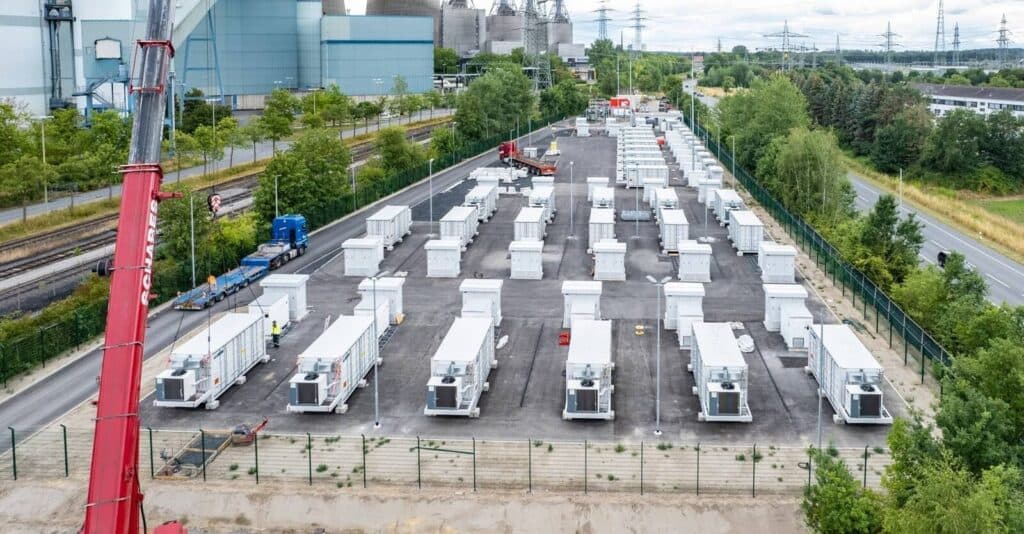
As renewable energy capacity in the US state of California has grown in recent years, so too has the number of battery storage facilities. According to local regulators, the growing number of battery storage facilities has prompted more questions about their safety. Although several incidents have occurred in the US in recent times, they say the vast majority of facilities operate safely and reliably.
The US state of California is one of the fastest-growing markets for renewables and energy storage in the country. According to the SEIA association, installed solar capacity in California exceeded 43 GW in the third quarter of last year, putting the state in first place among US states.
The rapid expansion of solar power in California is also paving the way for battery storage. This could help the state manage demand peaks, which occur as consumers use more electricity in the evening, when solar generation is insufficient. Within a month, total battery capacity on California’s grid could reach 10 GW, according to S&P Global.
California is home to the world’s largest battery storage facility, Moss Landing, with an installed capacity of 750 MW and a storage capacity of 3000 MWh. Its launch, however, was not without problems. During its first phase, the operator had to temporarily shut down most of the facility after the batteries overheated. The problem was caused by an improperly configured fire suppression system, which apparently triggered a short circuit. A similar incident, however, may also have occurred relatively soon after the second phase was launched, expanding the original facility.
"We know that safety incidents have occurred in the past, and that in California there is a strong focus on advancing safety and making sure we invest in it, consider the various risks that exist and manage them," said Alice Reynolds, president of the California Public Utilities Commission.
According to David Hochschild, who chairs the commission, battery storage facilities have experienced incidents in the past, including Moss Landing, but California’s fleet is operating very well and reliably.
"California is actually home to the largest and fastest-growing energy storage market in the world. And that’s good for the electricity grid. It’s good for reliability and it’s good for our economy," Hochschild said, according to S&P Global.
More storage could enable more efficient operation of renewables
A larger number of battery storage facilities could also help California reduce the amount of electricity that renewables have been unable to deliver to the grid. The volume of curtailed generation in California has risen sharply in recent years, with solar power accounting for almost all of it.
While some curtailed generation is due to insufficient demand, most of it is caused by limited capacity on the local grid. Batteries located near generation sources could help spread their output to the grid over a longer period.
"Modelling shows that a substantial amount of storage capacity needs to come online to help meet our needs. Storage is very important because it helps us use energy from wind and solar, which does not flow all the time," said David Erne of the California Energy Commission.
Translation disclaimer
This article is a machine translation of the Czech original and has not yet been fully reviewed. In case of any doubt, please refer to the Czech version.
Sdílejte článek prostřednictvím:
You might also like

28 October 2026, 13:08

28 October 2026, 11:10

28 October 2026, 09:08
