27 October 2026, 10:17
Loading...
Hydropower could help Europe meet its need for greater flexibility

Marek Kršák
27 April 2024, 08:12
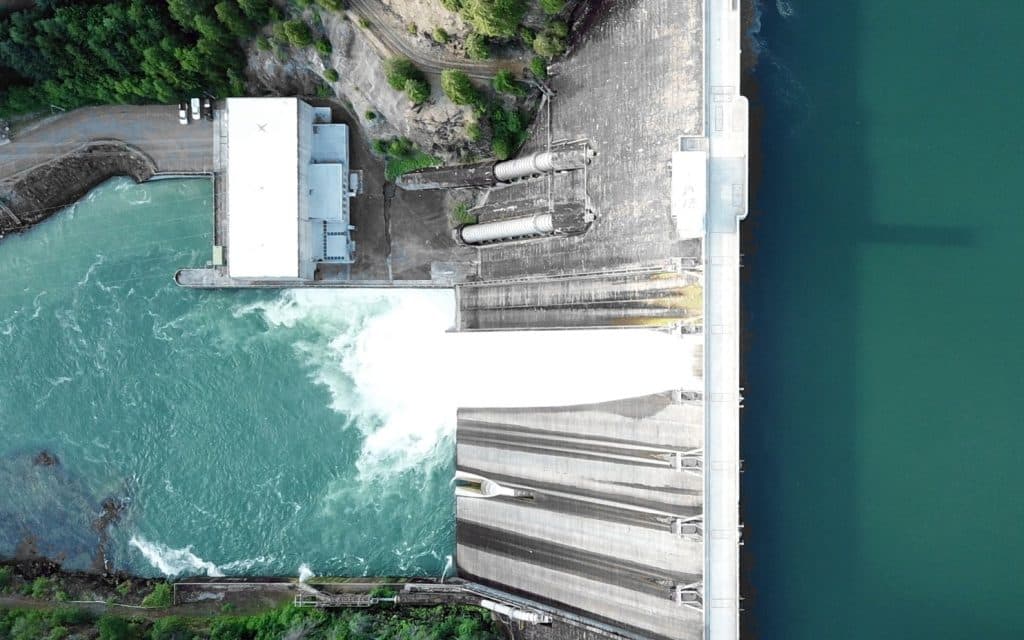
Water holds enormous potential that could help Europe cut emissions effectively. Although the golden age of megaprojects involving the largest dams built in Europe is over, hydropower still offers further opportunities. The most significant is the possibility of pumping water at sites where infrastructure already exists. This information was shared during a debate entitled "Hydropower – Enhancing storage and flexibility for a greener future" organized by Euractiv in cooperation with Austrian company illwerke vkw.
It is no coincidence that the list of EU countries with the lowest emissions from electricity generation coincides with the ranking of countries with the highest share of hydropower in their energy mix.
These include, above all, countries such as Sweden, Austria and France. They benefit from robust hydropower infrastructure built several decades ago, when financing similar projects was considerably easier, both politically and financially. In recent years, however, the number of new hydropower plants has grown much more slowly, prompting the question of how to make effective use of existing infrastructure.
The most significant contribution could come from providing flexibility services to the electricity grid. According to hydropower expert Yasmina Abdelilah, who works for the International Energy Agency, there are currently two main areas that require immediate investment. First, existing hydropower infrastructure needs to be modernized. The next priority is to focus on building pumped-storage reservoirs. The average age of European hydropower plants is between 40 and 60 years.
Europe will need ever more flexibility
Pumped-storage hydropower plants consist of two reservoirs at different elevations, which can generate electricity as water flows downhill through a turbine.
However, according to Abdelilah, the way technologies are currently prioritized in the market does not work in these plants' favor. Financing for these projects is also still difficult to secure, and the permitting process can take several years. Projects built within existing infrastructure are an exception.
As well as generating electricity, water storage can be thought of as a physical battery. It can be used when the market requires it, and it can be "charged" using surplus energy from renewable sources.
One such proposed pumped-storage project is Lünerseewerk II in western Austria, near the borders with Germany, Liechtenstein and Switzerland. According to energy company illwerke vkw, which is responsible for the project, the plant could provide approximately 1 050 megawatts of power and 230 gigawatt-hours of storage capacity—not only for Austria, but also for neighboring countries.
The estimated investment cost of the Lünerseewerk II project is 2 billion EUR. The project is currently undergoing the permitting process, and the pumped-storage plant would be built within existing infrastructure.
Permitting processes
During the debate, Cosimo Tansini of the European Environmental Bureau (EEB) said he agreed that faster processing does not necessarily mean a less thorough environmental impact assessment.
He also added, however, that it remains important to meet all requirements relating to potential environmental damage. “The new EU rules are essential, and we must ensure that local, regional and national authorities have the resources and staff needed to genuinely speed up environmental impact assessments. Under the new RED Directive, a full EIA may not be required.”
Translation disclaimer
This article is a machine translation of the Czech original and has not yet been fully reviewed. In case of any doubt, please refer to the Czech version.
Sdílejte článek prostřednictvím:
You might also like
27 October 2026, 06:15
26 October 2026, 19:59

26 October 2026, 14:24