
23 October 2026, 14:38
Loading...
Regulation and lack of financing hinder battery storage development in Spain

Eduard Majling
2 October 2024, 11:00
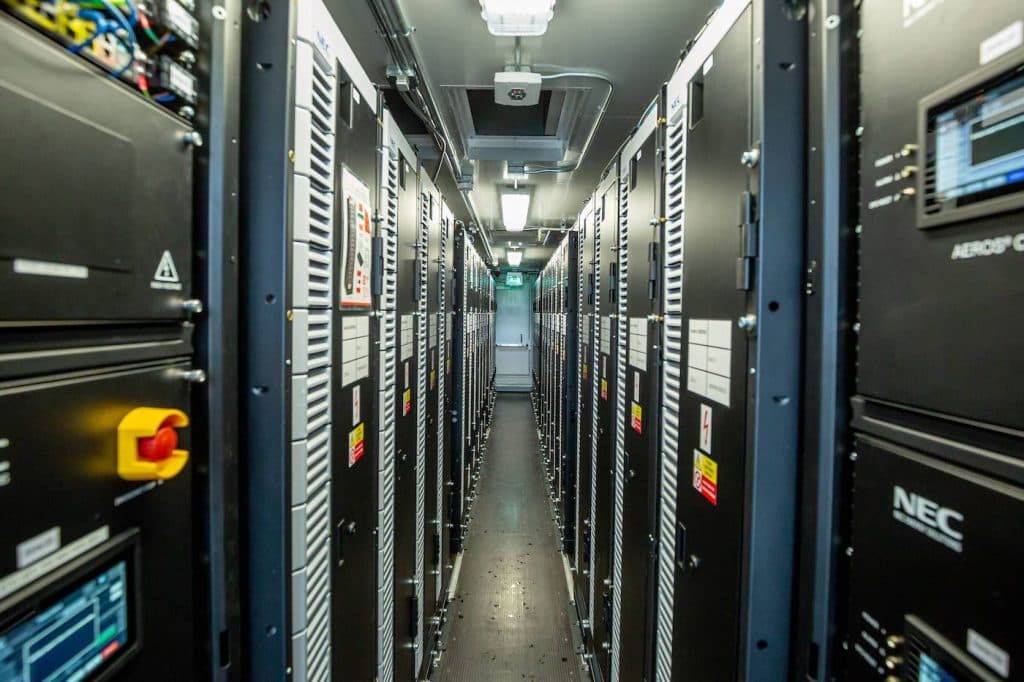
As electricity generation from intermittent renewable sources grows, flexibility in power systems is becoming increasingly important. Battery storage is receiving more and more attention in this regard, as it can help stabilise short-term fluctuations. Spain is no exception: it has ambitious targets in this area, although some experts consider them difficult to achieve. The rapid development of battery storage in the country is being held back by a lack of regulatory support and funding.
The growing installed capacity of solar and wind power plants on the path to decarbonisation is placing ever greater demands on system management. Battery storage can help address short-term fluctuations in their output on a larger scale.
For example, last week Spain raised its storage targets to 22.5 GW by 2030, according to Montel. However, this figure includes not only batteries, but also pumped-storage hydropower plants and solar thermal power plants.
According to consultancy Aurora, however, the country had just 30 MW of battery storage capacity as of June this year. Other European countries are doing considerably better, including Germany with 1.4 GW and the United Kingdom with 3.5 GW. Battery storage requires relatively high investment, which is reflected in the level of risk associated with these projects. Given the uncertainty over project profitability, developers may therefore encounter difficulties securing financing from banks.
“It is very difficult to finance projects in Spain,” Rodrigo Garcia, an analyst at Optimize Energy, told Montel.
According to him, banks are highly sceptical about projects, particularly regarding future revenues from the provision of ancillary services. At present, he said, battery storage cannot participate in this market in Spain.
In other European countries, battery storage developers can optimise revenues through trading on the day-ahead or intraday markets, as well as from providing ancillary services, or secure stable income from capacity payments. However, not all of these options are available in Spain.
Capacity mechanisms are one way to support flexibility providers in the market, including battery storage. According to Montel, Spain plans to approve the introduction of such a mechanism by the end of this year. Garcia also says batteries can improve the economics of operating solar power plants, whose output increasingly has to be curtailed.
Growing battery capacity could lead to cannibalisation
However, the rapid development of battery storage could itself be held back, due to so-called cannibalisation. This phenomenon is already evident in some markets for solar and wind power plants, where revenues from electricity sales fall as the installed capacity of these sources grows.
While such concerns are not currently warranted for batteries, some experts say the effect could become pronounced over the next 10 to 15 years. This may also be why banks are reluctant to finance projects in Spain, particularly in the absence of established capacity mechanisms.
Translation disclaimer
This article is a machine translation of the Czech original and has not yet been fully reviewed. In case of any doubt, please refer to the Czech version.
Sdílejte článek prostřednictvím:
You might also like


23 October 2026, 11:01


23 October 2026, 06:34