The number of solar batteries in Germany doubled last year to more than one million

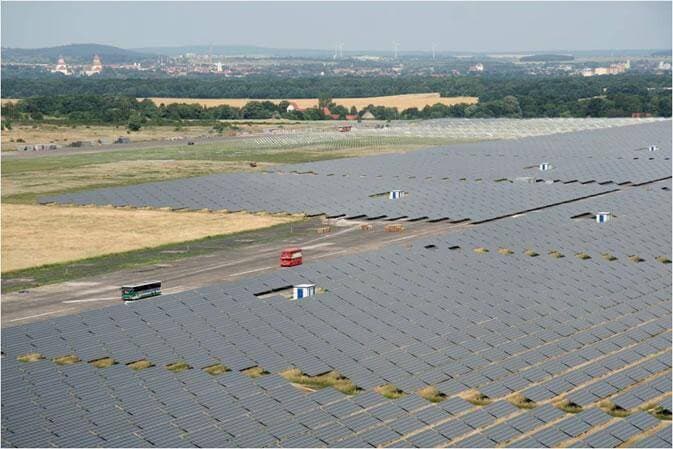
The total number of batteries installed as part of photovoltaic systems in Germany, as well as their storage capacity, doubled last year. Batteries are now standard when installing rooftop solar systems, the German Solar Industry Association (BSW) reports.
Germany has reached 1.2 million battery systems installed as part of photovoltaic installations, with storage capacity now standing at approximately 12 GWh. More than half a million new “solar” batteries were installed in Germany in 2023. This is according to a preliminary annual assessment by the German Solar Industry Association, based on data from the German grid regulator.
“Battery storage systems are now standard when new solar systems are installed on private buildings. More and more companies are also storing solar energy generated on their own rooftops so they can use it around the clock,” explains BSW Managing Director Carsten Körnig.
BSW regretted that policymakers continue to underestimate the potential of battery storage and that market barriers are still slowing its expansion. BSW welcomed the proposals by the Federal Ministry for Economic Affairs and Climate Action (BMWK) to develop an electricity storage strategy, published in December. However, it said the proposal does not address the key strategic questions concerning the role of batteries in the future electricity system.
According to the association, storage systems should be considered a central pillar of the electricity system, on a par with generation, grids and consumption. BSW sees Federal Minister for Economic Affairs Robert Habeck’s storage strategy as the start of an intensive debate on integrating storage systems into the electricity system.
As the share of renewables in electricity generation grows as part of the energy transition, finding ways to use electricity surpluses will become an important part of the energy system of the future. This will be especially true in Germany, which plans to cover 80% of its electricity consumption with renewable energy sources by 2030. During periods when conditions are favorable for wind and solar power generation, their output will often dramatically exceed electricity consumption.
Translation disclaimer
This article is a machine translation of the Czech original and has not yet been fully reviewed. In case of any doubt, please refer to the Czech version.