This week, we once again bring you a carefully selected list of the ten most important articles we published on oEnergetice.cz. If you missed any of them, here is a selection of the articles that attracted the most interest from our readers. Best of luck for the week ahead!
The Chamber of Deputies may ban the use of devices that dissipate surplus energy, with penalties of up to five million crowns. This is proposed by an amendment from Minister of Industry and Trade Lukáš Vlček (STAN), which the Economic Affairs Committee today recommended adding to an amendment to the Energy Act known as lex plyn. The bill is intended to speed up the construction of combined-cycle gas power plants and could shorten permitting processes by up to five years. Combined-cycle plants are expected to provide sufficient electricity generation capacity as coal is phased out.
Over the past year, distribution companies have recorded a significant increase in applications to connect so-called electricity dumpers to distribution grids, driven by negative electricity prices on the market. These devices convert electricity into heat without making further use of it. Vlček’s amendment would ban the use of electrical equipment “if effective further use is not made of the electricity consumed by that equipment”. The specific options for using this electricity would be set out in a decree.
It is becoming harder for generators in Nordic countries to secure long-term PPAs because of low electricity prices. Generators prefer pay-as-produced contracts, but their returns are too low to incentivise investment in new renewable energy projects. In Czechia, renewable energy sources rely more on state support than on PPAs.
Energy producers in Nordic countries are finding it increasingly difficult to agree long-term power purchase agreements (PPAs). The problem is low wholesale electricity prices and falling capture rates for renewable energy sources (RES)—that is, the ratio of the average electricity price under a contract to the average market electricity price.
The lifetime of nuclear power plants is one of their key parameters, given the high cost of construction. While many existing units were designed to operate for 40 years, extending their lifetimes has become a strong trend in recent years. Many nuclear units built in the 1980s could therefore operate for 50 or even 60 years. Russia’s Rosatom says that new materials and technologies should enable modern reactors to operate for up to 100 years.
Building a nuclear power plant is typically a huge undertaking, costing hundreds of billions of crowns. The planned lifetime of a plant is therefore one of the important factors determining its economic viability. The reactor pressure vessel is a key component of a nuclear power plant, and its lifetime typically determines the lifetime of the whole facility.
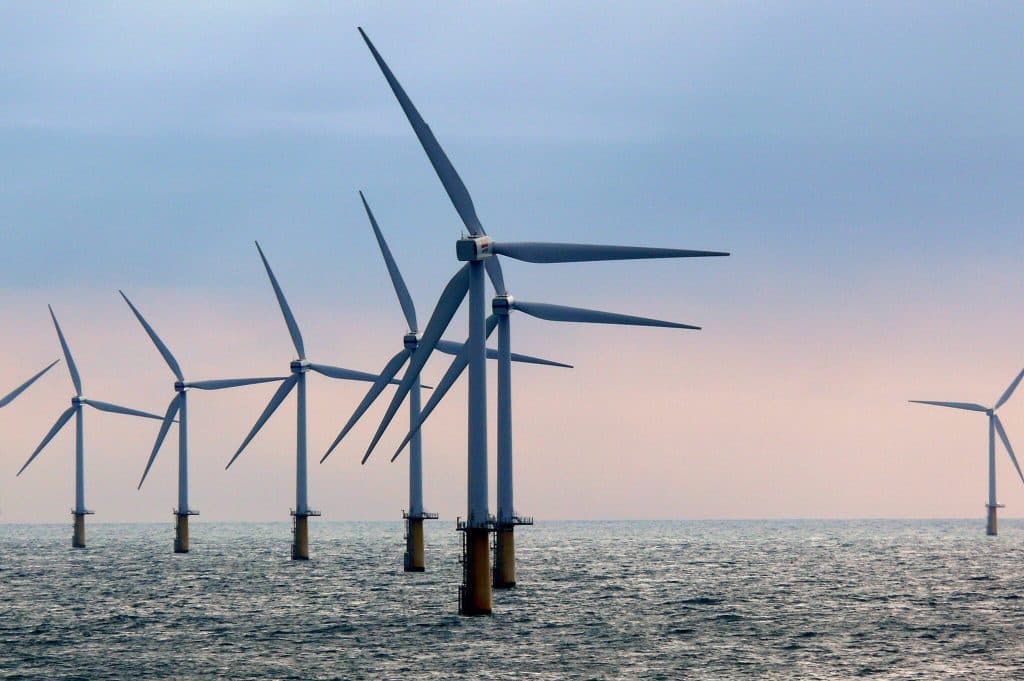
The EU’s largest offshore wind farm is set to be built over the next few years around 30 kilometres north of the Polish resort town of Łeba. Baltica 2 is a joint project between Poland’s partly state-owned PGE (Polska Grupa Energetyczna) and Danish corporation Ørsted, with the two companies set to own and operate it on an equal basis.
The wind farm itself received the necessary environmental permits in 2020, with permits for related infrastructure following two years later. Another milestone was the grid connection agreement with Poland’s transmission system operator PSE. As transmission systems become saturated with new renewables, grid connections are often the main “brake” on new projects.
Finland’s first green hydrogen plant, and one of the first in Europe, has begun commercial operation. The 20 MW plant in Harjavalta is being developed by P2X Solutions, which has also announced plans to build similar facilities at several other locations in Finland.
The start of commercial operations at the green hydrogen plant in Harjavalta marks a significant milestone in the development of Finland’s hydrogen economy. A methanation unit is also planned for the site, enabling the production of synthetic methane.
Škoda Auto, working with ŠKO-ENERGO and ČEZ ESCO, installed thousands of solar panels on its manufacturing and logistics buildings in Mladá Boleslav. They are now up and running, generating clean solar power. A key figure in the rooftop solar project is Aleš Staněk, an electrical projects, measurement and control specialist in the Planning and Project Management department. He led the progress meetings and was responsible for ensuring the project ran smoothly, that all parties involved worked together, and that the work was completed to a high standard.
You have been with ŠKO-ENERGO for more than six years, and you were put in charge of this project soon after joining. Was it something of a baptism of fire, given the scale of the undertaking?
You could say the project lasted almost my entire career at ŠKO-ENERGO so far. It wasn’t originally supposed to take that long, but, as tends to happen with major construction projects, it ran over schedule for various reasons, whether because the designer changed or deliveries from subcontractors were delayed. It’s the most challenging project I’ve ever worked on. I’m glad we completed it successfully. Škoda Auto began taking electricity from the panels in November 2023.
Last year was a record year for newly approved wind turbines in Germany, news channel CNBC reported. The country is due to hold federal elections in less than a week, which will offer an indication of Germany’s future direction. It is no secret that the dark horse in the upcoming election, the Alternative für Deutschland (AfD) party, has little sympathy for wind turbines.
In 2024, Germany approved a total of 2,405 new turbines with a capacity of 14 056 MW. Another 1,890 turbines with a combined capacity of almost 11 GW secured support in auctions. However, installed capacity actually increased by only a fraction of that amount: 635 turbines with a total capacity of around 3.2 GW were connected to the grid. Germany’s total installed onshore wind capacity rose to around 63.4 GW.
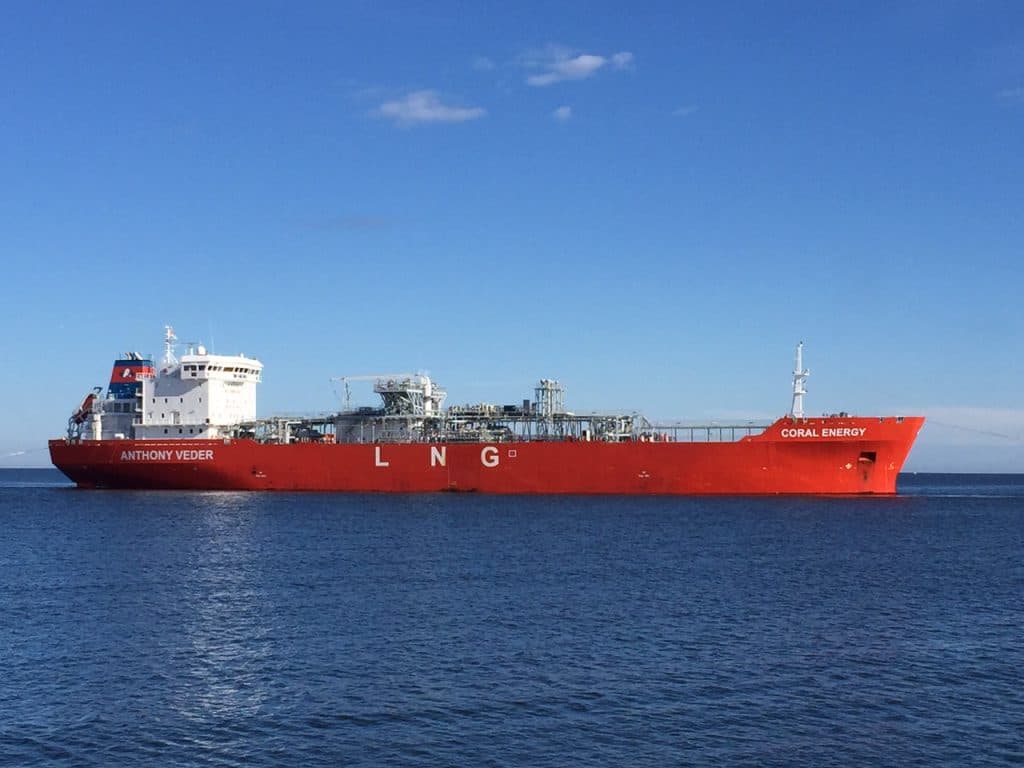
The Trump administration has announced that it has conditionally authorised LNG exports from a huge project in Louisiana. It is the first new LNG export authorisation since former President Joe Biden paused the issuing of such licences a year ago.
Commonwealth LNG, which has been waiting for approval longer than any other company, plans to build an export terminal in Louisiana with an annual capacity of 9.5 million tonnes of LNG. It would sell the liquefied gas to countries that do not have a free trade agreement with the US. In that case, the project requires federal government approval.
The need to modernise road infrastructure is one of the issues raised in connection with planned nuclear power plant construction and the transport of oversized components. But wind farm construction also creates similar needs, as turbines grow ever taller and their blades ever longer. Northern Germany faces the same question, as its ports are the entry point for most of the wind turbine blades imported into the country. However, the German federal government and its ministries cannot agree on who should bear these additional costs.
As with nuclear power plants, where the capacity of new units has often increased over recent decades to benefit from economies of scale, the same trend is evident in wind power. Taller turbines with longer blades, however, place greater demands on transportation. Several northern German states say their motorways—and, in particular, their exits—are too small for transporting today’s huge blades. Motorway entrances and exits will therefore need to be widened, but it is not yet clear who should pay for the upgrades.
Discussion of our electricity sector is dominated by questions such as “whether and how to protect coal-fired power plants”, and we rely to a considerable extent on building nuclear capacity. The idea is gradually taking hold in public debate that, besides the new Dukovany units, we will achieve this through small modular reactors. Discussions about them are somewhat like those about the Yeti: everyone talks about it, but (almost) no one has seen it (with the exception of China and Russia).
Meanwhile, we are missing the opportunity to invest in technologies that already exist and are cost-effective. Although we jointly secured a requirement in Brussels for countries to grant permits for strategic investments (including renewables, of course) within one year, the reality is that these projects remain almost impossible to deliver. This is especially tragic for wind power, which we urgently need for a balanced energy mix.
At the beginning of 2025, China’s EAST tokamak broke its previous world record for sustaining fusion plasma. For the first time in history, the 1,000-second mark was surpassed. This is another step towards making fusion energy usable. China is working intensively on further facilities and is also taking the lead in this field.
On 20 January 2025, the Chinese EAST (Experimental Advanced Superconducting Tokamak), operated by ASIPP (the Institute of Plasma Physics under the Chinese Academy of Sciences) in Hefei, sustained plasma in so-called H-mode for 1066 s. This broke its own previous record of 403 s, which had surpassed the previous record of 390 s set in 2003 by the French TORE Supra tokamak. These records were discussed in the overview mentioned above. In these experiments, the electron temperature reached and exceeded 100 million degrees, the temperature required for tritium-deuterium fusion reactions.
Data in this chart is also available in 15-minute resolution60min15min
Energostat: electricity generation in Germany
Data in this chart is also available in 15-minute resolution60min15min
Find more up-to-date charts and data on Energostat
Translation disclaimer
This article is a machine translation of the Czech original and has not yet been fully reviewed. In case of any doubt, please refer to the Czech version.