This week, we once again bring you a carefully selected list of the ten most important articles published on the oEnergetice.cz website. If you missed any of them, here is a selection of the articles that attracted the most interest from our readers. Good luck in the week ahead!
South Korea’s Korea Hydro & Nuclear Power (KHNP) has decided to withdraw from the process to select a supplier for two new reactors at the site of the Borssele nuclear power plant in the Netherlands. The move follows the company’s recent decision not to take part in similar tenders in Sweden and Slovenia.
In December 2021, the Dutch government placed nuclear power at the heart of its climate and energy policy. According to preliminary plans, the two new reactors are to be completed around 2035, with each having an installed capacity of between 1000 and 1650 MWe. The reactors are expected to provide around 9–13% of the Netherlands’ electricity generation in 2035. In December 2022, the Dutch government announced that the Borssele site was the most suitable location for their construction.
Hungarian oil and gas company MOL has discovered a new oil field near the town of Somogysámson in western Hungary. The company announced the discovery today in a press release sent to the Czech News Agency (ČTK). Production from the field could reach up to 1200 barrels of oil per day, equivalent to around one percent of the company’s total hydrocarbon production.
Zsombor Marton, MOL Group’s executive vice president for exploration and production, said the discovery was clear evidence of further production potential in Hungary. He added that, thanks to oil deposits in Vecsés and Tura and natural gas fields in eastern Hungary, the company had raised domestic production to its highest level in five years.
Wholesale gas prices for the European market are rising today following reports of an attack on a metering station in Sudzha, Russia. The station used to be an entry point for transporting Russian natural gas through Ukraine and onward to the European Union, until Ukraine halted further transit. Reuters reports.
The price of the key gas futures contract for delivery next month at the Title Transfer Facility (TTF) virtual trading hub in the Netherlands was up by more than two percent shortly before 1 p.m. CET, trading below 44 euros (around 1100 Kč) per megawatt-hour (MWh). The TTF price is a benchmark for gas prices in Europe.
A South Korean company has unveiled a model of a container ship powered by a small modular nuclear reactor (SMR). The new propulsion system aims to reduce the carbon footprint of container shipping. Global shipping consumes around 350 million tonnes of fossil fuels a year and accounts for around 3% of global carbon emissions.
US gas turbine manufacturer GE Vernova has expressed doubts about plans by Germany’s likely future government to bring 20 GW of new gas-fired power plants online by 2030. The company considers the target “very ambitious” and says it faces a number of obstacles.
In a document summarising the results of talks between the likely future German governing coalition, the conservative CDU/CSU alliance and the Social Democrats (SPD) said they plan to build substantially more new gas-fired power plants than the outgoing coalition government, which aimed to build 12.5 GW by 2030. The prospective government wants to use these plants not only as backup power plants but also to stabilise prices.
“As part of a revised power plant strategy, we want to support the construction of up to 20 GW of installed gas-fired power capacity by 2030. These plants are to be built primarily at existing power plant sites,” the document states.
Markus Becker, director of business development at US gas turbine manufacturer GE Vernova, said the permitting process needs to be accelerated to make the planned expansion possible, and clarity must be provided quickly on the framework conditions under which the plants are to be built and operated.
The carbon border adjustment mechanism (CBAM) being introduced by the European Union could have a devastating impact on Ukraine’s steel and iron industries. This is according to a model by Kyiv-based consultancy GMK Center. The authors say it is difficult for Ukrainian companies to meet decarbonisation requirements without EU funding. The European Commission is working on exemptions to mitigate the impact on Ukrainian producers.
The EU’s Carbon Border Adjustment Mechanism could result in Ukrainian export losses of up to 4.7 billion dollars between 2026 and 2030, according to a new study by the Kyiv office of consultancy GMK Center.
Last year, Italy’s recovery and resilience plan provided generous subsidies for agrivoltaics. Some 500 projects, with a combined capacity of more than 1.5 gigawatts, opted to put the dual use of land to the test. However, Italians’ distrust of renewable energy and mafia interests are making things difficult for them.
The vast Murge plateau is one of Italy’s most fertile areas. It is located in the south of the country, near the city of Bari, which has a population of 300,000. It was here, near the town of Laterza, that a group of enthusiasts established a community agrivoltaic vineyard on two hectares in 2008. Their aim is to make farming as economically and environmentally sustainable as possible.
Chinese company BYD has unveiled a new platform for electric vehicles that, it says, will allow them to be charged as quickly as it takes to refuel a petrol car. The company also announced for the first time that it will build a network of charging stations across China, Reuters reports.
The so-called “super e-platform” will be capable of reaching a maximum charging power of up to 1000 kilowatts (kW), allowing cars using it to travel up to 400 kilometres after five minutes of charging, company founder Wang Chuanfu said at an event at the company’s headquarters in Shenzhen. A charging rate of 1000 kW would be twice as fast as Tesla’s Superchargers, whose latest version offers charging speeds of up to 500 kW. Fast-charging technology is considered important for wider adoption of electric vehicles, as it helps ease drivers’ concerns about whether charging their car will take too long.
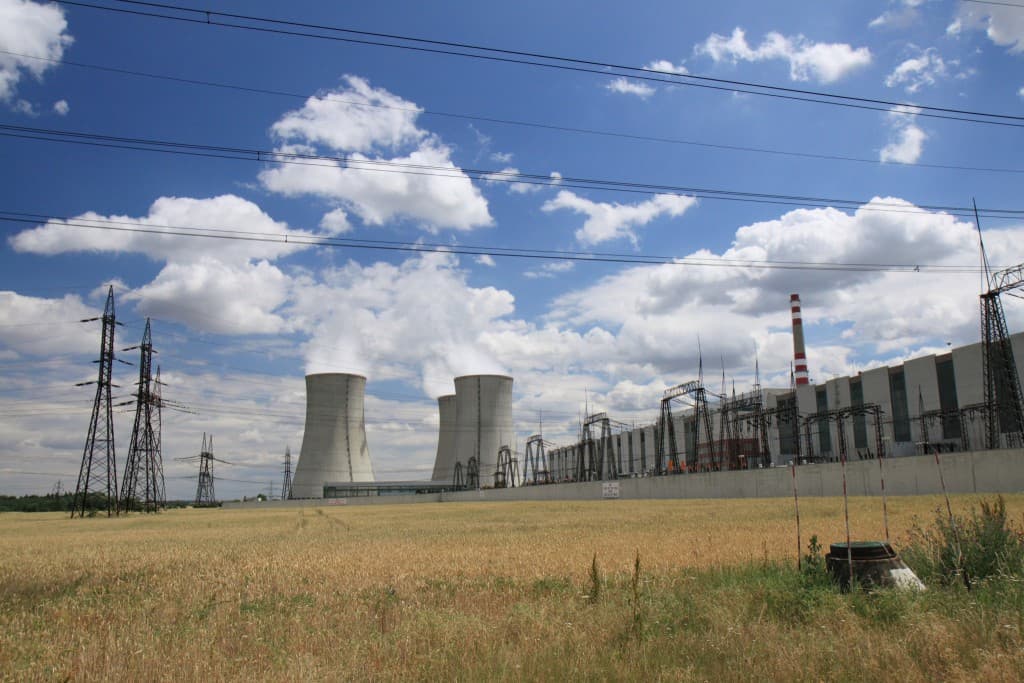
Unit 4 at the Dukovany Nuclear Power Plant is not generating electricity. It has been disconnected from the grid since 13 March for repairs to two valves in the plant’s non-nuclear section. Electricity generation is expected to resume over the weekend, or by Monday at the latest, plant spokesperson Jiří Bezděk told the Czech News Agency (ČTK) today. He said the unit had not been shut down but was in so-called hot standby. Energy workers are scheduled to take Unit 3 at Dukovany offline today to replace part of its fuel and service equipment. The outage is expected to end at the beginning of June. The power plant has four units.
Operators are expected to shut down the reactor of Unit 3 this evening. “Over the weekend, we will cool the unit down. At the same time, we are finishing work on Unit 4, which we briefly disconnected from the grid after bringing it back online for repairs and inspection of two valves in the plant’s non-nuclear section,” plant director Roman Havlín said.
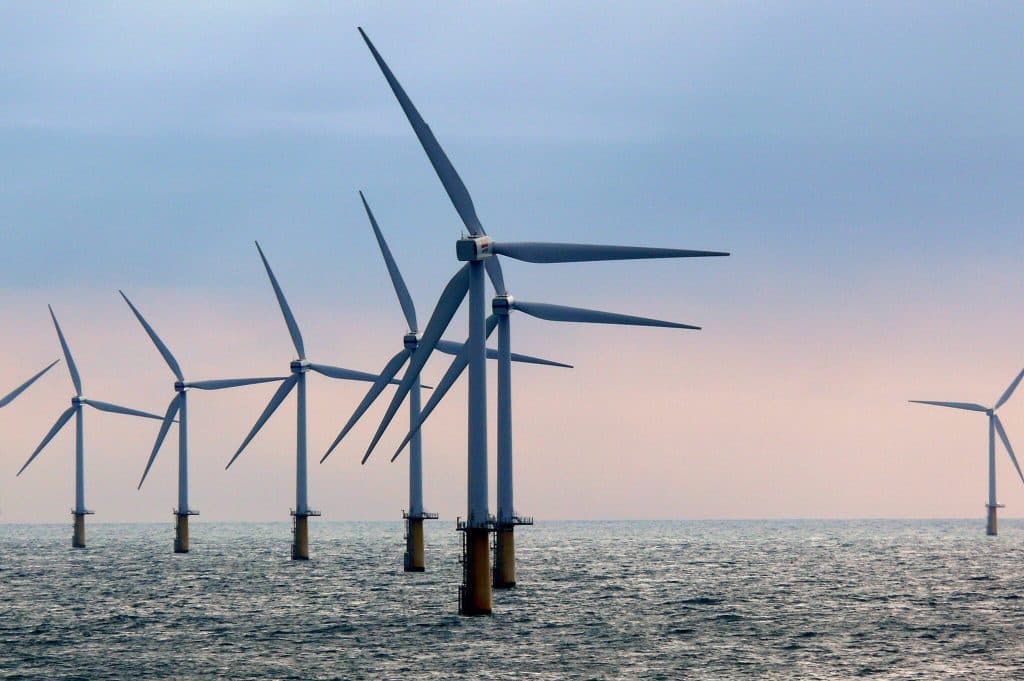
The Sofia offshore wind farm, being built in UK waters, is expected to receive its first turbine soon. The wind farm, with an installed capacity of 1.4 GW, is set to comprise 100 giant wind turbines. It is expected to start generating electricity this year, with completion planned for next year.
Data in this chart is also available in 15-minute resolution60min15min
Energostat: electricity generation in Germany
Data in this chart is also available in 15-minute resolution60min15min
Find more up-to-date charts and data on Energostat
Translation disclaimer
This article is a machine translation of the Czech original and has not yet been fully reviewed. In case of any doubt, please refer to the Czech version.