This week, we once again bring you a carefully selected list of the ten most important articles we published on oEnergetice.cz. If you missed any of them, here is a selection of the articles that attracted the most interest from our readers. Good luck in the new week!\n
\n\nAlthough Ukraine managed to slightly increase its domestic natural gas production last year, the situation has changed in recent months. The country continues to face Russian attacks on its energy infrastructure, which are also affecting natural gas supplies. Domestic production is now insufficient to meet all demand, so Ukraine also has to import natural gas. According to the country’s central bank, it will need to spend nearly $3 billion on gas purchases this year.\n\nLow natural gas storage levels and damage to production infrastructure from Russian missile and drone attacks are forcing Ukraine to import gas. According to Reuters, Russian attacks during last winter and this spring knocked out at least 40% of Ukraine’s gas production capacity. Some of the damaged production facilities have returned to operation, but domestic production is still insufficient to meet all demand.\n\nRead the full article HERE.\n\n
\n\nTwo days after the worst power outage in Spain’s history, its cause remains unclear. The exceptional event has sparked a debate about renewable energy in the country. Spanish energy company Red Eléctrica (REE) itself pointed to a loss of photovoltaic generation in the southwest of the country shortly before Monday’s blackout, also fuelling calls from the local opposition not to shut down nuclear power plants, newspaper El País reported today.\n\nREE, whose largest shareholder is the Spanish state, said on Tuesday that it had recorded two incidents involving a loss of power generation in the southwest of the country around midday on Monday, probably at solar power plants. According to Spanish television, REE said this caused the system to disconnect from the European grid and may have led to the blackout, adding that the cause of the incidents is unclear. REE ruled out a cyberattack, while the Spanish government, which also convened a meeting of the national security council today, has refused to speculate about the cause. The government has also pledged to do everything it can to prevent a recurrence.\n\nRead the full article HERE.\n
\n\nAround 12:30 today, a power outage affected mainland Spain, stopping metro services in Madrid and Barcelona and disrupting rail services in various parts of the country. Spanish media reported the news. The cause of the outage is unknown, and it is not yet clear how many people were affected. Power outages were also reported in Portugal, whose government did not rule out a cyberattack. According to El País, the outage did not affect the Spanish islands of the Canaries or the Balearics.\n\nSpanish energy company Red Eléctrica announced that electricity consumption in Spain fell by half around 12:30 and that it had activated an emergency plan. An hour later, the company said it was gradually restoring electricity supplies.\n\nRead the full article HERE.\n
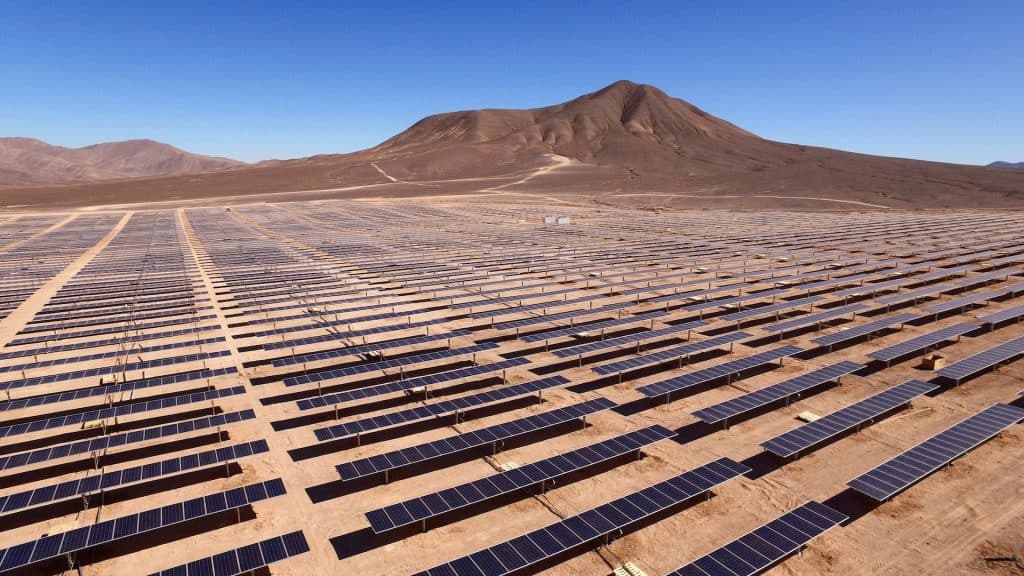
China led the way in solar power plant installations in 2024. In just one year, the country added 277 GW of installed capacity from large solar power plants—roughly four times as much as the European Union. Projects in the Kubuqi Desert in the northeast of the country are particularly striking; due to their scale and location, they have been dubbed the Great Solar Wall.
\n
According to preliminary estimates by China’s National Energy Administration, installed capacity from so-called utility-scale solar power plants—those with an installed capacity of more than 1 MW—exceeded 880 GW in China in 2024. China therefore has more large solar power plants than any other country.
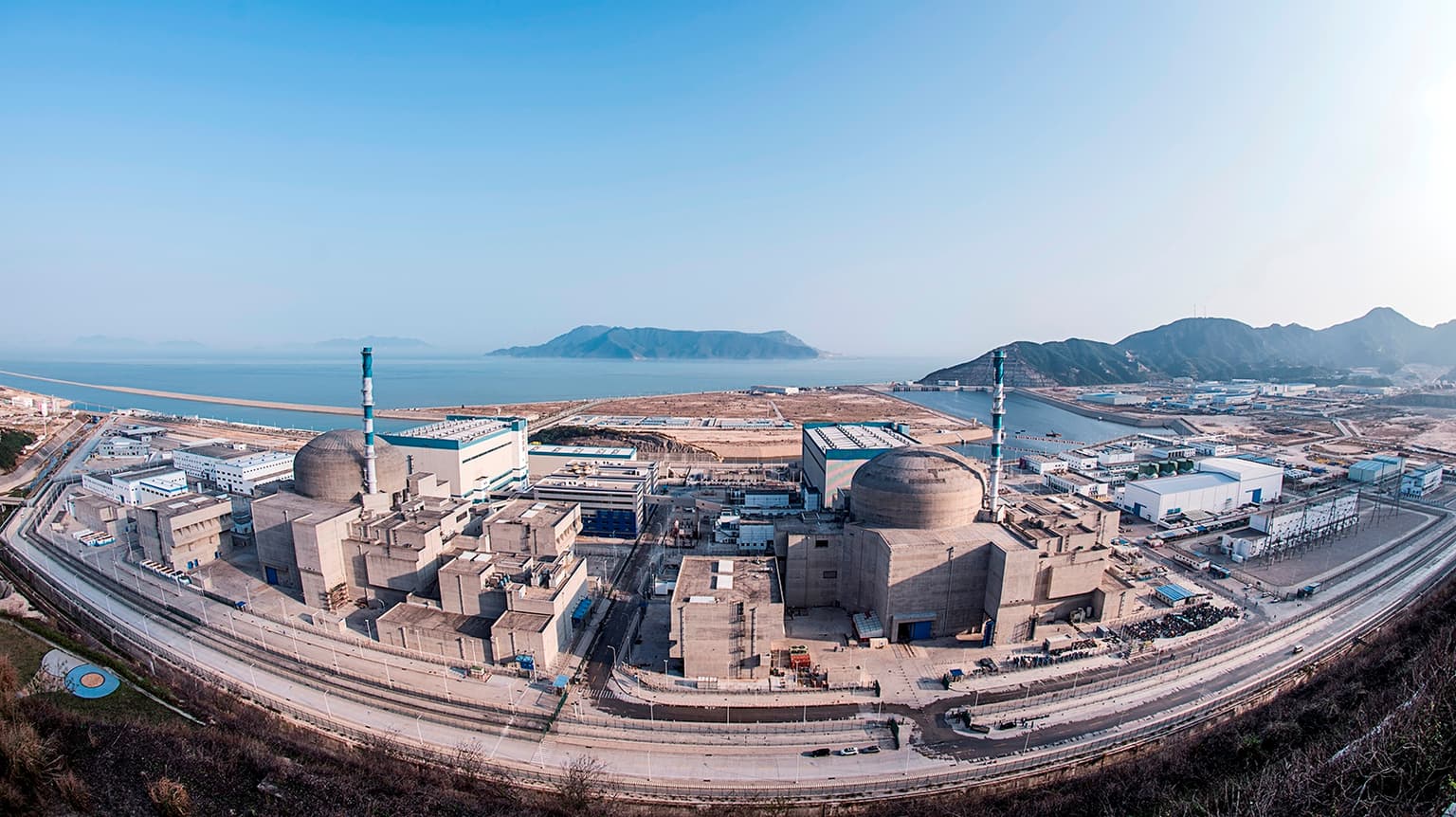
\n\nChina’s State Council approved five nuclear power plant construction projects—Fangchenggang Phase III, Haiyang Phase III, Sanmen Phase III, Taishan Phase II and Xiapu Phase I—with a total of ten reactors. Eight of them will be Hualong One reactors. The construction decision was made on April 27 at a State Council meeting.\n\nChina General Nuclear (CGN) announced that it had received approval to build the second phase (Units 3 and 4) of its Taishan nuclear power plant in Guangdong province and the third phase (Units 5 and 6) of the Fangchenggang plant in the Guangxi Zhuang Autonomous Region. All four new units will use HPR1000 (Hualong One) pressurised water reactor technology.\n\nRead the full article HERE.\n
\n\nEuropean transmission system operators assessed alternative configurations of bidding zones in Europe. While no changes were proposed in the Nordic region, the study identifies specific configurations in Central Europe that would bring economic benefits and, among other things, proposes splitting Germany’s bidding zone. The study notes, however, that implementing a change to the current configuration requires a more in-depth political and economic assessment. A major weakness of the study is its use of outdated data.\n\nThe European Network of Transmission System Operators for Electricity (ENTSO-E) published its Bidding Zone Review (BZR) for the target year 2025.\n\nRead the full article HERE.\n
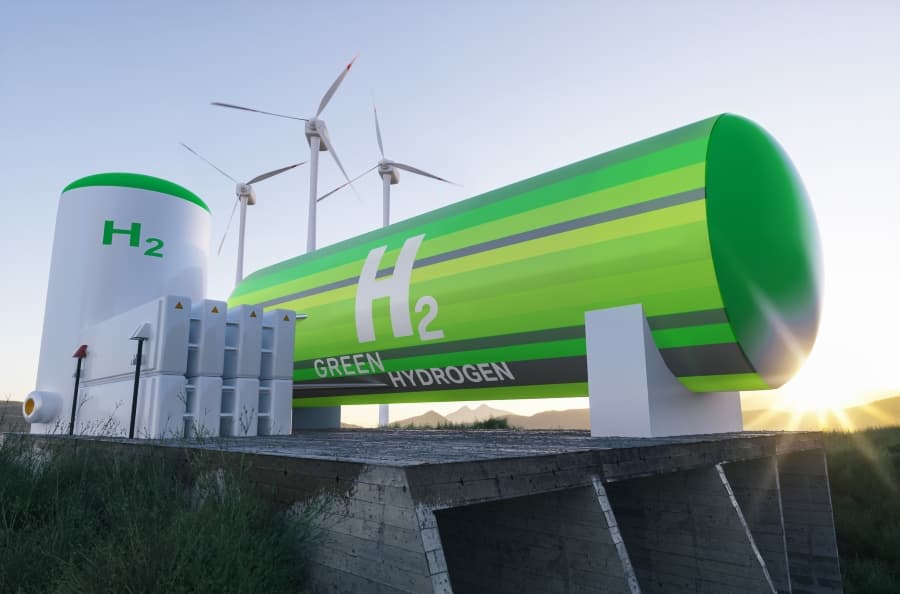
\n\nOn April 25, the Dutch government announced approval of a major package of measures worth 11.4 billion euros ($13 billion), aimed at accelerating the country’s energy transition and boosting the competitiveness of domestic industry. The package includes support for the production and use of green hydrogen, with 2.1 billion euros ($2.4 billion) allocated to subsidies for domestic hydrogen production. The country will also introduce a mandatory 4% share of renewable hydrogen in industrial applications, the H2 View website reports.\n\nOn April 25, the Dutch government announced approval of a major package of measures worth 11.4 billion euros ($13 billion), aimed at accelerating the country’s energy transition and boosting the competitiveness of domestic industry.\n\nRead the full article HERE.\n
\n\nThe United Kingdom intends to buy back three nuclear power plants from French state-owned EDF. The plan to acquire two existing nuclear plants and one former nuclear site was revealed by Brussels-based Politico, citing unnamed government sources and representatives of the UK energy sector. The move is part of a broader UK government plan aimed at a nuclear “renaissance.” Despite the leak, London has so far categorically denied the reports, according to the UK Department for Energy Security and Net Zero.\n\nAccording to Politico’s sources, discussions are currently taking place both within the UK government and at an intergovernmental level.\n\nRead the full article HERE.\n
\n\nThe Ministry of the Environment and the State Environmental Fund will provide CZK 5 billion to support the construction of photovoltaic power plants and the development of community energy, with a further CZK 2 billion allocated to energy storage. Four new calls for grants from the Modernisation Fund target companies, municipalities, regions and energy communities. Applications for energy storage funding open today and will be accepted until June 2; applications for the other areas will be accepted from July 1 this year until January 30 next year. The Ministry of the Environment announced the news in a press release today.\n\nAccording to Environment Minister Petr Hladík (KDU-ČSL), the newly announced calls can help Czechia “make progress in its energy transformation and strengthen the energy self-sufficiency of industry and public institutions.” He said that in just under four years of the Modernisation Fund’s operation, the ministry had approved support for 2,772 commercial and municipal photovoltaic installations with a capacity of 2,327 megawatt-peak. Together, they will generate clean electricity equivalent to the normal annual consumption of more than 660,000 households.\n\nRead the full article HERE.\n
\n\nUnit 2 of the Vogtle nuclear power plant in the US state of Georgia is operating with new fuel containing a higher proportion of the uranium-235 isotope. Power plants currently use fuel with a 3-5% content, while the new generation of fuel contains 5-10%. The higher concentration of uranium-235 in the fuel will enable longer fuel cycles, reducing the time the unit is offline and not generating electricity.\n\nUS energy company Southern Nuclear announced that, as part of the refuelling of Vogtle 2, it had also loaded new fuel from Westinghouse into the reactor. A total of 4 fuel assemblies containing Low Enriched Uranium Plus (LEU+) pellets have a higher concentration of uranium-235 (U-235) than fuel in standard commercial use.\n\nRead the full article HERE.\n
Energostat: electricity generation in Czechia
\n
Data in this chart is also available in 15-minute resolution60min15min
\n\n
Energostat: electricity generation in Germany
\n
Data in this chart is also available in 15-minute resolution60min15min
\nFind more up-to-date charts and data on Energostat
Translation disclaimer
This article is a machine translation of the Czech original and has not yet been fully reviewed. In case of any doubt, please refer to the Czech version.