24 September 2026, 11:23
Loading...
CO2 emissions from the power sector rose last year, mainly due to drought

Jakub Malý
9 March 2024, 08:48
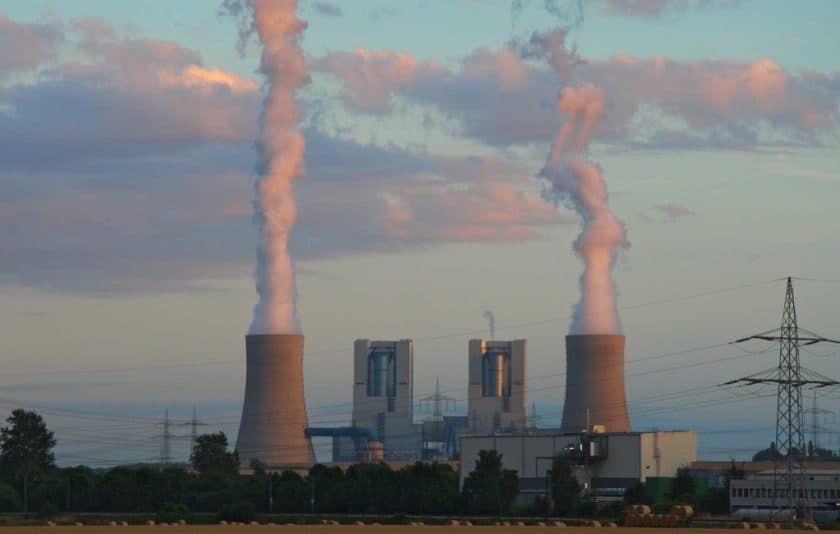
Carbon dioxide emissions from energy sources recorded a slight increase in 2023, reaching an all-time high. This follows from an analysis by the International Energy Agency (IEA).
The increase in emissions last year amounted to 410 million tonnes, representing a 1.1% increase compared to the previous year. This resulted in a record high of 37.4 billion tonnes. The main factor behind this increase was the loss of hydropower generation caused by severe droughts in key economies such as China and the United States. Due to drought, many countries reverted to fossil fuels, with emissions from coal combustion accounting for more than 65% of the reported increase in emissions.
Despite rising overall energy demand, the development of renewable energy sources helped mitigate reliance on fossil fuels. The expansion of clean energy technologies, such as solar photovoltaic panels, wind power and nuclear energy, played a key role in reducing dependence on traditional fossil fuels. Without these sources, the increase in CO2 emissions would have been three times higher, the report says.
China and India, among the largest producers of CO2 emissions in the power sector, experienced similar situations in 2023. Despite continuing to rapidly deploy renewable energy sources, China saw a 4.7% increase in CO2 emissions from the power sector, precisely due to a decline in hydropower generation. The restart of economic growth also contributed to the rise in emissions.
A similar situation could be observed in India, which experienced strong GDP growth. GDP growth coupled with increased electricity demand, combined with weak monsoons and therefore lower hydropower generation, led to an increase in total emissions of around one quarter.
The combination of economic growth and unfavourable conditions for renewable electricity generation can lead to increased electricity production from fossil fuels. This is a situation that has also become familiar in Europe in recent years, as photovoltaic and wind power plants are increasingly integrated into the energy systems of individual countries and their output must be replaced when it is unavailable. Transmission system operators thus have to deal with weather fluctuations almost on a daily basis.
How would more severe drought affect the Czech power sector?
This question must primarily be viewed from two perspectives, which are closely interconnected. The first is the operation of Czech nuclear power plants.
The Dukovany nuclear power plant is supplied from the Dalešice, or Mohelno, reservoir, with storage capacity of 17.1 million m3, which is fed by the Jihlava River. The Temelín nuclear power plant draws water from the Hněvkovice reservoir, with a capacity of 22.2 million m3, which is fed by the Vltava River.
Together, the two plants withdrew 89 million m3 of water in 2023 and returned 30 million m3 to circulation. The Vltava has a significantly higher flow rate, and Temelín is therefore much less threatened by drought. By contrast, the water supply situation for Dukovany was addressed, for example, in the summer of 2018.
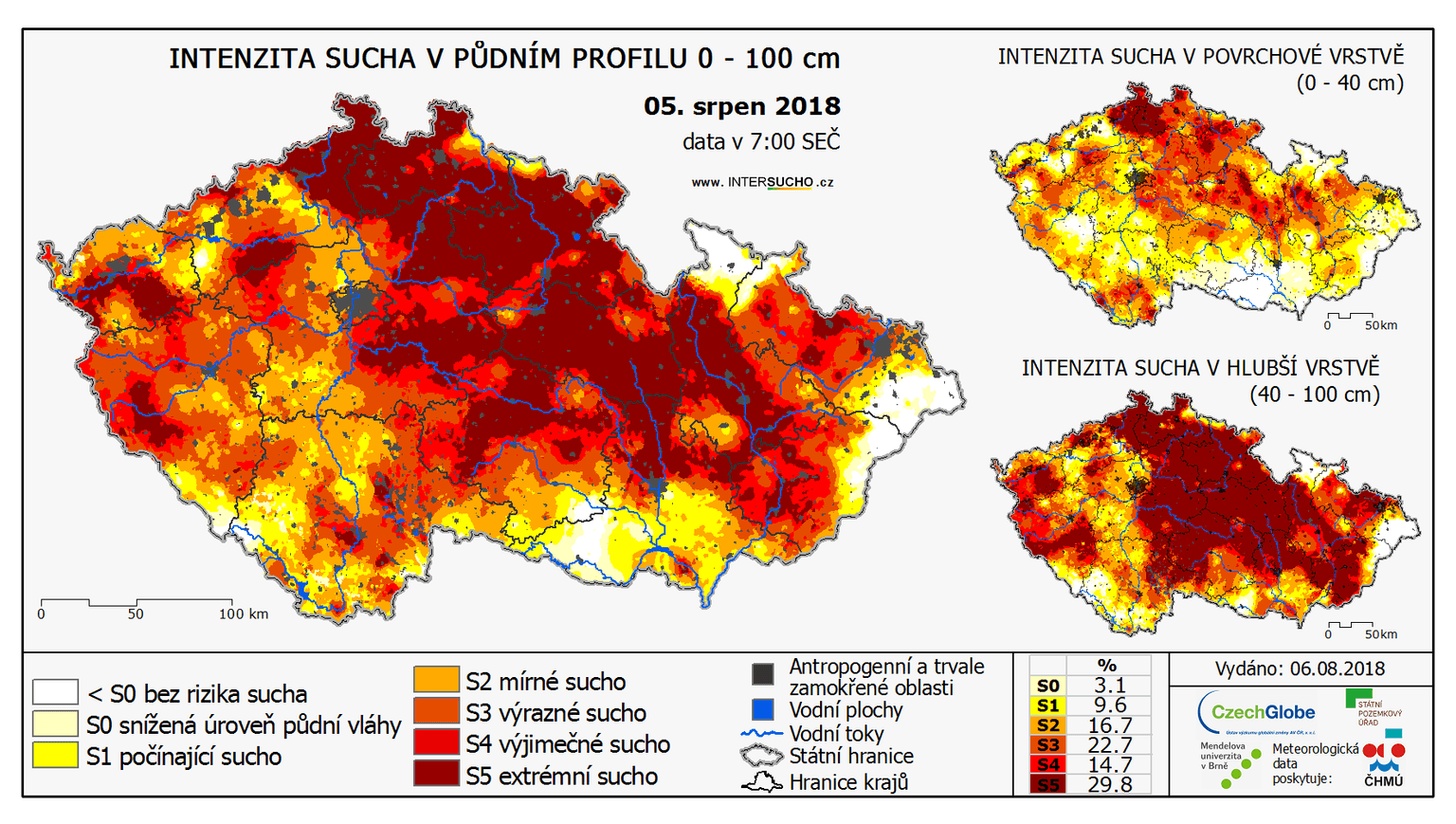
Drought conditions in Czechia, August 2018. Source: Intersucho.cz
At that time, Czechia was hit by heatwaves and the use of water from the mains supply was restricted across virtually the entire country. During this period, inflow to the Dalešice reservoir was 0.7 m3/s, while the minimum residual flow from the reservoir must be at least 0.78 m3/s under an agreement with the Morava River Basin Authority. Dukovany uses just under 2 m3/s for cooling and returns around 1 m3/s to the river. This means that a deficit occurs once inflow from the Jihlava River falls below 1 m3/s.
The question remains how severe and prolonged a drought would have to be, or rather to what level Dalešice would have to fall, for the plant's operational capability to be threatened.
As part of the EIA for the completion of additional units at Dukovany, an assessment was made of whether the new units could be cooled and whether there would be enough water in the Jihlava River. The EIA issued a favourable opinion; nevertheless, at the beginning of 2024, a report emerged that the planned completion of Dukovany would change the type of cooling from wet to dry cooling, which can save up to 70% of the water normally consumed. This is a more capital-intensive system, but it may deliver savings by reducing charges for water withdrawn from the Dalešice reservoir.
Restrictions on electricity generation at nuclear power plants due to heatwaves are nothing new; they most recently occurred in the summer of 2022, including in France. At the same time, the situation was also monitored in Czechia. Heatwaves threaten not only water supplies for power plants, but also reduce their efficiency, as higher temperatures lead to lower efficiency.
The second perspective is the operation of hydropower plants, which are directly affected by drought through reduced river flows. Czechia has several dozen small hydropower plants, along with larger hydropower plants, the best known of which is the Vltava Cascade. A prolonged drought would have slightly different impacts on each of them, with smaller hydropower plants being more vulnerable to generation restrictions.
The dry year of 2018 and statistics on the operation of the Czech electricity system that year from the Energy Regulatory Office can again indicate the direct impacts on electricity generation. Hydropower generation reached 1.63 TWh and, compared with 2022 generation of 2.09 TWh, was 22% lower.
If electricity generation from hydropower sources were to decline further by high single-digit percentages due to a lack of water, this would probably not represent a noticeable loss for the Czech energy system. However, in combination with possible restrictions on generation at nuclear power plants, it could constitute a more significant shortfall.
Translation disclaimer
This article is a machine translation of the Czech original and has not yet been fully reviewed. In case of any doubt, please refer to the Czech version.
Sdílejte článek prostřednictvím:
You might also like
24 September 2026, 10:30
24 September 2026, 06:56
23 September 2026, 17:27