23 October 2026, 14:38
Loading...
Natural disasters push up insurance costs. Households and public budgets pay the price
Klára Čeperová
5 August 2026, 12:52
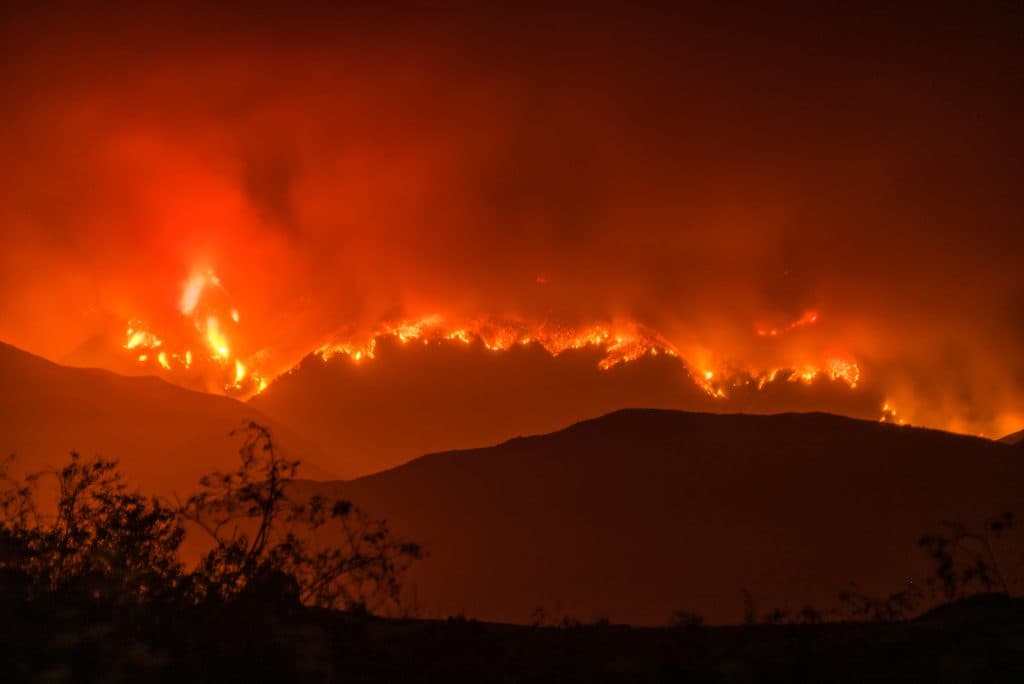
While wildfires threatened the outer suburbs of Bordeaux and Madrid last week, Europe once again faced an uncomfortable reality. A rapidly warming planet threatens to make some parts of the continent uninsurable.
Record wildfires that forced hundreds of thousands of people from their homes, destroyed natural ecosystems and threatened cities previously considered resilient to wildfires are just the latest in a series of climate-related natural disasters forcing policymakers to rethink how risks are managed.
"What is happening in Europe this summer is not exceptional. These heatwaves and wildfires are part of a significant global increase in extreme weather events, which are imposing real costs on households, businesses and governments," said Agnès Bénassy-Quéré, deputy governor of the French central bank.
Wildfires on the rise
Extreme weather events are already costing European governments, which often face funding shortages, enormous sums in damage repairs. European Environment Agency data show that climate and weather extremes caused economic losses exceeding EUR 200 billion between 2021 and 2024.
According to Nikhil da Victoria Lobo, who leads property and casualty reinsurance at Swiss Re for Western and Southern Europe, the Middle East and Africa, wildfires are the fastest-growing weather risk in the world, although they still account for only a relatively small share of insurance claims in Europe.
"Insurance claims caused by wildfires in Europe have grown in real terms by an average of 8 to 11 percent a year since 1970," Nikhil Lobo added.
The recent situation in the suburbs of Bordeaux and Madrid is one example of how extreme weather events could make some at-risk areas uninsurable in the future.
Insurers, meanwhile, are raising premiums and withdrawing from the market entirely in some high-risk areas, shifting the costs of uninsured losses onto governments and individuals.
"In Europe, 75 percent of losses caused by natural disasters are uninsured," said Ariel Le Bourdonnec of non-profit organisation Reclaim Finance, citing data from the European Insurance and Occupational Pensions Authority (EIOPA). According to the Insurance Europe association, floods and storms represent the highest costs for insurers, followed by extreme heat and wildfires."There is a share of losses that is not covered by insurance, and this share is constantly growing. On the other side are insurers, whose profits continue to rise," Le Bourdonnec concluded.
According to Politico.eu, which reported the story, there are two options: governments either intervene and protect citizens from sharply rising insurance premiums at the cost of a greater burden on public budgets, or people will remain unprotected if their homes are flooded or destroyed by fire.
The growing risk has prompted the European Central Bank (ECB) and the European insurance regulator to call on Brussels to take a more active role by creating a Europe-wide reinsurance system and a public fund for natural disasters.
More disasters, higher premiums
The cumulative impacts of climate disasters are increasing pressure on insurers. With each additional disaster, primary insurers must raise premiums to avoid losses on new policies.
"In some parts of Europe, extreme risks are becoming a reality. Even reinsurers, which are supposed to protect insurers themselves, are stepping back, reducing the scope of coverage or increasing deductibles," said Thierry Langreney, president of climate organisation Les Ateliers du Future.
According to SKÅL International, an organisation representing the tourism industry, insurance premiums for tourism businesses in fire-prone areas of Spain have risen by an average of 15 percent a year over the past five years. In Italy, premiums for coastal properties had risen by 25 percent over five years by 2022 due to more frequent storms and flooding.
According to French insurance association France Assureurs, household insurance premiums rose by 7.8 percent in 2025, while the surcharge for climate disasters, which does not include wildfires, increased by 66 percent.
For now, most people in France can take out home insurance anywhere in continental France without major difficulty. However, the public reinsurer is seeing the first signs of strain in some cities, where insurance is becoming difficult to obtain or financially unaffordable.
Insurance costs are therefore gradually exceeding the means of households and businesses, widening the gap between economic losses caused by natural disasters and insurance-covered losses. For comparison, according to Aon, around half of global economic losses caused by natural disasters were insured last year.
"There is a real risk that this already substantial gap will widen further as the number of natural disasters increases, with serious consequences for people's everyday lives and the economic activity of affected regions," EIOPA Chair Petra Hielkema said at a climate risk conference in April.
Translation disclaimer
This article is a machine translation of the Czech original and has not yet been fully reviewed. In case of any doubt, please refer to the Czech version.
Sdílejte článek prostřednictvím:
You might also like


23 October 2026, 11:01
23 October 2026, 06:34