EP approves industrial emissions cuts, member states are next

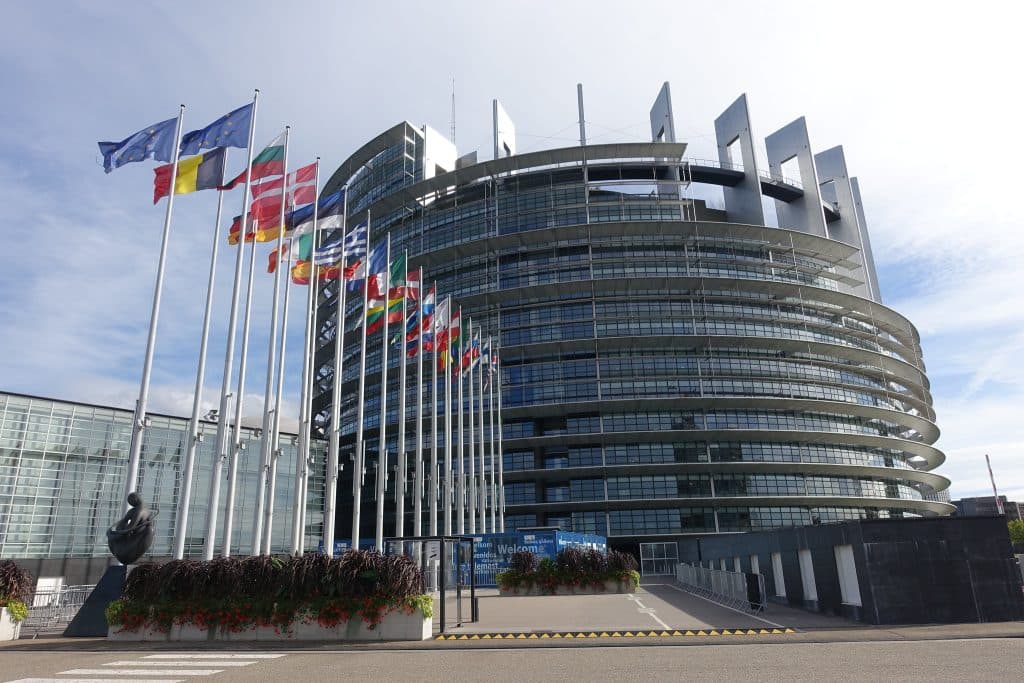
On Tuesday, 21 November, the European Parliament voted to approve a new version of the Net-Zero Industry Act, which now covers a total of 17 technologies, including nuclear energy. The Act will now go to the Council of the European Union, where ministers from the member states will discuss its final form. The final list of technologies covered by the Act is likely to be shorter than it is now.
EU lawmakers, led by the conservative European People's Party (EPP), the liberal Renew group and the Socialists and Democrats (S&D), adopted their position with 376 votes in favour, 139 against and 116 abstentions.
The EU's proposed Net-Zero Industry Act (NZIA), which aims to achieve annual production of net-zero technologies equivalent to 40% of the EU's needs by 2030 and secure a 25% share of the global market, was originally presented in March. It will now be submitted to EU member states in the Council of Ministers in early December, where they are expected to agree on its final form.
Since it was presented by the European Commission in March this year, the text has undergone several major revisions. It originally covered only 10 technologies and contained two separate priority lists, the first considered “strategic” and the second serving only as a supplement. During an October vote, however, Parliament's Industry Committee (ITRE) abandoned the idea of a two-tier list and allowed for the inclusion of nuclear energy, including future technologies such as small modular reactors as well as conventional reactors, which had initially been excluded.
The 17 technologies covered by Parliament's text include renewable energy (wind and solar), nuclear energy (fission, fusion and the fuel cycle), energy storage, the capture, transport, injection, storage and use of carbon dioxide, methane and nitrous oxide, hydrogen (transport, electrolysers, fuel cells, propulsion, production and refuelling infrastructure), alternative fuels, biomethane, electric vehicle charging, heat pumps, energy efficiency, heat distribution and electricity grids, thermonuclear fusion, electrification and highly efficient industrial processes for energy- and carbon-intensive industries, biomaterial production and recycling.
The right to choose one's own energy mix?
As some MEPs had already questioned the need to open the field to so many technologies before the vote, the Act is likely to encounter resistance from certain member states.
The first talks between the European Parliament, the Council and the European Commission are scheduled for December. However, if no workable position is reached in trilogue negotiations by the end of January, talks are likely to be postponed until June 2024 because of the upcoming European elections.
“There is a risk that the Council will call for a much narrower list,” noted Christophe Grudler, Renew's rapporteur on the text.
The technologies most likely to be contentious include biomaterial recycling and nuclear technologies. For example, “Austria's position on nuclear energy remains unchanged,” an EU diplomat told Euractiv.com, suggesting that Vienna would try to exclude it from the NZIA.
Some environmental groups also support the idea of a more restrictive list that would exclude nuclear energy and carbon capture and storage technologies, which they consider too uncertain.
Translation disclaimer
This article is a machine translation of the Czech original and has not yet been fully reviewed. In case of any doubt, please refer to the Czech version.




