24 September 2026, 11:23
Loading...
Industry groups: EU target changes are only partial concessions, do little to solve problems for Czech industry

oEnergetice.cz, ČTK
5 November 2025, 12:36
The agreed changes to EU climate policy are merely partial concessions, and the risk of major problems and a loss of competitiveness for Czech and European industry persists, the Czech Chamber of Commerce and the Confederation of Industry and Transport said today in assessing the outcome of EU ministers’ talks. In their view, this is so far more of a postponement of certain problems until later. They also stressed that the conditions set out in legislation will be crucial. This follows from comments by both organisations for the Czech News Agency (ČTK). The Czech District Heating Association said the delay extends the preferential treatment of households that produce their own heat from fossil fuels.
EU member states today approved the European Union’s new 2040 climate target. The goal remains a 90 percent reduction in emissions by 2040 compared with 1990, as proposed by the European Commission, although some countries, including the Czech Republic, negotiated certain concessions. One of them is that the new ETS 2 emissions trading system, which is also set to cover road transport and heating, will be delayed by one year and launched in 2028. Environment Minister Petr Hladík (KDU-ČSL) described as another key concession the fact that the 2040 target will be reduced to 85 percent for the EU as a whole, without binding shares for individual countries, while up to five percent of emissions reductions may be achieved through international credits from third countries.
The Czech Chamber of Commerce welcomed the negotiated partial concessions, but is not satisfied. "ETS 2 needs a thorough review, not merely a one-year postponement of the problem," said Lenka Janáková, director of the Chamber of Commerce’s legislation, legal affairs and analysis department. According to her, reducing the climate target to 85 percent and allowing emissions reductions through international credits amounts to a real easing of ambition by two percentage points. "However, it is unclear what happens if the credits do not account for the full five percent; pressure on domestic measures will then increase," Janáková said.
Conversely, the Chamber welcomed the promise of higher free allocation of allowances for Czech industry after 2028. "For now, however, it is only a promise; the specific benefit will only become clear with the actual adjustment of free allocation," Janáková noted. She also positively assessed the emphasis on the geographical balance of investments from the Innovation Fund, but said that the conditions for drawing support, which differ among individual member states, remain a barrier.
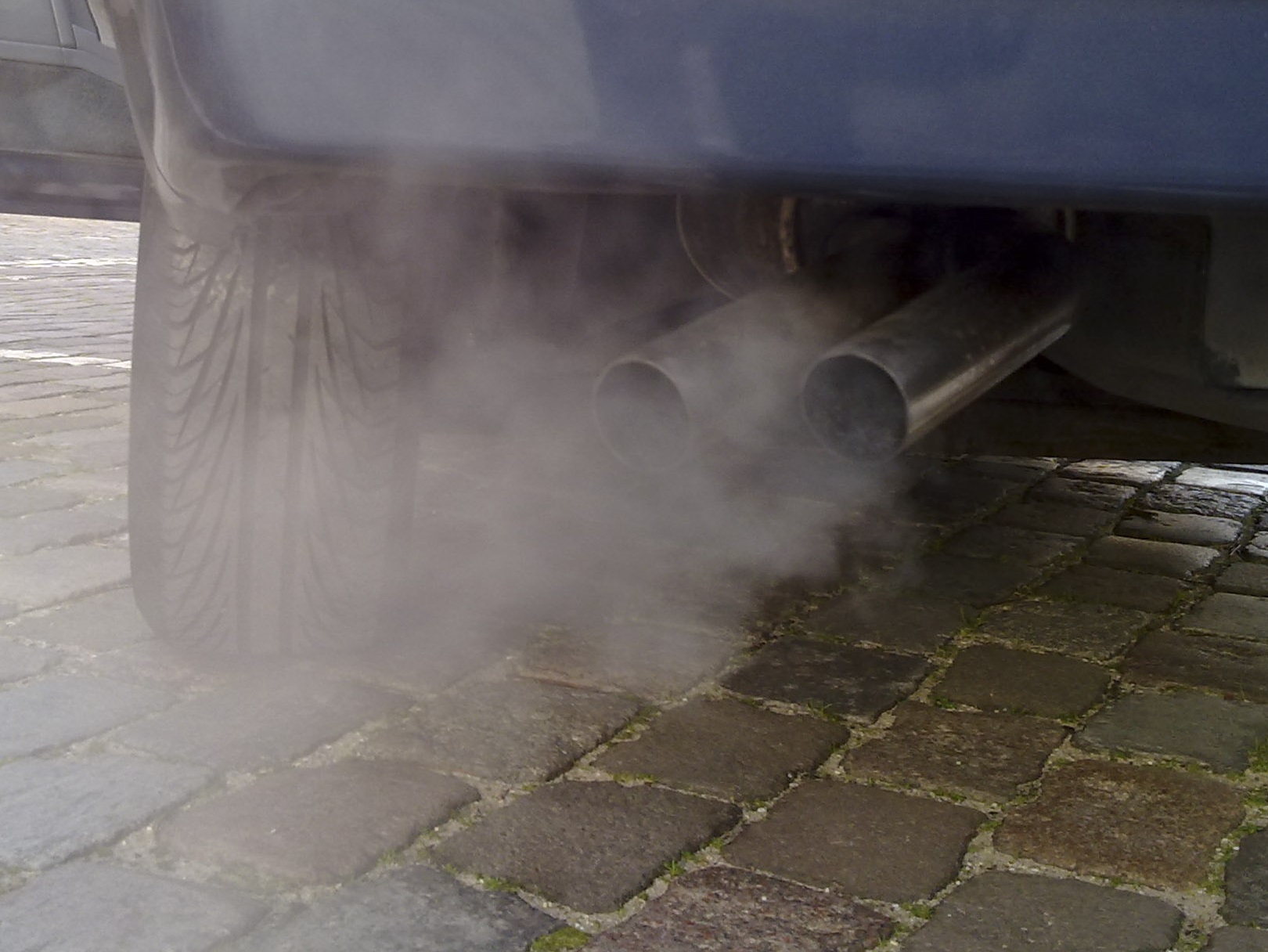
Car exhaust emissions. Source: Ruben de Rijcke / Wikimedia Commons / CC-BY-SA-3.0
The Confederation of Industry in particular dislikes the emissions reduction plan, which it considers unrealistic and a threat to Czech industry. "European industry is in very poor condition, as it is burdened by persistently high energy prices compared with the rest of the world and declining competitiveness, also due to excessive regulation. We are concerned that the impacts on the Czech Republic will be disproportionate because of industry’s high share of Czech GDP, even though this is an EU-wide target and no Czech contribution has been set," said the confederation’s director general, Daniel Urban. According to him, industry and the energy sector will bear the main share of the reductions.
Conversely, the confederation welcomed the agreement to delay ETS 2. "Specifically, the introduction of ETS 2 is expected to have an impact on inflation of up to around one percentage point, so postponing it will help maintain a stable price level," Urban said.
According to the Czech District Heating Association, the changes to the climate target will not have a significant impact on current decarbonisation activities in district heating. However, district heating companies said the reduction would help heavy industry. The association understands the effort to delay the ETS 2 system. "However, we must point out that this extends the entirely illogical preferential treatment of households that produce their own heat from fossil fuels over households connected to district heating systems, which will invest more than CZK 200 billion in decarbonisation over the next five years," the association said.
Translation disclaimer
This article is a machine translation of the Czech original and has not yet been fully reviewed. In case of any doubt, please refer to the Czech version.
Sdílejte článek prostřednictvím:
You might also like

24 September 2026, 10:30
24 September 2026, 06:56
23 September 2026, 17:27