
28 October 2026, 15:10
Loading...
New gas package – Part 1: From natural gas to hydrogen networks
Veronika Jurcová
7 May 2024, 15:25
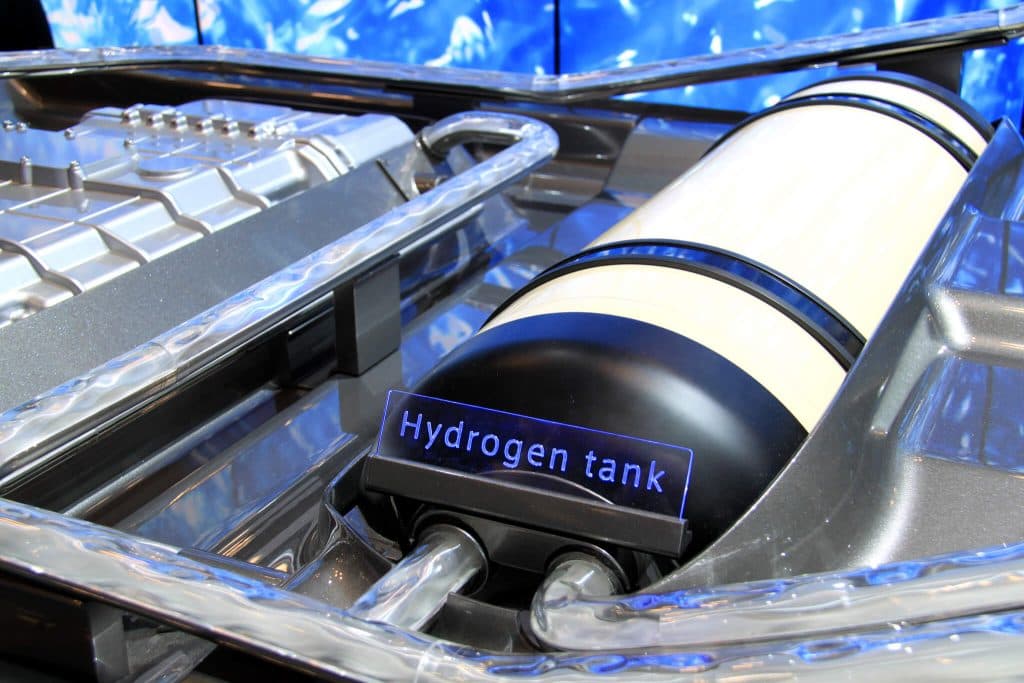
The European Parliament has approved a package designed to facilitate the deployment of renewable and low-carbon gases. The measures focus on regulating infrastructure and trade in hydrogen and decarbonised gas, which will gradually replace fossil natural gas.
Gas package – key points
- Creating hydrogen infrastructure and a market
- Renewable and low-carbon gases
- Integrated network planning
- Supporting consumer participation
- Energy security and supply
One of the package’s main aims is to create a hydrogen market, foster an environment conducive to investment and support the development of dedicated infrastructure, including trade with third countries. Market rules will be applied in two phases, before and after 2030, and will focus in particular on regulating access to hydrogen infrastructure, unbundling hydrogen production and transport activities, and setting transmission tariffs. A new governing structure, the European Network of Hydrogen Infrastructure Operators (ENNOH), will be established to support dedicated hydrogen infrastructure.
Hydrogen infrastructure and its operation
The new legislation amends the rules for gas infrastructure to enable a gradual shift to hydrogen transport.
The revision removes barriers to developing cross-border hydrogen infrastructure and a competitive hydrogen market, which are prerequisites for introducing hydrogen production and consumption. The new legislation also allows for zero hydrogen transmission tariffs, provided neighbouring hydrogen infrastructure operators agree.
The package also introduces rules to prevent monopolies in hydrogen production, transport and storage through so-called vertical unbundling. This means that Member States will have to ensure that, two years after the package is signed, the same entity cannot operate both production facilities and hydrogen pipelines.
The package also includes horizontal unbundling requirements, which prevent gas transmission system operators from also operating hydrogen infrastructure. However, an exemption may be requested. It should only be granted temporarily, following a positive cost-benefit analysis and an impact assessment by the regulator.
“The unbundling rules for hydrogen network operators will follow existing best practices in the gas and electricity markets,”said MEP Jens Geier, who led the negotiations on the package.
Establishment of ENNOH and third-party access
The EU entity for hydrogen network operators (ENNOH) will oversee the planning and operation of hydrogen networks. It will work with the equivalent association for gas pipeline operators (ENTSOG) and will gradually become independent of existing gas network operators.
The measures also include requirements for regulated third-party access to hydrogen networks and storage facilities to ensure transparent and non-discriminatory conditions, with exemptions possible only after a thorough cost-benefit analysis.
Industry, particularly investors in terminals for importing ammonia and other hydrogen derivatives, has already voiced opposition to this clause. They argue that it effectively limits their ability to secure long-term infrastructure access reservations, which could make it harder to obtain financial support from banks. Start-up TES, which produces synthetic methane, has already secured an exemption from regulated third-party access for its proposed terminal in Wilhelmshaven, Germany.
Hydrogen readiness in the Czech Republic
The new rules for hydrogen trading and transport will also affect the Czech Republic, which is involved in several European hydrogen initiatives and projects. The Czech transmission system operator, NET4GAS, is working on three key projects that should enable renewable hydrogen to be transported to Central Europe. They are:
- Czech German Hydrogen Interconnector (CGHI), which aims to create a transport route for renewable hydrogen produced in the Baltic Sea and Nordic countries, bringing it to the Czech Republic and further southwest to Germany.
- Central European Hydrogen Corridor (CEHC), which aims to transport renewable hydrogen from Ukraine through Slovakia and the Czech Republic to areas in Germany and the EU
- SunsHyne Corridor plans to bring renewable hydrogen from North Africa to Central Europe.
To develop these corridors, the system operator plans to convert two of its existing gas pipelines to transport renewable hydrogen by 2030.
Preparations are also under way at the distribution network level. As confirmed to oEnergetice.cz, the Czech distribution network can already handle a blend containing up to 20% hydrogen mixed with natural gas.
“We have been preparing our distribution network for the transition to renewable gases for a long time. Our gas pipelines can already distribute a blend containing up to 20% hydrogen mixed with natural gas. We can also prepare our gas infrastructure to distribute 100% hydrogen within ten to fifteen years. The increase in investment would not be astronomical: it would be around ten percent on top of our current investment,” says Aleš Gregorovič, spokesperson for the GasNet group.
Translation disclaimer
This article is a machine translation of the Czech original and has not yet been fully reviewed. In case of any doubt, please refer to the Czech version.
Sdílejte článek prostřednictvím:
You might also like

28 October 2026, 13:08

28 October 2026, 11:10

28 October 2026, 09:08
