
23 October 2026, 14:38
Loading...
Carbon border levy faces overhaul: EU responds to industry criticism
Veronika Jurcová
13 February 2025, 06:14
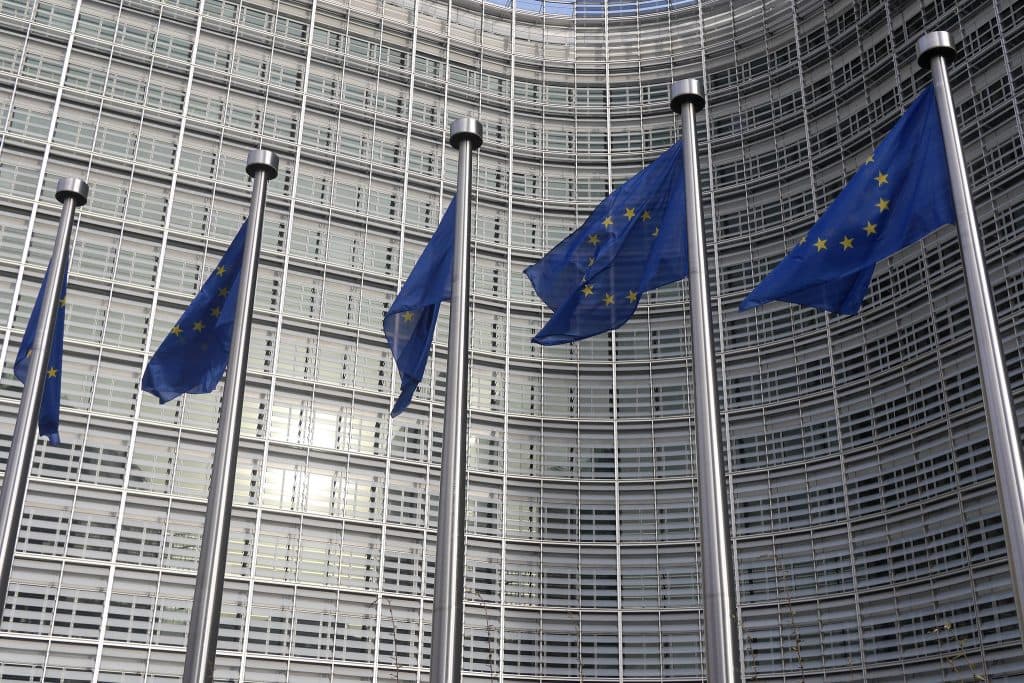
The European Commission is facing growing pressure over the so-called carbon border levy, the requirement to report carbon emissions under the Carbon Border Adjustment Mechanism (CBAM), which is due to be fully launched in January 2026. The current transition phase is exposing weaknesses in the system and an excessive administrative burden for industry, which is already struggling to remain competitive. The Commission is therefore considering simplifying the legislation so that it applies only to the 20% of companies that produce most of the emissions,Reuters.
Carbon border levy
The first-ever climate import levy (the so-called CBAM) came into force in October 2023, imposing charges on imports of emissions-intensive products such as cement, iron, steel, aluminium, fertilisers, electricity and hydrogen. Its aim is to level the playing field between European producers, who pay for emissions allowances, and competitors from outside the EU.
The transitional period, which began on 31 October 2023, currently requires importers only to report emissions, with no financial costs. From 2026 to 2034, however, CBAM will gradually replace free emissions allowances under the EU ETS, with the charge determined by the price of allowances in that system.
Pressure to amend the current legislation
Some industry groups have warned that obtaining the necessary data from international suppliers is complicated and creates an excessive administrative burden. The European Commission is therefore considering changing the rules so that the carbon border levy applies to only 20% of companies covered by the system. According to EU Climate Commissioner Wopke Hoekstra, these companies produce almost all of the emissions associated with CBAM.
Hoekstra noted that, according to the Commission’s analysis, the 20% of companies in question account for a full 97% of emissions covered by CBAM. "It makes sense to spare the remaining 80% of companies from unnecessary administrative burdens," he said at a meeting of a European Parliament committee.
Narrowing the scope of the legislation could exempt tens of thousands of companies from the obligation to pay the carbon levy. The move forms part of the new Commission’s wider debate on simplifying sustainability policies. By the end of February, the European Commission plans to present a proposal to amend the EU regulatory framework, including changes to CBAM and emissions reporting requirements.
The EU is seeking to support the competitiveness of its industry and respond to global challenges, such as efforts to deregulate in the US. European Commission President Ursula von der Leyen has stressed, however, that any simplification must not weaken the EU’s climate targets.
CBAM and the competitiveness of European industry
While some industry groups are calling for CBAM to be revised, the steel sector in particular—which is grappling with overcapacity—is warning against its abolition. The OECD estimates global excess steelmaking capacity at 551 million tonnes, four times the EU’s annual demand, and says it could rise by a further 157 million tonnes by 2026. Without CBAM, steel prices could fall further, worsening the situation for European producers. The Eurofer association is therefore calling for major improvements to the mechanism.
The main aim of CBAM is to prevent so-called carbon leakage, whereby European industry relocates to countries with less stringent emissions regulations. The costs of emissions are expected to be passed on to suppliers around the world, prompting criticism from trading partners such as China, South Africa and Brazil. They argue that the measure unfairly burdens developing economies.
The mechanism is also intended to encourage the EU’s trading partners to establish their own carbon markets, reducing the impact of CBAM on their exports. An analysis by Commodity Insights shows that Brazil, Canada, South Africa and Turkey will be the most affected, with iron and steel production among the hardest-hit sectors.
Coralie Laurencin, senior director for energy and climate policy at S&P Global Commodity Insights, acknowledges that CBAM may need some adjustments, but says its complete abolition would undermine the European emissions trading system.
The growing debate over CBAM reflects a broader EU dilemma: how to reconcile environmental goals with economic realities and maintain the competitiveness of European industry.
Translation disclaimer
This article is a machine translation of the Czech original and has not yet been fully reviewed. In case of any doubt, please refer to the Czech version.
Sdílejte článek prostřednictvím:
You might also like


23 October 2026, 11:01


23 October 2026, 06:34