
28 October 2026, 15:10
Loading...
EU emissions targets for 2040: Which countries are for and which are against?
Klára Čeperová
27 March 2024, 07:13
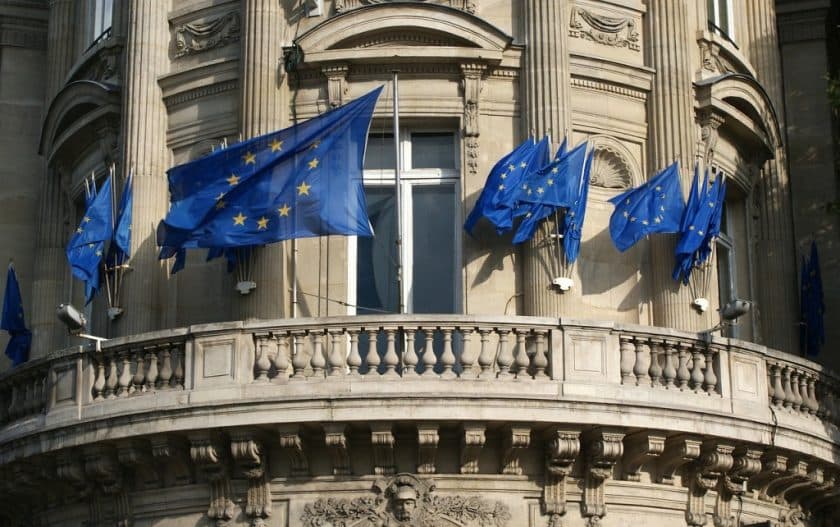
Debate over the EU target of cutting emissions by 90% by 2040 made progress at a meeting of environment ministers in Brussels. Ten countries backed the proposal, three opposed it and thirteen called for further concessions at the meeting, Euractiv reports.
Under its Climate Law, the EU has committed to cutting carbon dioxide emissions by 55% by 2030 and to reaching net zero in 2050. In February, however, the Commission proposed another milestone: 2040, by which member states should collectively cut their emissions by 90%. EU countries have now spoken out to declare their positions on the proposal.
For and against
"I feel there is significant support," climate commissioner Wopke Hoekstra said after 10 countries backed the Commission proposal. They include France, Finland, Denmark and Spain.
Three voiced clear opposition. Greece warned that people "want a better life now", while Poland called for "more analysis". Warsaw's change of position came as a surprise after the governing coalition promised in January a more proactive approach to climate policy. Czechia called the plan too ambitious.
Half of the countries, however, refused to take a firm position, citing specific circumstances ranging from the concerns of island states to those of rural, car-dependent countries. Germany and the Netherlands expressed only preliminary support: the coalition government in Berlin still needs to reach an internal agreement, while the Netherlands' caretaker minister Rob Jetten assured others that the country's newly elected parliament is "for" the 90% target.
Member states' specific circumstances
"Every EU country has its own development model," Romanian Environment Minister Mircea Fechet said.
Many of the countries that joined the EU in 2004 or later emphasized their different economic starting points. Latvia and other EU countries highlighted the need for "flexibility" that would take national circumstances into account.
"We do not have sufficient resources to meet our climate targets," Croatian State Secretary for the Environment Ivo Milatić explained, adding that "we must find a way to ensure a just transition that leaves no one behind".
A just transition is an approach that combines climate measures with social policies to protect vulnerable citizens who might otherwise be adversely affected by the transition. In the EU, this is often achieved through tax transfers.
Slovenian Environment Minister Bojan Kumer called for "greater geographical balance" in the allocation of EU funding from the Modernisation Fund and the Innovation Fund—two multi-billion-euro funds financed through emissions trading.
Industry
The other main concern for EU countries is industrial competitiveness—a point on which everyone from Budapest to Berlin agrees.
"Strengthening the competitiveness of our industry is crucial for the years ahead," German State Secretary for Economic Affairs and Climate Action Sven Giegold said.
Translation disclaimer
This article is a machine translation of the Czech original and has not yet been fully reviewed. In case of any doubt, please refer to the Czech version.
Sdílejte článek prostřednictvím:
You might also like

28 October 2026, 13:08

28 October 2026, 11:10

28 October 2026, 09:08
