EU unveils list of key energy projects, dominated by new power lines and hydrogen

The European Union has published its second Union list of Projects of Common Interest (PCI) and Projects of Mutual Interest (PMI). The listed projects aim to modernise and develop energy infrastructure across Europe and bring the EU closer to a genuine Energy Union. New interconnections both between European countries and with neighbouring countries could play a strategic role in boosting competitiveness, supporting decarbonisation, and strengthening energy security and self-sufficiency.
The list contains 235 projects, ranging from electricity grids and hydrogen infrastructure to CO₂ transport. In addition to interconnection projects between member states, it includes 25 projects with Ukraine, the United Kingdom, Switzerland, the Western Balkan countries, North African countries, Norway and Georgia. According to a recent study, the European Commission estimates that investment needs for energy infrastructure will reach almost 1.5 trillion euros between 2024 and 2040. All projects had to demonstrate significant cross-border benefits and support for climate targets for 2030.
Projects by category
113 projects for electricity, offshore grids and smart electricity grids, which will help integrate more renewable energy sources.
100 hydrogen and electrolyser projects, which will accelerate the integration and decarbonisation of the EU energy system.
17 CO₂ transport projects, which will support the emergence of a carbon capture and storage market.
3 smart gas grid projects focused on the digitalisation and modernisation of the gas system.
- 2 ongoing long-term projects, which connect Malta and Cyprus to Europe's mainland gas network.
Projects recognised by the EU as PCI or PMI receive a number of benefits. They have priority status and go through a simplified permitting process with a fixed maximum deadline of three and a half years. They also benefit from faster and more streamlined environmental impact assessments.
In addition, each country assigns a single competent authority to act as a “one-stop shop”, while dedicated contact points are available for offshore grids. Projects can use a procedure that allows investment costs to be shared among member states according to the benefits each derives from the project. They can also apply for financial support from the Connecting Europe Facility in the form of grants for studies and construction itself.
The European Commission has adopted this list since 2023 and, under the TEN-E Regulation (2022/869), will update it every two years. Projects of Common Interest (PCI) are key investments for completing the internal energy market and support the EU's energy and climate goals. Projects of Mutual Interest (PMI) connect the EU with third countries and contribute to energy and climate goals on both sides.
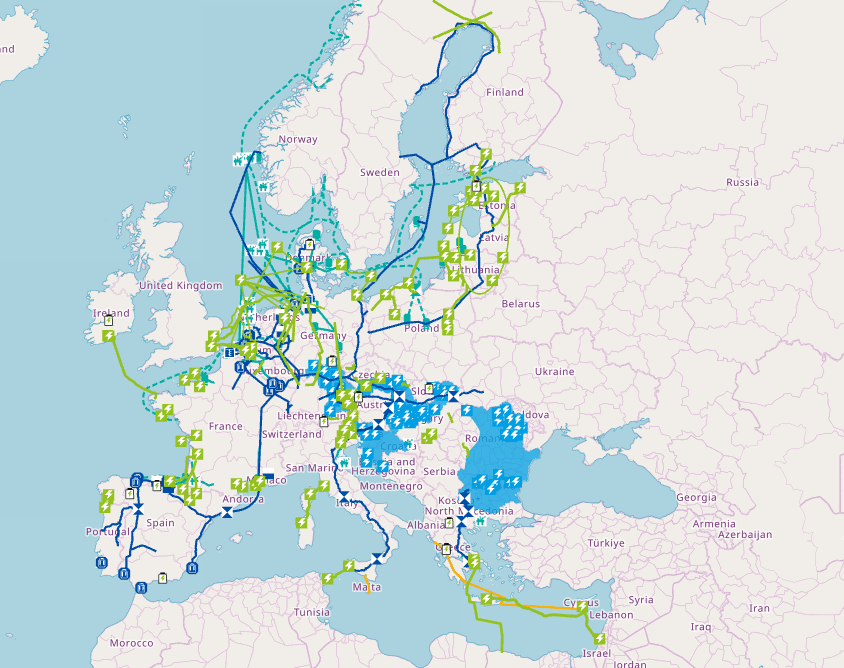
Czechia: Better links with neighbours and hydrogen infrastructure
Projects involving the Czech Republic include the Hradec–Röhrsdorf (DE) and Otrokovice–Ladce (SK) interconnectors. The Czech Republic is also set to become an important link in the Central European hydrogen corridor, which is intended to connect Ukraine with Germany. The development and modernisation of transmission and distribution networks are also planned.
A European Commission study estimated that Europe's energy infrastructure (electricity, hydrogen and CO2 networks) will require investment of up to almost 1.5 trillion EUR by 2040. The Commission has therefore already made funding available through CEF-Energy, including an allocation of 1.25 billion EUR in February 2025 and a subsequent call for 600 million EUR. Looking further ahead, it proposes a substantial increase in the CEF budget for 2028–2034, to as much as 29.91 billion EUR from the current 5.84 billion EUR, which would allow broader support for PCI/PMI projects. Actual funding and implementation, however, depend on specific calls for proposals and the maturity of the projects.
The list has now been submitted to the European Parliament and the Council as a Commission delegated act. They have two months, with the option of extending this by a further two months, to object. If it is not rejected, it will enter into force and replace the first list from 2023, which contained 166 projects.
Translation disclaimer
This article is a machine translation of the Czech original and has not yet been fully reviewed. In case of any doubt, please refer to the Czech version.




