
23 October 2026, 14:38
Loading...
European Commission tells car industry: You've had enough time
Klára Čeperová
19 September 2024, 11:33
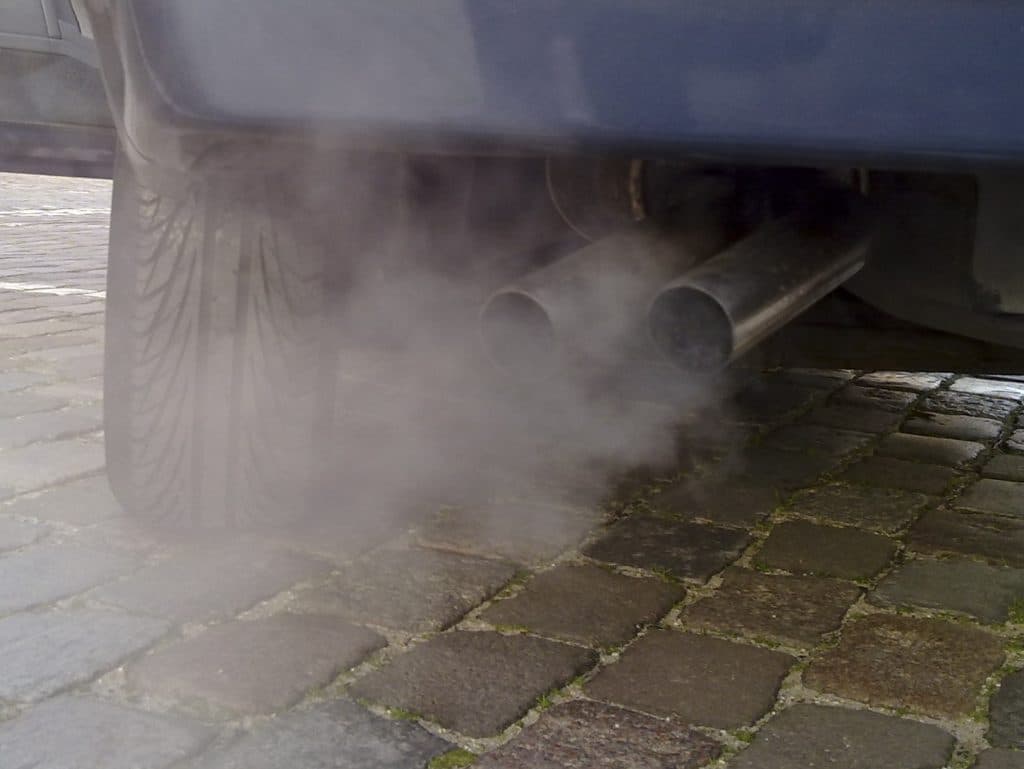
The automotive industry is complaining about strict emissions targets for mobility. Manufacturers have also calculated that failure to comply with the rules for 2025 could expose them to fines of up to 16 billion euros. The European Commission, however, has pushed back against these claims.
Under EU CO2 emissions requirements for passenger cars and vans, carmakers must reduce the average CO2 emissions of their vehicles by 15% by next year compared with 2021 levels. But with electric vehicle sales falling short of expectations, some industry players called for a two-year delay in an unofficial document circulated over the weekend, to avert the risk of billions in fines. Euractiv reports.
The European Commission on Monday rejected calls from carmakers to delay the upcoming 2025 targets for reducing CO2 emissions from cars, saying the industry had had enough time to prepare.
"The 2025 target requires—and enables—manufacturers to develop a comprehensive compliance strategy," Tim McPhie, the Commission's climate action spokesperson, told Euractiv.
Nothing has changed
McPhie stressed that the 2025 target had not changed even in the latest revision of CO2 standards in 2023, which introduced a de facto ban on new petrol and diesel cars from 2035. He added that "the industry has had quite a lot of time to prepare for this next phase of the transition".
"The targets that will apply from 2025 were adopted by the co-legislators in 2019," McPhie said.
To meet the 2025 target of around 95 g CO2 per kilometre, the share of electric vehicles in the market would need to rise to 20-22%, according to the document—while the uptake of fully electric cars is currently stagnating below 15%.
According to French newspaper Le Monde, the document was written by carmaker Renault, whose CEO Luca de Meo also heads the European Automobile Manufacturers' Association (ACEA). Last week, ACEA said that "the EU still lacks essential market conditions for the mass adoption of zero-emission passenger cars and vans".
The association says that charging and hydrogen refuelling infrastructure is currently inadequate, alongside "affordable green energy", incentives to buy electric vehicles and secure supply chains.
Withdrawal of support has slowed market growth
Automotive industry expert Ferdinand Dudenhöffer, director of the Center for Automotive Research in Bochum, Germany, was sympathetic to the carmakers' demands.
The main reason for the slow uptake of electric cars "is not the carmakers," Dudenhöffer told Euractiv, "but German policy, under which electric cars are not selling because the bonus was scrapped," he added.
Last year, the German government abruptly ended a bonus of up to 4 500 euros per car for electric vehicles as it sought to address an ongoing budget crisis.
"Germany alone is responsible for the decline in the number of electric cars in Europe," Dudenhöffer said, accusing German Economy Minister Robert Habeck of having 'destroyed' electric mobility.
Translation disclaimer
This article is a machine translation of the Czech original and has not yet been fully reviewed. In case of any doubt, please refer to the Czech version.
Sdílejte článek prostřednictvím:
You might also like


23 October 2026, 11:01


23 October 2026, 06:34