23 October 2026, 14:38
Loading...
The world looks to Warsaw: Can Poland block the Nord Stream 2 pipeline?
Jan Žižka
3 August 2016, 20:46
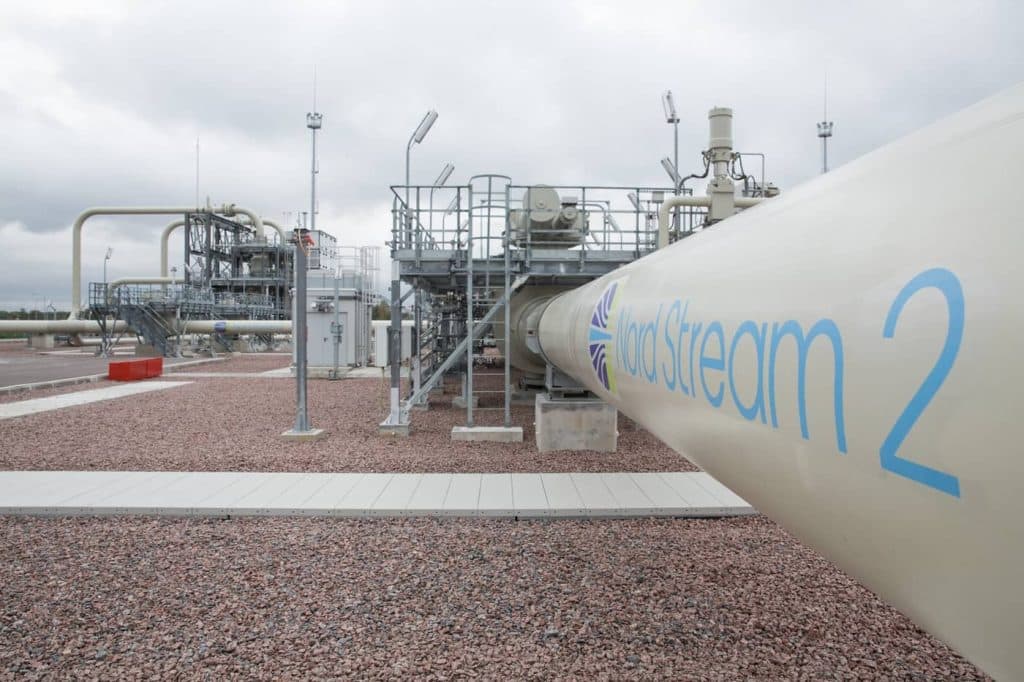
Warsaw cannot complain about a lack of attention – its efforts against the planned Nord Stream 2 pipeline are being closely watched in Berlin, Moscow and Washington. Poland appears to remain the only truly significant and active opponent in the European Union still trying to prevent the construction of another pipeline beneath the Baltic Sea. However, it can count on American support.
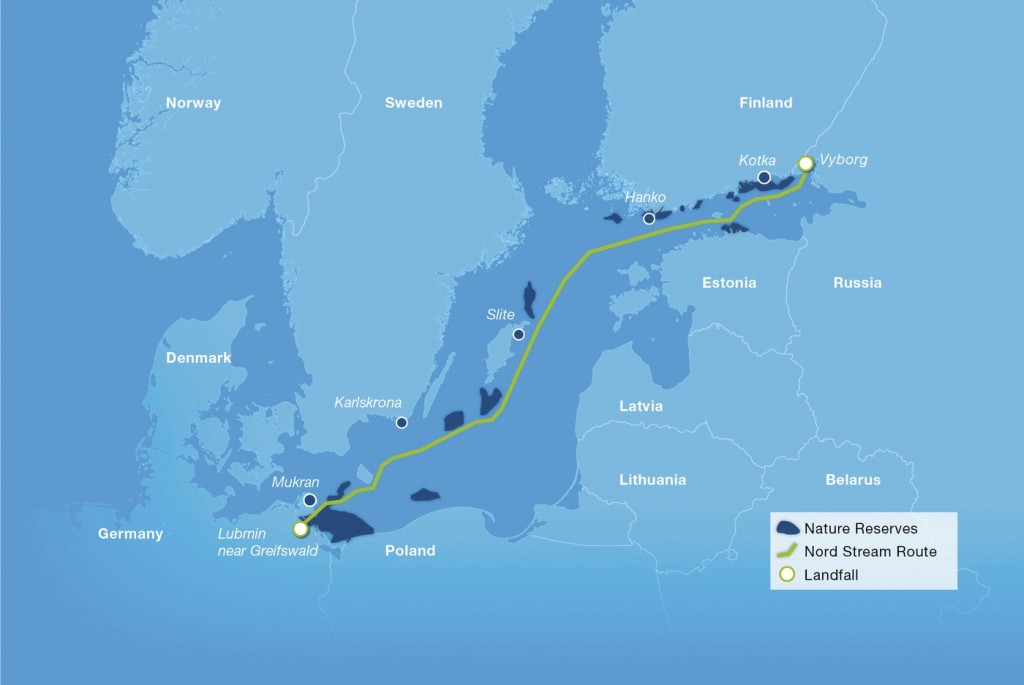
The Nord Stream 2 pipeline is set to double the capacity of the existing subsea route from Russia directly to Germany to 110 billion cubic metres per year. The transport of gas via this route would therefore not be affected by disputes between transit countries on land. A growing number of EU states view the project as a reality precisely because it has Germany's backing.
Czechs and Slovaks are now much more concerned with the economic opportunities that connecting their transit pipelines to Nord Stream 2 and the German pipeline will ultimately bring them. (Czechs could earn substantially from increased transit volumes, while Slovaks may not lose out after all, contrary to initial fears.)
Threat to competition
Poland, however, maintains that building the subsea pipeline harms Ukraine and reduces energy security. It does not increase the number of gas sources and routes; instead, it places an even greater burden on one existing route.
Particular attention was recently attracted by the position of Poland's antitrust authority (UOKiK), according to which the Nord Stream 2 pipeline could further restrict competition on the country's gas market. The European companies involved in the project – Germany's Uniper and Wintershall, France's Engie, Austria's OMV and Anglo-Dutch Shell – were given four weeks to try to refute UOKiK's concerns.
There is no doubt that Poland is already heavily dependent on imports of Russian gas. However, thanks to the new LNG terminal in Świnoujście and a planned pipeline project from Norway, it should diversify its gas sources.
Why Poland?
Many will surely ask why a ruling from Warsaw should carry any significant weight. Not only will the Nord Stream 2 pipeline not cross Polish territory, it will not even pass through Polish territorial waters – unlike those of Russia, Finland, Sweden, Denmark and Germany.
However, Poland has secured relatively significant powers for its antitrust authority in Brussels and adopted a law that gives UOKiK broad scope to act. It must also be taken into account that the European companies mentioned operate in Poland and are unlikely to want to ignore an antitrust ruling completely. Especially since they could face fines if they did so.
If UOKiK were to confirm its negative position on the planned pipeline, it could face a legal dispute or the matter could be referred to a higher level within the European Commission. Russia's Gazprom could then face the difficult decision of whether to build the entire pipeline at its own expense. (It currently holds a 50% stake.)
On the other hand, the antitrust authority should assess the entire matter independently of the Polish government's political positions – otherwise it would be entering a highly risky game.
No compromise?
Either way, much suggests that Poland has learned from the days when its opposition – for example, to the Nord Stream 1 pipeline – simply faded away. According to available sources, it is better able to navigate European rules and use the instruments offered by the European Union. It should be expected that Beata Szydło's government will use them.
Regardless of the future antitrust ruling, it is also clear that the position of the current Polish government, formed by the Law and Justice party, is far more uncompromising than before. It is therefore highly uncertain whether Warsaw could accept economic incentives from Gazprom, as the Slovaks do, for example.
Such incentives have emerged, at least according to reports by the Russian daily Kommersant. According to the newspaper, amendments to the existing Russian gas supply contract are under consideration, and Poland could allegedly secure a more favourable price. Doubts later emerged, however, as to whether anyone in Warsaw would be willing to accept such a compromise.
Warning from America
What is certain is that Poland now has a strong ally in Washington – at least at the State Department. Special Envoy for International Energy Affairs Amos Hochstein said in an interview with Euractiv.sk that the Nord Stream 2 project could revive Cold War-era dividing lines in Europe.
According to Hochstein, the pipeline makes no sense because it hinders competition. Anyone who invests in building a pipeline will want to use it at all costs and will not consider alternatives in the form of imports of liquefied natural gas.
Hochstein sees the future in the construction of cheaper floating LNG terminals, such as the one Lithuania has already built. The aim need not be to reject Russian gas as such, but to seek alternatives that would make it possible to use gas from various sources when needed.
In this respect, the US view entirely aligns with Poland's position. Poland has so far been in a weak negotiating position vis-à-vis Gazprom. Unlike the Czechs, for example, Poland did not have access to alternative gas sources and routes, and therefore had to pay a higher price than other Europeans.

What will happen in Washington
The question is how the US position will be affected by the autumn presidential election. If Hillary Clinton wins, continuity can be expected in energy security matters as well. But as statements by her opponent Donald Trump suggest, everything could change if he wins. All the more so as this is effectively about policy towards Russia, which the Republican candidate reportedly intends to change entirely.
However, the specific steps of a potential President Trump are very difficult to predict. On the one hand, he wants to continue promoting shale gas and oil extraction, which brings major economic benefits to America, while Hillary Clinton is now far more restrained for environmental reasons. Exports of US LNG, which could – also according to Hochstein – compete strongly with Russian gas on the European market, should therefore fit Trump's vision.
On the other hand, it is worth recalling that one of Trump's foreign policy advisers is Carter Page, who previously headed Merrill Lynch's Moscow office and was involved in economic relations with Russia, particularly Gazprom itself. He opposes sanctions against Russia.
The Italian conundrum
Theoretically, Poland has one more significant ally within Europe in its opposition to the Nord Stream 2 pipeline – Italy. Rome, too, has so far taken a relatively firm stance against the project.
A closer look, however, shows that Italy's concerns are entirely different from Poland's. In this respect, Rome is much closer to the position of the aforementioned Trump adviser – it is critical of sanctions against Russia. Nor is the construction of pipelines from Russia the target of Italian criticism. On the contrary, Italy was receptive to the cancelled project to transport gas southwards – the South Stream pipeline.
The key to understanding Rome's position is the fact that Italy is competing with Germany to become a major European gas hub. Why should Nord Stream be given the green light when South Stream was cancelled? “Thanks to Nord Stream, Germany could overtake Italy,” says Nicolo Rossetto, an energy expert at the Institute for International Political Studies in Milan.
Suspicions are even being voiced in Rome that, while Germany insists on sanctions against Russia on the one hand, it is circumventing them itself through projects such as a subsea gas pipeline.
And what follows from this? Italy could be persuaded, for example, that Nord Stream 2 will ultimately strengthen its market too, as a large share of the gas from the subsea pipeline will be directed there. But what could persuade Poland is entirely unclear today.
The author works as a consultant and energy project specialist at the HATcom agency.
Translation disclaimer
This article is a machine translation of the Czech original and has not yet been fully reviewed. In case of any doubt, please refer to the Czech version.
Sdílejte článek prostřednictvím:
You might also like
23 October 2026, 11:01
23 October 2026, 06:34