Damage to Nord Stream pipelines remains unexplained after a year

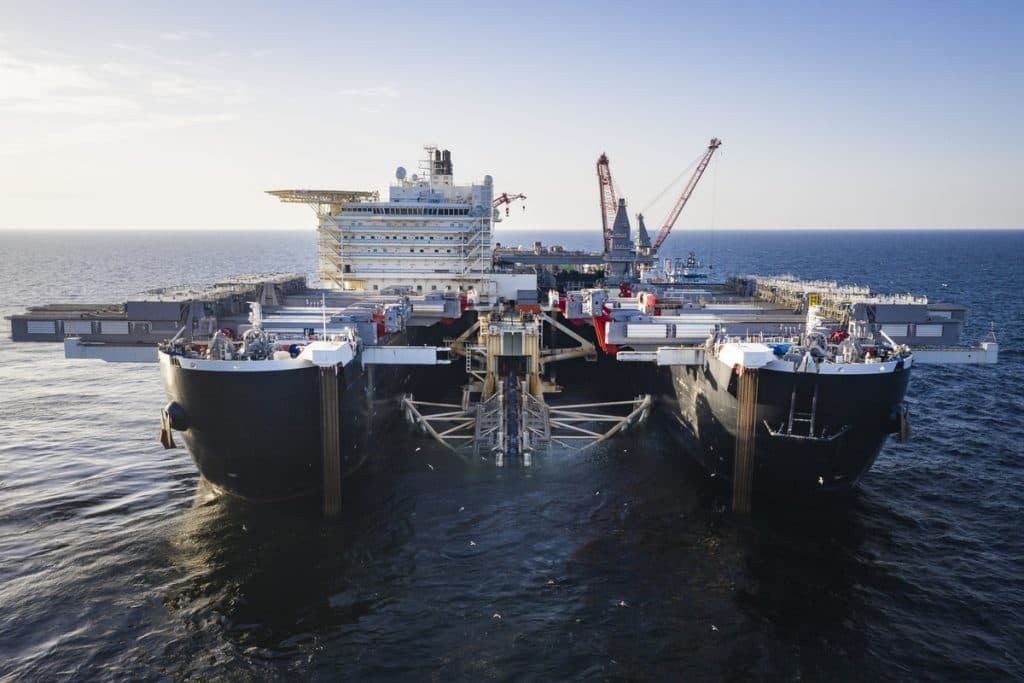
Selected facts about the damage to the Russian-German Nord Stream gas pipelines (a year ago, on 26 September 2022, Danish authorities reported leaks from the damaged Nord Stream pipelines):
– Nord Stream 1, which carried gas from Russia to Germany under the Baltic Sea, was commissioned in 2011 and is 1224 kilometres long. The pipeline was the main route for Russian natural gas supplies to Germany. In 2021, the similarly long Nord Stream 2 pipeline was completed. It runs parallel to Nord Stream 1 and has the same capacity: 55 billion cubic metres of gas per year (27.5 billion for each line).
– Gas was no longer flowing through Nord Stream 1 to Europe before the explosions, amid growing tensions between Moscow and the West following Russia’s invasion of Ukraine. Moscow blamed the shutdown on maintenance. Nord Stream 2 had been completed but was never brought into operation because of the war in Ukraine and anti-Russian sanctions. The majority owner of the pipelines is Russian company Gazprom. The pipelines had long been criticised by the United States and some of its allies, who warned that increased dependence on Russian gas threatened Europe’s energy security.
– Reports of problems with the pipelines running from Russia to Germany began to emerge on 26 September 2022. Danish authorities first reported a leak from Nord Stream 2, then Sweden warned of two leaks from Nord Stream 1 a day later, and on 29 September the Swedish Coast Guard said it had discovered a fourth leak. Scandinavian seismologists reported explosions on the Baltic Sea floor. They said these could not have been caused by an earthquake or landslides.
– Investigations into the cause of the leaks on Nord Stream 1 and 2 began immediately. According to preliminary information available to Sweden and Denmark, the damage to the pipelines in the Baltic Sea was probably deliberate. In November, the Swedish prosecutor’s office confirmed that it was sabotage. „The analysis carried out showed traces of explosives on several objects recovered at the sites of the leaks,“ said Swedish prosecutor Mats Ljungqvist, who was tasked with the preliminary investigation. Ljungqvist recently said he wanted to have clarity by the end of the year. „By completion, I mean that we will close the investigation or decide to bring charges against someone,“ he explained. In April, he told Reuters that the „absolute main scenario“ in the case was the involvement of a state actor.
– Gas leaks were detected near the Danish island of Bornholm, in both Danish and Swedish waters, at depths of 70 to 80 metres. Experts say this rules out natural causes of the damage and supports the theory of sophisticated sabotage.
– Russian President Vladimir Putin and Russian officials initially blamed the United States for the explosions. They also described them as a terrorist attack. Ukraine rejected speculation that it had ordered the attack. Western politicians, meanwhile, blamed Moscow for the attack on the pipelines. In October last year, Moscow accused Britain of carrying it out. According to a statement from Moscow, British soldiers from the same unit that had trained Ukrainian troops ahead of an October drone attack on Russia’s Black Sea Fleet in Sevastopol were involved in planning and carrying out the operation.
– However, the countries investigating the explosions, including Denmark, Sweden and Germany, have not yet said specifically who may have been behind them.
– In March this year, media reports emerged that a pro-Ukrainian group was involved in the sabotage. According to German media, five men and one woman used the Andromeda yacht to carry out the attack. They had rented it from a company owned by Ukrainians in Poland, and it had set sail from the German city of Rostock. Authorities, however, urged caution over such media reports. The reports noted that there was no evidence that the Ukrainian government had been involved in the operation in any way. In July, European diplomats told the UN Security Council that investigators had found traces of underwater explosives in samples taken from the yacht. The New York Times reported that those responsible may have been opponents of Russian President Vladimir Putin, most likely with Ukrainian or Russian citizenship, or both. Ukraine has repeatedly denied any connection to the attack
– According to The Wall Street Journal (WSJ), the sabotage team used Poland as an operational base to damage the Nord Stream pipeline. Warsaw denied this, saying it was an attempt by Moscow to portray Poland as a state hostile to Russia. The WSJ reported that investigators had concluded that the explosive used in the operation was the powerful plastic explosive HMX, also known as octogen, a colourless substance suitable for demolishing underwater infrastructure.
– The future of the pipelines is uncertain. Russia has announced plans to seal and preserve the damaged sections of the Nord Stream 1 and Nord Stream 2 pipelines, but is not currently considering repairs or bringing them back into operation.
Translation disclaimer
This article is a machine translation of the Czech original and has not yet been fully reviewed. In case of any doubt, please refer to the Czech version.




