European gas storage is full. Traders are increasingly using storage in Ukraine
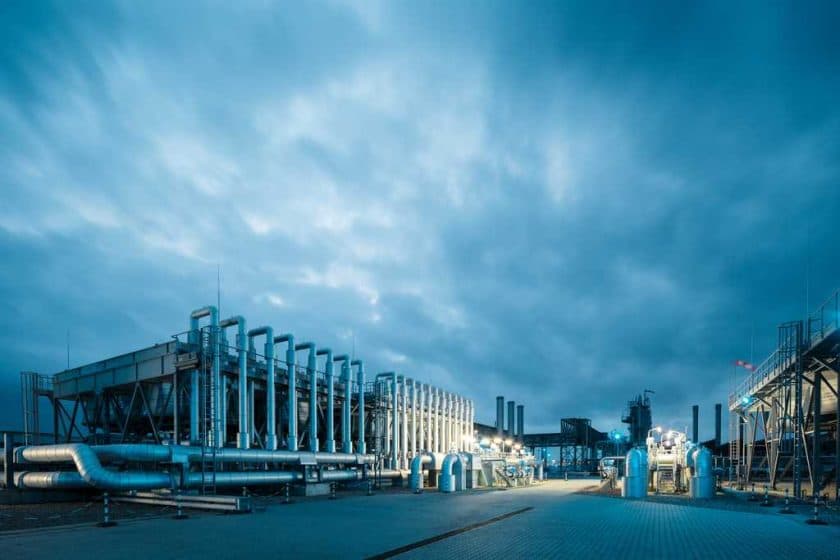
Gas storage facilities in Europe were almost 99% full as of 1 November, so gas traders are increasingly using storage capacity in Ukraine, despite the risks posed by the ongoing war. The outlook for gas consumption this winter remains uncertain, and supplies of natural gas could be at risk in the event of an interruption or an exceptionally cold winter. Ahead of the coming winter, LNG tankers are also serving as “floating storage” at sea, reports Financial Times.
Following Russia’s invasion of Ukraine and the sharp drop in Russian gas supplies to Europe, the European Union set a target of filling its gas storage facilities to at least 90% of capacity by the start of the heating season, on 1 November 2023. According to GIE data, storage facilities are now almost 99% full, thanks in particular to continued imports of liquefied natural gas and lower demand. This makes the EU less vulnerable, although it is far from a guarantee that it will have all the energy it needs for the coming winter.
“The risk of gas shortages in Europe this winter is low, except in the event of major unplanned supply disruptions or prolonged, severe cold affecting Europe and Asia at the same time. Europe has stocked up as well as it could,” says Natasha Fielding of Argus, which monitors energy market prices.
Nevertheless, despite the current availability of gas, the region’s increased reliance on LNG, particularly after gas supplies from Russia were curtailed last year, means Europe remains vulnerable to possible supply disruptions.
According to analysts, additional gas reserves could prevent significant price increases in Europe. The price at the Dutch Title Transfer Facility (TTF) virtual trading hub has been highly volatile this year. There are several reasons for this. Israel suspended gas production at an offshore field near Gaza because of the ongoing conflict. In September, workers also went on strike at two Chevron liquefied natural gas (LNG) plants in Australia. In Europe, meanwhile, an undersea gas pipeline linking Finland and Estonia was damaged.
Use of gas storage facilities in Ukraine
With EU storage capacity almost exhausted, gas traders are increasingly turning to Ukraine, which has the largest gas storage facilities in Europe. The amount of natural gas held in the country has consequently reached its highest level since Russia’s invasion last year.
Ukraine has become an attractive place to store gas despite the risks associated with Russia’s invasion. Its appeal is due in particular to favourable storage tariffs, as well as incentives such as a three-year exemption from customs duties, which makes it easier and cheaper to re-import gas into the EU. Gas flows from EU countries to Ukraine have been rising since the summer.
Gas storage facilities in Ukraine are located mainly deep underground in the west of the country, far from the front lines. According to state-owned energy company Naftogaz, they currently hold more than two billion cubic metres of gas belonging to EU entities.
Naftogaz has offered foreign customers more than 10 billion cubic metres of gas storage capacity, equivalent to a third of Ukraine’s total capacity. Naftogaz CEO Oleksiy Chernyshov stressed that European companies are taking a commercial risk by storing their gas in Ukrainian facilities, which, although far from combat zones, could still be targeted by Russian attacks.
The EU and Ukraine are also discussing the possibility of insuring storage facilities against war-related damage. Chernyshov said that any guarantees would further increase the use of Ukrainian storage facilities, but added that he did not expect insurance to be viable in the near future.
The Czech company EP Commodities, part of the EPH group, also transports gas to Ukraine and uses its storage facilities. It has confidence in the reliability of Ukraine’s gas transmission system, which has proved its resilience even in the difficult conditions of war.
LNG tankers as floating storage
Some companies are also paying to charter LNG tankers that serve as “floating storage” at sea, thereby increasing storage capacity.

According to Alex Froley, a market analyst at consultancy ICIS, the number of tankers off the coast of Europe classified as floating LNG storage is rising. There were 10 at the beginning of October; the number then rose to 16, and by the end of October 21 tankers had been classified this way.
“If current weather and supply and demand conditions remain stable, I would expect the number of floating storage vessels to continue rising through November, possibly reaching as many as 30 tankers waiting off Europe,” Froley said.
Full EU storage facilities are therefore being complemented by stocks in Ukraine and gas held in LNG tankers. Despite the huge reserves, however, some analysts continue to highlight the risks. Wayne Bryan, head of European gas research at LSEG, said current storage levels ensure short-term supplies, but warned that cold weather or an interruption to production in Norway, a key supplier of natural gas to Europe, could pose a problem.
“The lack of alternatives to LNG will leave the EU gas market exposed to increased volatility,” Wayne Bryan said.
Translation disclaimer
This article is a machine translation of the Czech original and has not yet been fully reviewed. In case of any doubt, please refer to the Czech version.