10 October 2026, 07:37
Loading...
Drought on the Rhine complicates fuel supplies. Refineries feel greatest pressure, power plants holding up for now
Veronika Jurcová
29 July 2026, 10:03
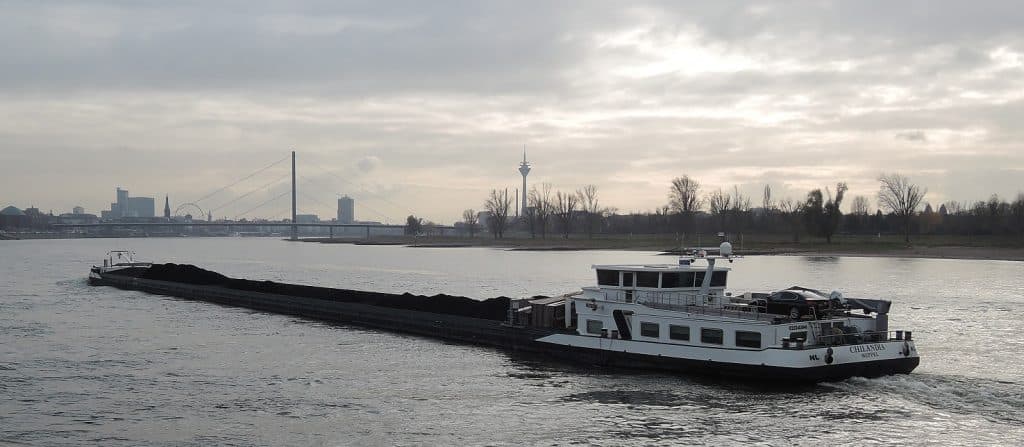
Persistent drought on the Rhine is beginning to have a noticeable impact on the German fuel market. Limited navigability on this key European waterway is complicating refinery supplies and the distribution of petrol and diesel, driving up both transport costs and fuel prices, Argus Media reports. Coal-fired power plants remain safe for now thanks to high stockpiles and alternative transport routes, but energy companies are monitoring the situation closely.
Low water levels on the Rhine are once again complicating the transport of energy commodities and fuels in Germany. In the critical stretch near Kaub, vessels can carry only part of their usual cargo, significantly increasing transport costs and beginning to feed through into fuel prices. Unlike during previous crises, however, coal supplies for power plants are not yet at risk.
According to current forecasts, water levels at Kaub are approaching those seen during the exceptional drought of 2018. While water levels normally reach three to four metres in summer, they are currently around 30 centimetres.
The critical Middle Rhine section, one of the most significant bottlenecks in European inland navigation, is once again restricting the transport of raw materials and finished products. Carriers must therefore reduce vessel loads and seek alternative logistics solutions.
Refineries and fuel distributors face the biggest problems
The impact is most visible in the fuel market. Most river vessels can no longer pass through the critical stretch with a full load, while some can carry only a third, or in extreme cases just a quarter, of their standard capacity.
This significantly increases transport costs. Shipping companies are charging low-water surcharges because a greater number of vessels is needed to transport the same volume of goods. According to traders, river freight rates to Frankfurt and Karlsruhe have reached their highest level since records began.
Higher logistics costs subsequently feed through the entire supply chain. Both the supply of raw materials and components to refineries and the distribution of petrol, diesel and heating oil to end customers have become more difficult.
The tightest situation is in western Germany. Petrol availability is limited at some terminals, and some suppliers have reduced their activity in the spot market. At the same time, demand is rising for alternative supplies from other regions.
However, complicated logistics are not the only factor behind rising fuel prices. The market is also responding to higher gasoil contract prices on the ICE exchange, supported by continuing geopolitical tensions in the Middle East.
Power plants are better prepared for such situations
Unlike the fuel market, coal-fired power generation has not yet experienced major problems. Germany's largest energy companies, including Uniper, EnBW and Steag, say they have been preparing for similar situations over the long term.
“In general, low-water situations and other extreme weather events represent known challenges for which we are able to prepare operationally,” said a spokesperson for Uniper, one of Germany's largest energy companies.
Power plants have sufficient coal stocks, and some operators have scheduled routine outages specifically for periods of low water levels. If necessary, they can use rail transport or alternative water routes, for example through canals leading from Dutch ports.
Compared with 2018, energy companies are also entering the drought period with higher fuel stocks and prepared contingency scenarios. This is one reason why the current problems have not yet hit the power sector as hard as they did eight years ago.
However, electricity producers are not entirely unaffected. Restricted navigability is raising transport costs, and some companies are therefore postponing purchases of spot coal supplies until September. This is reflected in the market, among other things, by September coal contracts trading at higher prices than August contracts.
The Rhine remains a strategic artery for European energy
The current drought shows that the Rhine remains one of the most important transport routes for European energy. Although companies have invested in higher stockpiles and prepared alternative logistics solutions following the experience of recent years, restrictions on navigation are very quickly reflected in the prices and availability of energy commodities.
This time, the greatest pressure is concentrated on refineries and fuel distributors, while power plants are benefiting from better preparedness than during previous episodes of extreme drought. However, if low water levels persist in the coming weeks or deteriorate further, logistics problems could gradually spread to other parts of industry. The Rhine is thus once again confirming its indispensable role in European energy infrastructure.
Translation disclaimer
This article is a machine translation of the Czech original and has not yet been fully reviewed. In case of any doubt, please refer to the Czech version.
Sdílejte článek prostřednictvím:
You might also like
10 October 2026, 07:02

9 October 2026, 13:47