France awaits approval of support for 6 nuclear reactors; renewables sector fears political shift after 2027 election
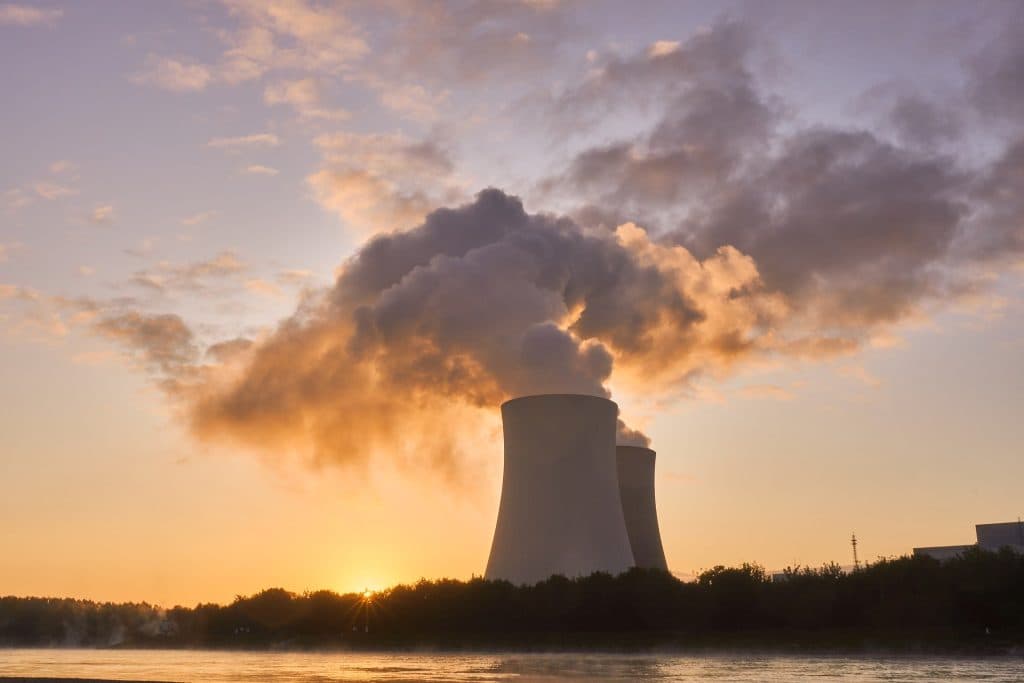
France expects the European Commission to approve a state aid mechanism for six new EPR2 nuclear reactors with a total capacity of approximately 10 GW later this year. Paris could then make a final investment decision by the end of the year, reports Montel news. The French government also stresses that the country’s energy strategy rests on two pillars—nuclear power and renewable energy sources. Representatives of the renewables sector, however, warn that a possible political shift after the 2027 elections could have serious consequences for the further development of renewables.
According to the energy ministry, France is close to reaching an agreement with the European Commission on a support scheme for the construction of six new EPR2 nuclear reactors. Technical talks are ongoing, but the government expects them to conclude successfully and the support mechanism to be approved later this year.
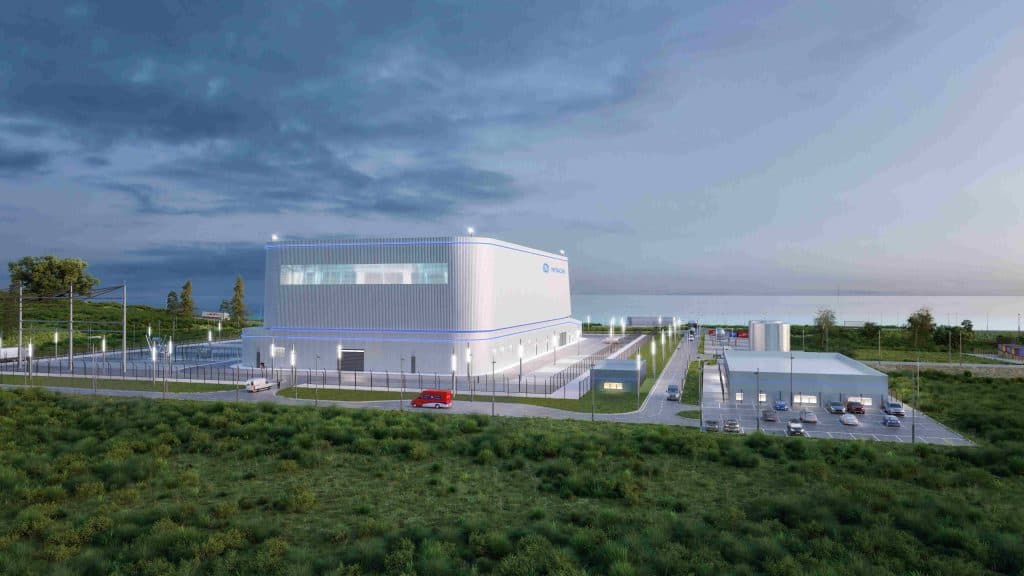
The plan involves building the reactors in pairs at the sites of existing power plants in Penly, Gravelines and Bugey. Their total installed capacity is expected to reach approximately 10 GW. The project’s next steps depend on the European Commission’s approval of the public support scheme.
The proposed support scheme rests on three main pillars. The first is a preferential loan with a lower interest rate, which would cover approximately 60 percent of construction costs. The second is a 40-year contract for difference, designed to ensure stable revenues for the investor regardless of electricity market prices. The third is a risk-sharing mechanism intended to protect the project against unforeseen events, such as natural disasters or changes in legislation.
Commission examines whether support is proportionate
The European Commission is reviewing the scale and combination of these instruments. In its preliminary assessment, it acknowledged that the project may be necessary to ensure security of supply and decarbonise the energy sector. At the same time, it is assessing whether the proposed state aid is proportionate and limited to the minimum necessary, and whether it would distort competition. The Commission is also examining the risk of further strengthening the dominant market position of the state-owned company EDF.
If the European Commission approves the support mechanism as Paris expects, a final investment decision could be made before the end of this year. The outcome of the proceedings will be important not only for France but also for other European countries considering the construction of new nuclear power plants with state support.
The “two-pillar” strategy
The French government bases its energy policy on a combination of nuclear power and renewable energy sources. In its view, these are not competing technologies but two components of the energy mix that together are intended to ensure sufficient electricity supply and the gradual decarbonisation of the energy sector.
This approach is also reflected in the new PPE3 energy strategy, which France approved in February 2026 for the 2026–2035 period. The document provides for the construction of six new EPR2 reactors and the extension of the operating lives of existing nuclear units. According to the government, nuclear power is to provide stable electricity generation and serve as a long-term mainstay of the energy system.
Renewables are also expected to help meet the anticipated growth in electricity demand associated with the electrification of the economy. France therefore plans to further develop solar and wind power, including offshore wind farms. By 2030, for example, it aims to reach 48 GW of installed solar capacity and 31 GW of onshore wind capacity.
Renewables sector seeks certainty ahead of elections
The future of support for renewable energy sources is becoming an increasingly sensitive political issue. France’s renewables sector is concerned about a possible shift in energy policy after the 2027 presidential election. Some right-wing and far-right political forces have previously advocated restricting the construction of new wind and solar power plants and supported proposals for a moratorium on further development of these technologies.
The lobbying organisation France Renouvelables has therefore urged the government to publish the volume and timetable of planned auctions for new projects as soon as possible. According to sector representatives, a predictable regulatory environment is essential for investors, particularly for projects with long development and payback periods.
The organisation also warned that a possible political shift after the 2027 elections could have “devastating” consequences for the renewables sector. It is therefore calling on the government to provide investors with greater certainty before the election campaign begins.
The French government, by contrast, denies that it wants to halt the development of renewables. It argues only that support mechanisms and sector funding need to be structured more sensibly.
Ahead of the elections, French energy policy is therefore focused on maintaining a balance between two energy sources: nuclear power is to provide a stable generation base, while renewables are to help meet rising electricity demand. The key question will be whether the government emerging from the 2027 elections maintains this combination.
Translation disclaimer
This article is a machine translation of the Czech original and has not yet been fully reviewed. In case of any doubt, please refer to the Czech version.