
23 October 2026, 14:38
Loading...
German government collapse: planned gas-fired power plants at risk

David Vobořil
28 November 2024, 13:20
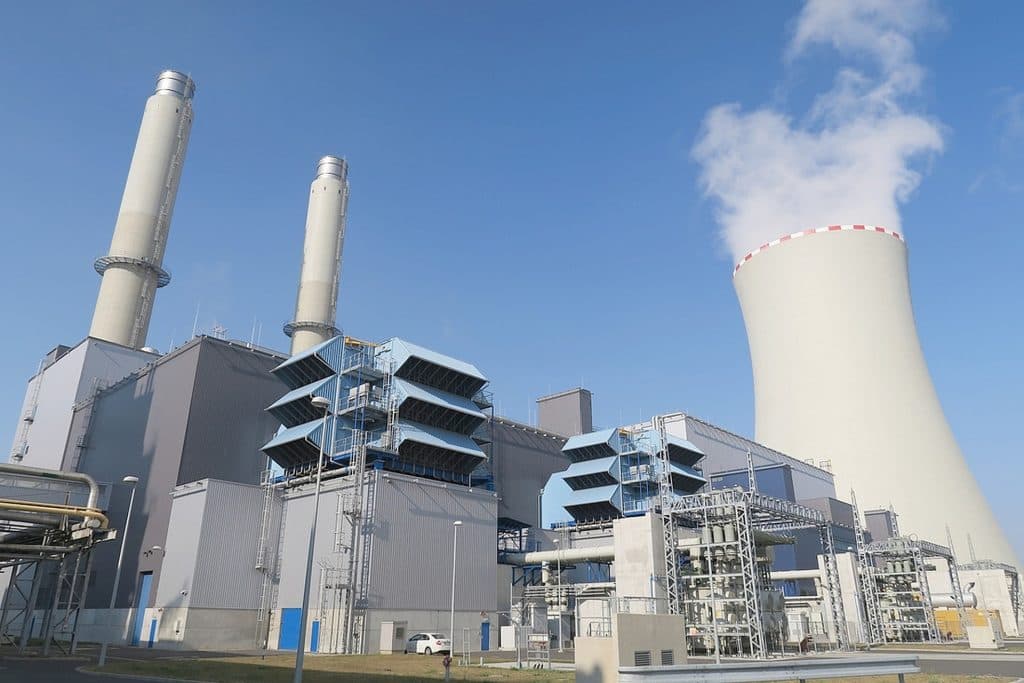
Germany’s Ministry of Economic Affairs is pushing for a law to support the construction of new power plants, so that tenders for new gas-fired power plants can be launched in 2025. The draft law, revised in response to criticism from energy associations, is now undergoing interministerial consultation. The opposition CDU has already announced that it will oppose it when it is debated in the Bundestag.
Germany’s Federal Ministry for Economic Affairs and Climate Action (BMWK) presented a draft law in September to support the construction of new power plants. The law is intended to ensure that power plants are built in the coming years to guarantee security of supply in the future when renewable energy production is low.
Energy associations pointed out that the terms of the planned auctions pose too many risks for investors. For this reason, the BMWK submitted an updated draft law and hopes it will be approved so that the first tenders can be launched in the first half of 2025.
The draft is now awaiting approval from other ministries before a full cabinet decision, scheduled for 4 December. The aim is then to pass it in parliament before the early elections in February, Tagesspiegel Background reported. However, lawmakers from the opposition Christian Democratic Union (CDU), whose support the minority government needs to pass the law, said they would oppose it.
The law includes auctions to support the construction of 12.5 GW of new power plants. Some are to be fuelled by natural gas and later converted to burn hydrogen. The Ministry of Economic Affairs expects the law to cost 17 billion euros if adopted, Tagesspiegel Background reported.
Opposition favours conventional gas-fired power plants with CCS
The energy industry has called for cross-party support for the law. Building hydrogen-ready power plants would take several years, so it is essential that tenders begin next year, said Kerstin Andreae, head of the energy industry association BDEW.
Corinna Enders, head of the German Energy Agency (dena), also described the construction of power plants as extremely important and urged the opposition CDU to approve the law before the new elections.
“Tenders for these power plants need to be launched urgently,”Enders told the online news outlet Table Media.
Jens Spahn, deputy leader of the opposition CDU/CSU parliamentary group, told Zeit Online that he did not want to discuss the law because it “does not go far enough”. Spahn also accused the current government of dragging its feet on the construction of new gas-fired power plants. The CDU/CSU’s aim is to build new conventional gas-fired power plants quickly and retrofit them with CCS, Spahn said. CCS technology involves capturing the carbon dioxide produced and storing it.
Another 200 GW of renewables by 2030
Germany has set a target of meeting 80% of gross electricity consumption with renewable electricity by 2030 and reaching 360 GW of installed capacity in wind and solar power plants by that year. That means adding a further 200 GW from today’s level. The growing electrification of sectors that still depend on other energy sources, particularly heating and transport, is also likely to increase overall electricity consumption in the coming years.
As a complement to the growing number of renewable energy sources and a replacement for retiring coal-fired power plants, Germany needs power plants that can help bridge periods of low renewable energy production. Energy companies are avoiding investment in such sources because new power plants are not economically viable without support, given their expected low utilisation.
Translation disclaimer
This article is a machine translation of the Czech original and has not yet been fully reviewed. In case of any doubt, please refer to the Czech version.
Sdílejte článek prostřednictvím:
You might also like


23 October 2026, 11:01


23 October 2026, 06:34