1 November 2026, 07:59
Loading...
Germany begins construction of key SuedOstLink line in Bavaria

David Vobořil
14 December 2023, 07:25

Construction of a key backbone power line has begun in the German state of Bavaria, several years behind schedule. With a transmission capacity of 2 GW, the line will connect wind-rich northern Germany with the industrial south.
Rising demand for electricity transmission in Germany, driven by the continued growth in the share of renewable energy sources, the politically accelerated phase-out of nuclear and coal-fired power plants, and new EU rules for the internal electricity market, poses fresh challenges for managing the German transmission grid. Building additional transmission lines is an important part of addressing these challenges.
Following an extensive planning and approval phase, TenneT has begun construction of the 780-kilometre SuedOstLink direct-current line. With the German grid regulator's approval for construction to begin early, work on SuedOstLink can start before a construction permit is issued. This significant acceleration of the line's construction has been made possible by a new law put forward by the German government as part of its so-called Easter package.
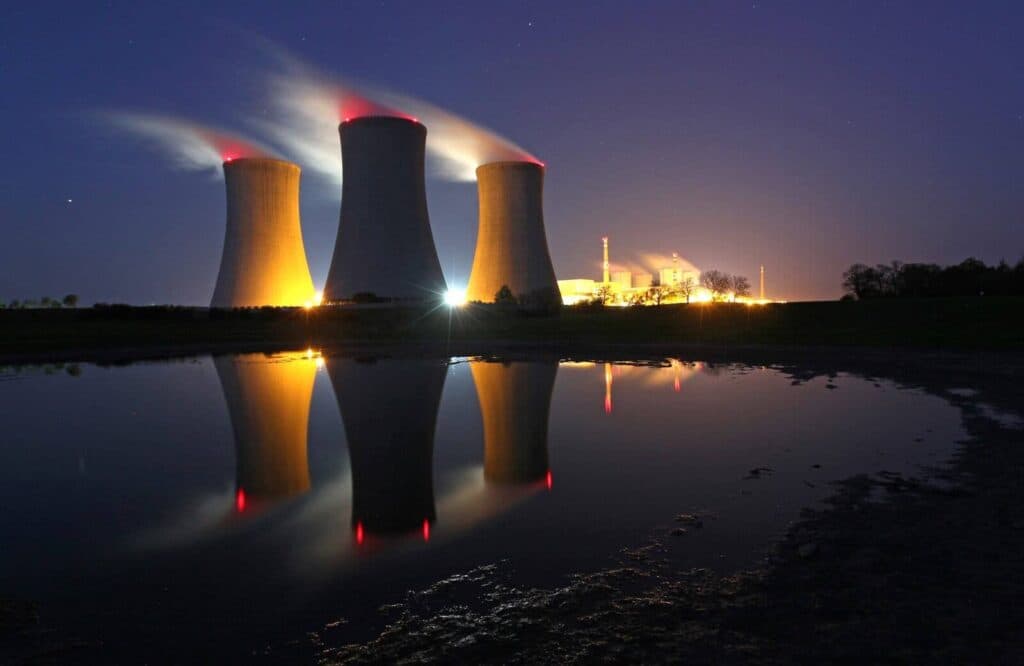
Construction began at the site of the decommissioned Isar nuclear power plant near Landshut, where the line's converter station will be located. The station will convert direct current to alternating current and vice versa, and connect SuedOstLink to the rest of the transmission grid near industrial centres, including Munich and Ingolstadt.
Germany needs to build thousands of kilometres of new power lines over the next two decades, “and they must be planned, approved and built quickly,” said Dieter Janecek, the government's coordinator for the maritime economy.
A backbone north-south line as the foundation of the Energiewende
The foundations of Germany's energy transition, known as the Energiewende, lie in building primarily north-south connections. The transmission of electricity from renewable energy sources—especially wind farms in the north—to centres of consumption, which are largely concentrated in southern and western Germany, is currently the country's biggest challenge.
Insufficient transmission capacity is why Germany has been regularly spending billions of euros a year on stabilising its transmission grid since 2017. Germany has also gradually shut down its remaining 8 GW of installed nuclear capacity, 4 GW of it in the south of the country. It is also gradually phasing out coal-fired power plants.
The solution to the widening regional imbalance between available and required capacity is expected to lie primarily in high-voltage direct-current (HVDC) backbone transmission lines. These include the new underground HVDC lines SuedLink and A-Nord, the aforementioned SuedOstLink, and the Ultranet project, which will use existing pylons for its 340-kilometre direct-current line.
Translation disclaimer
This article is a machine translation of the Czech original and has not yet been fully reviewed. In case of any doubt, please refer to the Czech version.
Sdílejte článek prostřednictvím:
You might also like

31 October 2026, 12:55

31 October 2026, 08:21
30 October 2026, 20:16