
23 October 2026, 14:38
Loading...
Germany moves forward with preparations for capacity mechanisms
Klára Čeperová
14 September 2024, 08:41
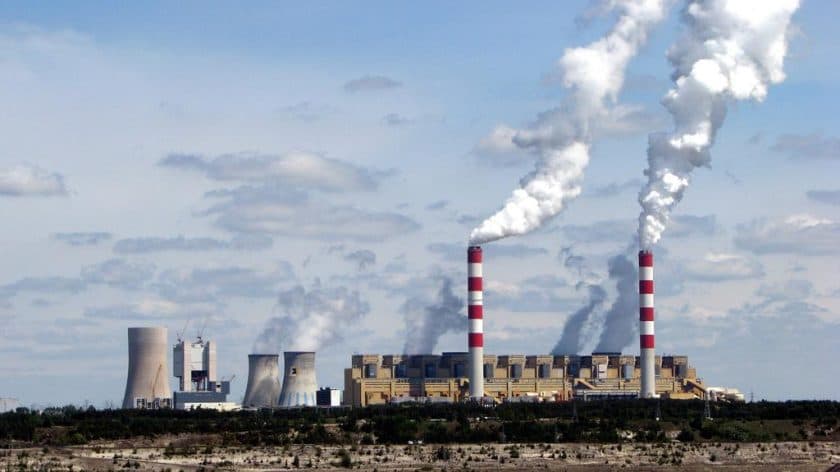
To prevent electricity prices from rising in the future, the German government wants to reverse the liberalisation of its electricity market and adopt a more interventionist approach by introducing capacity markets. What began as a February compromise to support new gas-fired power plants has become the subject of heated debate in Berlin.
At the end of the 1990s, at Brussels’ behest, Germany underwent an unprecedented liberalisation of its energy markets, with energy companies switching to a business model based on selling kilowatt-hours on a competitive market.
For the German market, this meant it was able to export an amount of electricity equivalent to Belgium’s current annual consumption and reduce German electricity prices, which fell by 49% between 2010 and 2016. Now, however, Germany appears to be moving towards reversing liberalisation, Euractiv reports.
Seeking to secure investment
In August, Germany’s Ministry for Economic Affairs presented an “options paper” on the future design of the country’s electricity market, proposing a combination of liberal and centralised elements, as seen elsewhere in Europe.
“It is clear that a free electricity market alone will not ensure the construction of larger power plants,” says Ingrid Nestle, a Green Party MP who speaks on energy issues for the party.
Among other things, the paper proposes creating a new “capacity market” that would pay generators a fixed fee based on available capacity, unlike the current liberal market, which rewards them for the energy they sell.
Germany had already pursued this approach, planning to support the development of gas-fired power plants through such a scheme. In 2022, Germany’s four transmission system operators commissioned Consentec and the Öko-Institut (Institute for Applied Ecology) to prepare a study on creating a capacity market specifically for the German electricity market.
Information from February indicates that the German government would like to have a capacity mechanism in place by 2028.
According to the German government, such a market based on available capacity would provide the desired “long-term investment certainty through centralised auctions with long contract periods”.
The government hopes to preserve the efficiency of a freer market by combining a centralised capacity market with local markets—at the cost of greater complexity.
“Germany is moving towards the de-liberalisation of the market in many areas,” explains Christoph Maurer, an expert on the country’s electricity market and managing director of consultancy Consentec.
What will the rules be?
Berlin is still grappling with the final proposal for the capacity market.
The utilities association BDEW and the gas industry group Zukunft Gas have expressed partial support, preferring a simpler capacity market to the proposed mixed model, while renewable energy lobby groups are concerned about any disruption to their business model.
“We warn against conducting risky experiments at this sensitive stage of the energy transition,” said Simone Peter, president of the renewable energy association BEE.
The consultation period with stakeholders ended on 6 September, and participants in the government’s electricity market discussion forum will discuss the results on 26 September.
Capacity mechanisms on the rise
The Czech Republic paved the way for introducing a capacity mechanism in its revision of the Energy Act last year. Various forms of capacity mechanisms, which are needed to keep selected dispatchable sources operating and, in particular, to build new dispatchable sources, are now in place in 8 EU member states.
Luxembourg, for example, has welcomed Berlin’s initiatives on cross-border coordination. Germany will also not be the first European country to turn to capacity markets.
“I believe Germany is in good company in Europe. Various countries already have capacity mechanisms,” Nestle said, adding that Belgium, France and the United Kingdom have already opted for some form of capacity mechanism.
Translation disclaimer
This article is a machine translation of the Czech original and has not yet been fully reviewed. In case of any doubt, please refer to the Czech version.
Sdílejte článek prostřednictvím:
You might also like


23 October 2026, 11:01


23 October 2026, 06:34