11 October 2026, 08:24
Loading...
Germany plans to cap land rents for wind farms. Banks warn of investment risks

David Vobořil
11 October 2026, 08:24
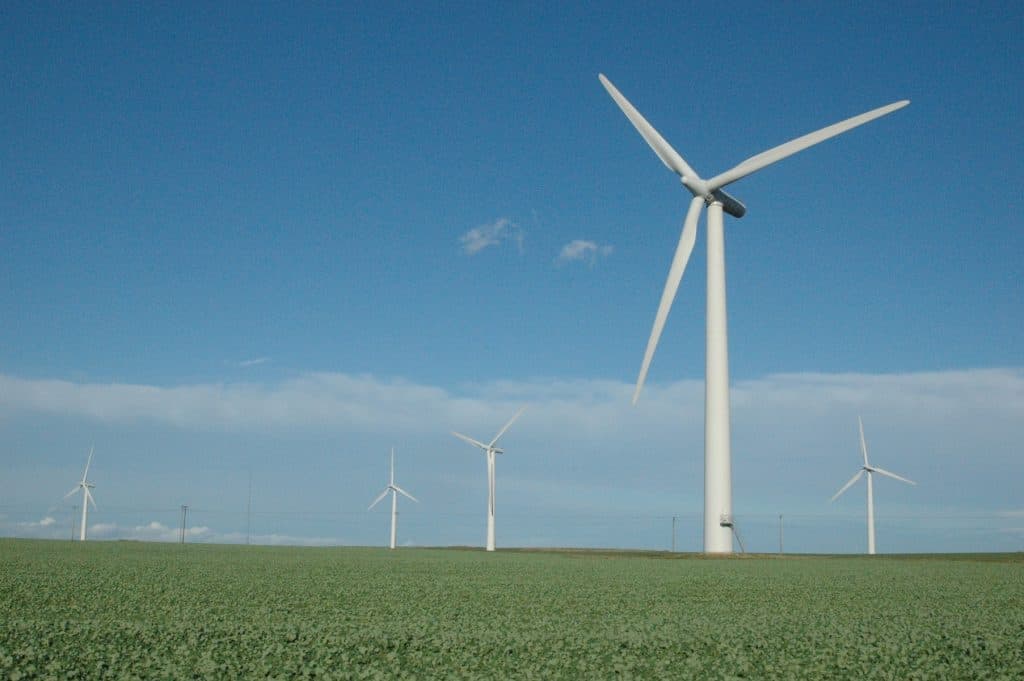
As part of its reform of support for renewable energy, the German government is proposing to limit rent for land used by onshore wind farms to 3.5% of their annual revenues. According to the Association of Local Utilities (VKU), the measure could reduce the cost of renewable energy support by around 13 billion euros by 2045. Banks and representatives of the renewable energy sector, however, warn that the regulation will increase investor uncertainty, raise financing costs and could jeopardise the construction of new wind farms.
Under the draft reform of the EEG, rent payments for land used by wind farms whose output receives state support would be capped at 3.5% of the farm’s annual revenues. The cap would apply for 20 years and would also cover some projects that have already signed lease agreements but have not yet entered operation. The originally proposed threshold was 2.5%; the economy ministry raised it following consultations with the federal states and industry organisations.
The measure is backed above all by the VKU, which represents municipal energy companies and other businesses. A study by the Research Center for Energy Economics, commissioned by the association, estimates that compared with a scenario in which rent averages 10% of revenues, a cap of 3.5% would reduce the cost of support under the EEG by around 13 billion euros by 2045. Annual savings could reach around 1.1 billion euros in 2045, according to the estimate.
The VKU argues that high rents increase project costs and therefore the level of support needed to make projects economically viable. Lower rents could lead to lower bids in public auctions and, in turn, reduce spending from the federal budget, the association says. At a rent equivalent to 3.5% of revenues, the landowner would receive an average of around 32,000 euros per year for each wind turbine.
Banks warn of higher financing costs
Eighteen banks have opposed the proposal, warning in an open letter to the ministry that a price cap would increase uncertainty around financing wind projects. In their view, the regulation would entail additional costs for checking, documenting and monitoring lease agreements over the long term. These costs could partly or entirely wipe out the intended savings.
The German Renewable Energy Federation (BEE) has also criticised the proposal. It says a uniform cap fails to account for regional differences in land prices or the specific circumstances of individual projects. Landowners would have no reason to lease land below market rates, the federation argues, while wind farm operators cannot simply replace suitable sites with others.
The issue also affects forest landowners and other associations representing landowners. They warn that limiting rents could reduce the willingness to make land available for new projects. A legal opinion commissioned by organisations representing forest owners and family farms also concluded that the proposal could conflict with constitutional protections for property and freedom of contract.
Germany seeks to reduce the cost of the energy transition
The German government is seeking to reduce the cost of the energy transition while also preparing changes to renewable energy support and the rules for connecting new power plants to the grid.
The outcome of negotiations on the reform could therefore affect not only the level of public spending but also the economic conditions for new wind projects.
Translation disclaimer
This article is a machine translation of the Czech original and has not yet been fully reviewed. In case of any doubt, please refer to the Czech version.
Sdílejte článek prostřednictvím:
You might also like

10 October 2026, 13:19

10 October 2026, 07:37

10 October 2026, 07:02