6 November 2026, 14:13
Loading...
Czech heat pipeline from Temelín to Budějovice to begin operating in September, supplying 800 TJ a year

oEnergetice.cz, ČTK
3 September 2023, 10:11
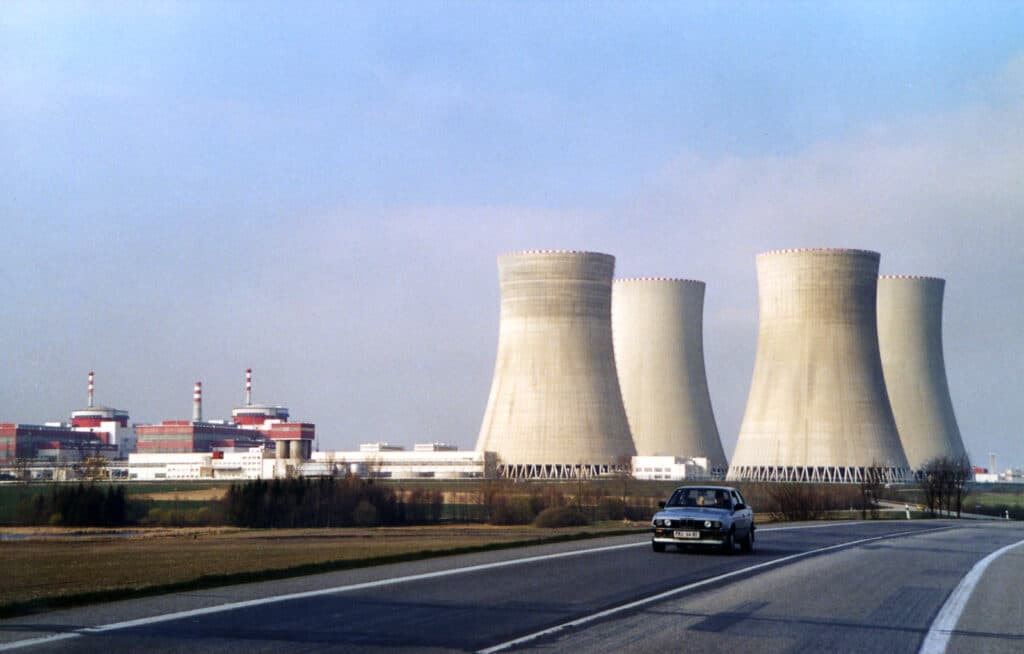
Trial operation of the 26-kilometre heat pipeline from Temelín to České Budějovice will begin in September, at the start of the heating season, and last for a year. The pipeline will supply heat to the city during the trial. The Temelín pipeline will cover 30 percent of Budějovice’s heat demand, supplying up to 800 terajoules a year. This is according to information in the Budějovice heating company’s newsletter. Temelín is expected to supply a third of the heating company’s customers. The company will thus save more than 80.000 tonnes of carbon dioxide emissions a year by not burning coal, Temelín spokesperson Marek Sviták told the Czech News Agency in July.
„For Budějovice, this will be a historic moment and the culmination of a long-standing strategic vision for heat supplies from a stable, emissions-free source. After all, connecting the city to Temelín was considered during preparations for the construction of the nuclear power plant. We are jointly testing and fine-tuning all parts of the system and verifying its operating parameters. This will be followed by trial operation with full heat supplies. It should continue throughout the coming heating season. The hot-water pipeline will then move into standard operation,“ said Martin Žahourek, a member of the heating company’s board.
The heat pipeline is expected to deliver 800 terajoules a year for at least 20 years. This will be the heating company’s first significant step towards ending coal combustion. Emissions from coal burning will fall by about 30 percent thanks to the pipeline. It is expected to cover the heat demand of approximately a third of the Budějovice heating company’s customers, with the remainder supplied from the municipal company’s own sources, Sviták said earlier.
Two 26-kilometre pipelines, each with an external diameter of 80 centimetres, will connect Temelín with Budějovice. Both pipes are buried at least 1.3 metres underground. „In winter, water at temperatures of up to 140 degrees Celsius will flow to České Budějovice; for the rest of the year, a temperature of 90 degrees Celsius will be sufficient,“ Sviták said.
The heat pipeline is being built by ČEZ, with an investment of 1.69 billion Kč. ČEZ initially announced that the pipeline would begin supplying heat to Budějovice at the turn of 2020 and 2021. Construction began in spring 2019. The project is about two years behind schedule. Work was halted for about a year from the end of 2020 after construction company Tenza went bankrupt. At the end of 2021, ČEZ selected the companies that will complete the pipeline: Elte and Energie – stavební a báňská.
Temelín is the country’s largest electricity producer, covering about a fifth of domestic consumption. ČEZ brought the plant online in December 2000. Last year, Temelín generated 16.29 terawatt-hours (TWh) of electricity. The plan to connect the nuclear power plant with the regional capital first emerged in the mid-1980s.
The Budějovice heating company supplies heat to around 30.000 homes and more than 400 businesses, institutions, schools, healthcare facilities and shops. Last year, it sold 1463 terajoules of heat, recorded revenue of 1.3 billion Kč and posted a profit after tax of 23.1 million Kč. This is according to its annual report.
Translation disclaimer
This article is a machine translation of the Czech original and has not yet been fully reviewed. In case of any doubt, please refer to the Czech version.
Sdílejte článek prostřednictvím:
You might also like
6 November 2026, 10:25