
28 October 2026, 15:10
Loading...
JRC: Which EU countries have the best conditions for using heat pumps?
Klára Čeperová
23 May 2024, 14:05
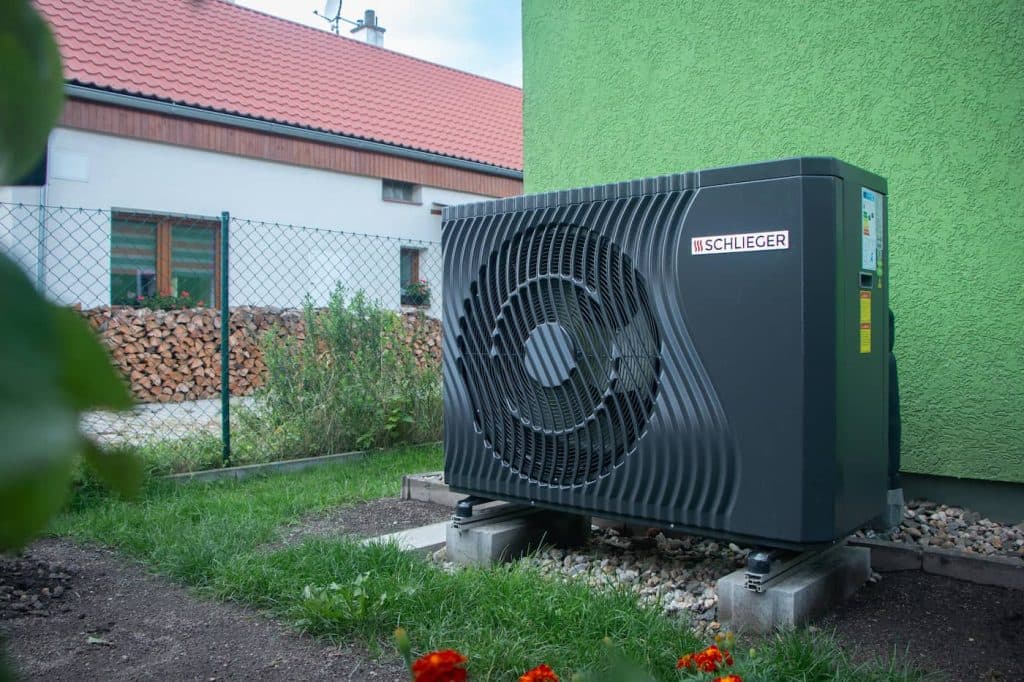
While operating a heat pump is still relatively expensive in much of Europe, a report by the EU’s official research body identifies three EU countries with ideal conditions for harnessing the economic potential of heat pumps. The main reason is the competitive price of electricity compared with gas. They are Sweden, Bulgaria and Portugal. However, these countries are able to make use of this advantage to varying degrees.
The European Commission estimates that more than 80 million heat pumps will be installed across the EU by 2040. They are considered a key climate-friendly component for heating and cooling homes.
However, given their higher upfront costs, heat pumps rely on electricity costing no more than roughly two and a half times as much as gas. This assumes that heat pumps operate roughly three times more efficiently than gas boilers. In that case, they deliver cost savings.
A new report by the EU’s Joint Research Centre has identified three EU countries where the ratio of electricity to gas prices favours heat pumps. They are Sweden, Bulgaria and Portugal. In each of these countries, electricity is no more than 50% more expensive than gas. The Euractiv website reports.
Subsidies
Another factor influencing the uptake of heat pumps is government subsidies for installation. More than two million heat pumps have been installed in Sweden—one in five residents owns one. By comparison, Germany has just one heat pump for every 50 residents.
In Sweden, subsidies of up to 1 890 euros were a major incentive. They are also effective in reducing emissions, as the country’s electricity mix relies heavily on nuclear and renewable sources. The report therefore states that each new heat pump in Sweden emits 99% less CO2 than fossil-fuel heating.
In Portugal, the heat pump market is dominated by air-to-air heat pumps. Despite favourable price ratios, there is only one unit for every 37 residents. An established support scheme covering 85% of installation costs, capped at 2 500 EUR, is intended to increase that number.
Bulgaria makes the least effective use of its potential. Despite favourable heat pump prices, there is only one installed unit for every 160 residents.
Countries with the highest costs
At the other end of the spectrum, in terms of the ratio of electricity to gas prices, are Italy, Belgium and Lithuania.
Italy shows, however, that high market penetration does not necessarily mean a high level of use. Decades of air-conditioning installations have led to a relatively high share of heat pumps in the country. These units provide cooling in summer. As a result, there is one installed unit for every 20 residents. But electricity in Italy is four times more expensive than gas, making heat pumps much less attractive for winter heating.
The situation in Belgium is similar—except that most heat pumps sold are larger and more expensive (but more efficient) types. Given an electricity-to-gas price ratio similar to Italy’s, their owners face a double cost burden: high investment and operating costs.
Lithuania has the least favourable ratio of electricity to gas prices, with electricity five times more expensive than gas. However, an effective subsidy scheme encourages consumers to switch to heat pumps, which have accounted for almost 50% of sales of new heating systems since 2019.
Translation disclaimer
This article is a machine translation of the Czech original and has not yet been fully reviewed. In case of any doubt, please refer to the Czech version.
Sdílejte článek prostřednictvím:
You might also like

28 October 2026, 13:08

28 October 2026, 11:10

28 October 2026, 09:08
