
23 October 2026, 14:38
Loading...
Developers withdraw the largest successful project from this year's EU hydrogen auction; it cannot be built

Eduard Majling
20 August 2025, 10:13
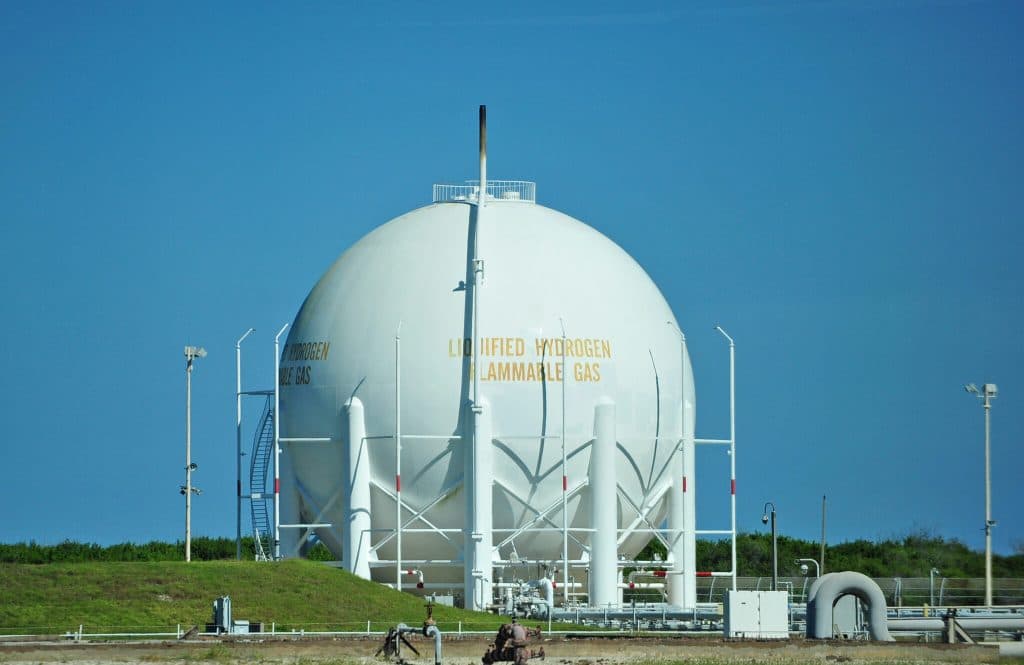
Another European Hydrogen Bank auction was held in March this year, the second in its history. Ultimately, 15 green hydrogen production projects secured support in the auction. However, at least one of them will not go ahead. The developers of the Zeevonk electrolyzer project have announced that it cannot currently be completed under the stipulated conditions. The massive electrolyzer was set to receive almost a quarter of a billion euros in operating support over 10 years.
Hydrogen has in recent years been viewed as one possible means of storing surplus electricity from renewable sources. Green hydrogen is also intended to help decarbonize industrial processes, replacing hydrogen produced conventionally from natural gas. However, producing green hydrogen is both financially and technologically demanding, prompting the introduction of various forms of support at EU level and in individual member states.
One such instrument is the auctions organized by the European Hydrogen Bank, two rounds of which have now taken place. In the second round, held in March this year, the planned 560 MW Zeevonk electrolyzer secured support as the last successful project. The electrolyzer, planned for the Netherlands, was expected to produce more than 400 thousand tonnes of hydrogen over 10 years of operation. It secured support of 0.6 EUR per kilogram of hydrogen produced in the auction, which would have brought the project almost 250 million euros in support alone.
One of the project's developers recently told Argus that the project will ultimately not go ahead. According to one of the developers, Swedish company Vattenfall, they decided to withdraw the project because it was required to enter operation by 2030. The company said construction delays affecting the necessary hydrogen infrastructure, which is not expected to be available until 2032—four years later than originally planned—would prevent the project from going ahead.
However, in view of delays to the planned hydrogen pipeline, the Dutch government has extended the permits for both the electrolyzer and the associated planned offshore wind farm until 2032, according to the news site. The government had already indicated the possibility of delays to hydrogen infrastructure last June, and confirmed in December that the pipelines would not be laid until 2031 to 2032.
Vattenfall did not immediately respond to Argus's question about why it and the other developer, investment fund Copenhagen Infrastructure Partners, had decided to enter the project in the auction.
Translation disclaimer
This article is a machine translation of the Czech original and has not yet been fully reviewed. In case of any doubt, please refer to the Czech version.
Sdílejte článek prostřednictvím:
You might also like


23 October 2026, 11:01


23 October 2026, 06:34