European industry seeks to decarbonise: Projects from recent auctions seek EUR 10 billion in support
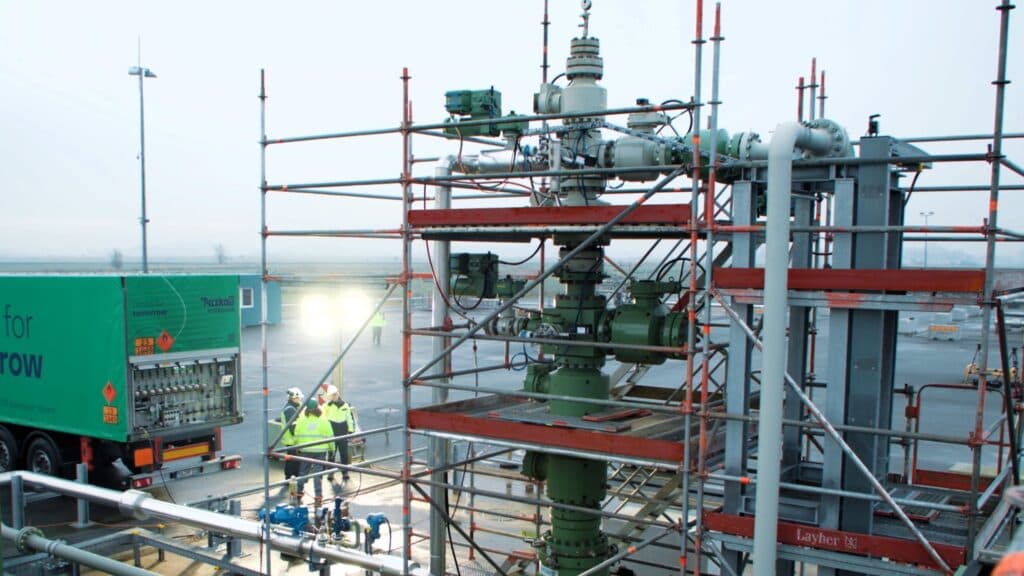
The 2025 Innovation Fund auctions (IF2025) attracted requests for financial support for decarbonisation in the hydrogen and industrial heat sectors worth almost EUR 10 billion. Demand thus far exceeded the amount earmarked to support the decarbonisation of European industry.
Under the EU Innovation Fund, one of the world's largest programmes supporting the financing and commercialisation of innovative technologies for net-zero and clean emissions, auctions were launched for the hydrogen and industrial heat sectors. A total of 143 projects applied, and the total funding they requested amounted to EUR 9.8 billion. However, demand in these auctions cannot be met, as the allocated funding totals EUR 2.3 billion. The Innovation Fund receives its funding from the sale of EU ETS emission allowances.
Some member states have decided to support domestic projects beyond the original allocation through the “Auctions as a Service” mechanism, contributing additional funding. Germany has allocated a further EUR 1.3 billion, while Spain has contributed EUR 490 million. Through this mechanism, both countries will primarily support hydrogen projects in their regions.
First auction for industrial heat
European industry and the heat associated with its industrial processes produce some of the highest levels of CO2 emissions. The primary aim of the support is to decarbonise industrial processes by electrifying heating solutions and using heat generated directly from renewable sources. The IF25 Heat auction is the first-ever EU-wide auction targeting this segment.
A total of 85 projects from 14 member states have applied, with requested financial support exceeding the allocated budget of EUR 1 billion by 1.4 times. Key technologies include heat pumps, electric boilers and furnaces, solar, thermal and geothermal energy, and thermal energy storage. A wide range of businesses from across industry applied to the auction. The key sectors include chemicals, food and beverages, pharmaceuticals, textiles, pulp and paper, glass, and iron and steel.
Interest in hydrogen auctions remains strong
Unlike the IF25 Heat auction, the IF25 Hydrogen auction was the third of its kind. Previous rounds were held in 2023 and 2024. However, this year's auction had the fewest project applications. It received only 58 bids, compared with 61 bids in 2024 and 132 in 2023. Nevertheless, the support requested exceeded this year's allocated budget of EUR 1.3 billion by more than sixfold.
Most projects focused on producing renewable hydrogen from non-biological sources, followed by projects involving electrolytic low-carbon hydrogen (i.e. from nuclear energy). This year also saw the introduction of projects in the maritime and aviation sectors. Projects from 11 countries could lead to the installation of electrolyser capacity totalling 4.3 gigawatts.
Auction context and mechanisms
The auction process is overseen by CINEA (the European Climate, Infrastructure and Environment Executive Agency), which will begin evaluating the bids received. This will include eligibility checks, assessment against qualification criteria, and price comparisons in accordance with the call conditions. The cost of hydrogen production is therefore a key indicator, as projects with the lowest hydrogen production costs are preferred.
Selected heat projects must reach financial close within two years and begin operations within four years, while hydrogen projects have two and a half years to reach financial close and five years to start production.
CINEA will announce the first results between May and June 2026. Grant agreements will then be signed, with final support awards expected in the fourth quarter of 2026.
Translation disclaimer
This article is a machine translation of the Czech original and has not yet been fully reviewed. In case of any doubt, please refer to the Czech version.