
24 September 2026, 11:23
Loading...
Hydrogen buses near Mníšek in Czechia delayed due to technology delivery

oEnergetice.cz, ČTK
21 November 2025, 14:34
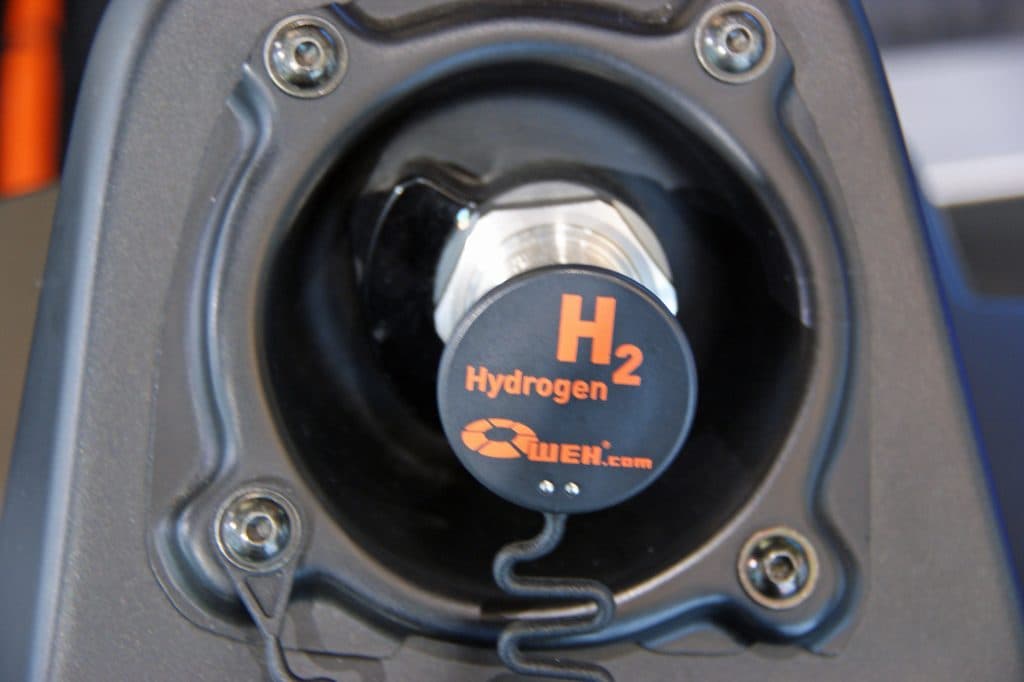
The introduction of hydrogen buses on regular routes around Mníšek pod Brdy near Prague will be delayed. The project was originally due to start in December, but will now begin during the first quarter of next year. The reason is a delay in the delivery of a refuelling station from a Scottish company. Hydrogen projects are facing delays across Europe, due to tight supplier schedules as well as the fact that the hydrogen economy in Europe is not developing as quickly as expected, ČEZ spokesperson Martin Schreier told ČTK today.
The Central Bohemian Region, ČEZ and Martin Uher Bus are cooperating on the pilot project. The zero-emission buses will use so-called green hydrogen, produced from renewable sources. According to earlier information, the cost of acquiring the ten vehicles will exceed 154 million crowns, with most of this expected to be covered by a European subsidy. The area around Mníšek will be the first in Czechia to operate hydrogen buses on regular routes.
ČEZ ESCO is building a hydrogen facility comprising an electrolyser with a power input of 540 kW, high-pressure storage for the hydrogen produced and a refuelling station with capacity for up to three hydrogen buses per hour. The winner of the bus tender, Polish company Solaris, has supplied ten hydrogen buses, which will be operated by contracted carrier Martin Uher Bus. They will run on routes 446, 517 and 688. The buses will have a range of up to 320 kilometres. The regional authority is financing transport costs, including hydrogen expenditure.

Hydrogen Source: Pixabay
According to Schreier, the site’s transformer substation, main switchboard and power connection have now been completed, along with the water connection, on-site infrastructure and roofing. As for the hydrogen facility, three containers including the electrolyser will arrive within several weeks. However, delivery of the last container—the refuelling station and dispenser for the hydrogen bus—has been delayed longer. “The supplier assures us that operations will start in the first quarter of 2026,” Schreier said.
According to him, innovative hydrogen projects are being delayed across Europe. These are pilot solutions that are only now being deployed on a larger scale. The delay to the hydrogen project will have no impact on passengers, the spokesperson said. Conventional buses will continue to operate as before on the routes intended for future hydrogen bus operations.
Hydrogen propulsion is significantly more expensive than diesel, and the purchase price of the buses is also higher. Its disadvantages include low energy efficiency, the need to build refuelling stations and a shortage of green hydrogen suppliers. Its advantages, on the other hand, include rapid refuelling, long range, low noise levels and the long lifetime of fuel cells.
Translation disclaimer
This article is a machine translation of the Czech original and has not yet been fully reviewed. In case of any doubt, please refer to the Czech version.
Sdílejte článek prostřednictvím:
You might also like

24 September 2026, 10:30
24 September 2026, 06:56
23 September 2026, 17:27