11 October 2026, 08:24
Loading...
Hydrogen is crucial to Germany's decarbonization, but current progress falls far short of expectations

David Vobořil
22 December 2025, 11:01
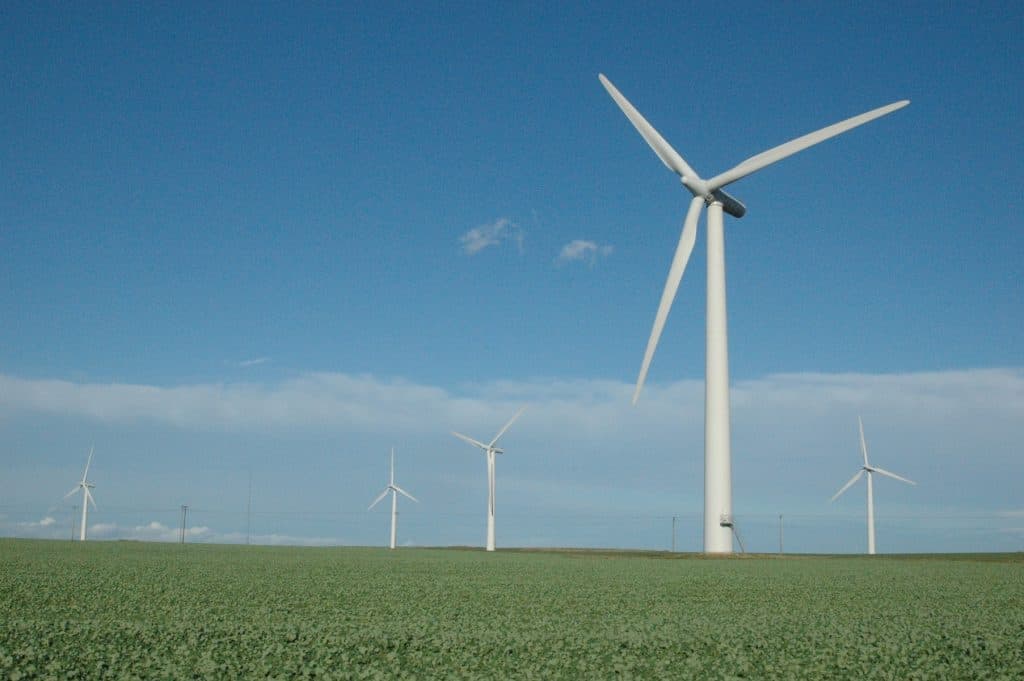
Germany's Energiewende relies on hydrogen as a key element in achieving climate neutrality, particularly in sectors that cannot be efficiently electrified, and for making use of surplus renewable energy. At the same time, it is clear that the development of the hydrogen economy is currently falling short of ambitious targets. Both production and demand are growing more slowly than targets require, and the future of gas networks is also uncertain. The government's expert commission is calling for systemic changes to Germany's hydrogen strategy.
Hydrogen plays a crucial role in Germany's transition to a low-carbon economy. It serves both as an energy carrier for sectors that cannot easily be electrified, such as some industrial processes in engineering, chemicals and steelmaking, and as a means of flexibly storing surplus renewable energy production using electrolyzers.
Electrolyzers are intended to make use of surplus electricity, particularly during periods of high renewable energy generation. This would avoid the need to size electricity grids for peak output or to curtail renewable energy generation.
Hydrogen is important for optimizing energy storage costs, because storing electricity alone, for example in batteries, is very expensive for long-term seasonal storage.
The current situation is far from the targets
In its latest report, the independent expert commission advising the German government on monitoring the energy transition warns that the development of the hydrogen market—including electrolyzers, hydrogen storage capacity and networks—is lagging far behind the targets set.
Under the updated framework of Germany's National Hydrogen Strategy, the goal is to build electrolyzers with a total capacity of 10 GW by 2030, but current electrolyzer capacity amounts to only hundreds of megawatts. From today's perspective, this target therefore seems unattainable.
The situation is similar on the demand side. Germany currently consumes around 55 TWh of hydrogen per year, but it is produced from fossil fuels. The hydrogen strategy assumes that total demand for climate-neutral hydrogen and its derivatives will reach 95-130 TWh per year by 2030, with around 50-70 % of this demand expected to be met by imports.
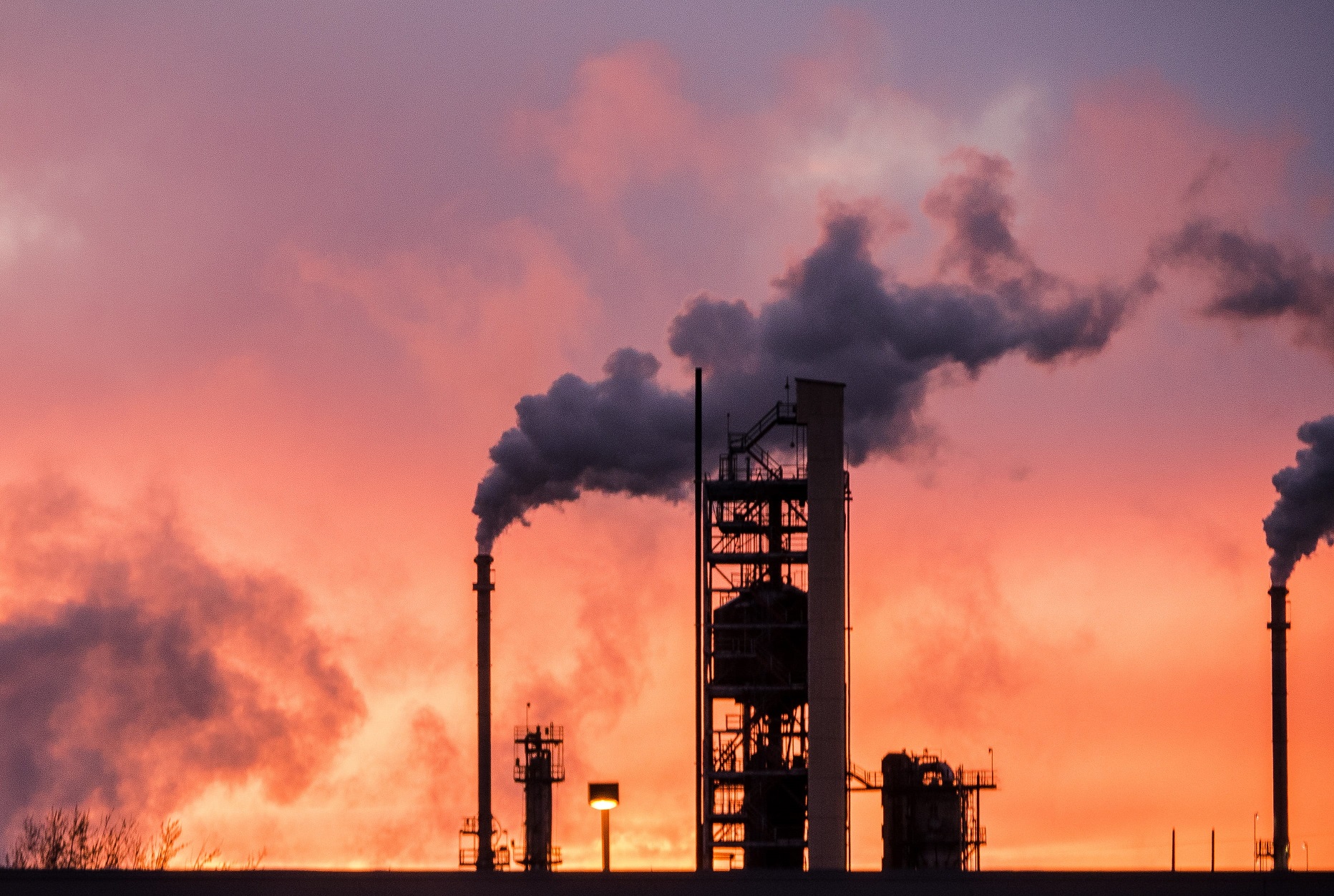
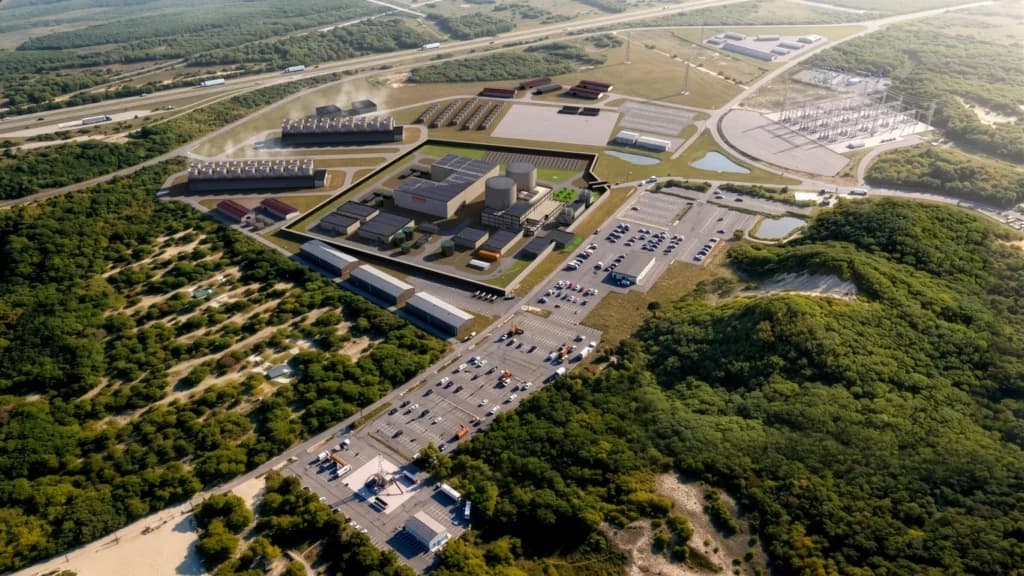
Source: pxfuel
According to the EWI H₂-Marktindex 2025, the main reasons for the low use of hydrogen in industry are the high investment and operating costs, which make climate-neutral hydrogen uncompetitive with fossil alternatives. Industrial consumers also point to the limited availability of hydrogen and the lack of infrastructure, which increases investment risks and complicates the planning of long-term projects.
The absence of stable market and price signals is another significant barrier, as is uncertainty about future regulation and support mechanisms. Together, these factors mean that although companies recognize hydrogen's strategic importance for decarbonization, they are still delaying its practical deployment.
Are gas pipelines the future of the hydrogen network?
Germany's hydrogen strategy envisages using part of the existing gas infrastructure to build the future hydrogen network.
A study by the German Technical and Scientific Association for Gas and Water (DVGW), a recognized standards body for the gas and water industries, confirmed that existing steel pipelines in Germany's gas network are suitable for transporting hydrogen. The study tested the effects of operational aging and the strength of steel under long-term operation.
Recent surveys show, however, that network operators themselves are increasingly less convinced by the prospect of using existing networks. According to a survey by consulting firm Horvath of 91 energy companies in German-speaking countries, most plan to reduce investment in gas networks, and a significant share expect them to be decommissioned by 2040.
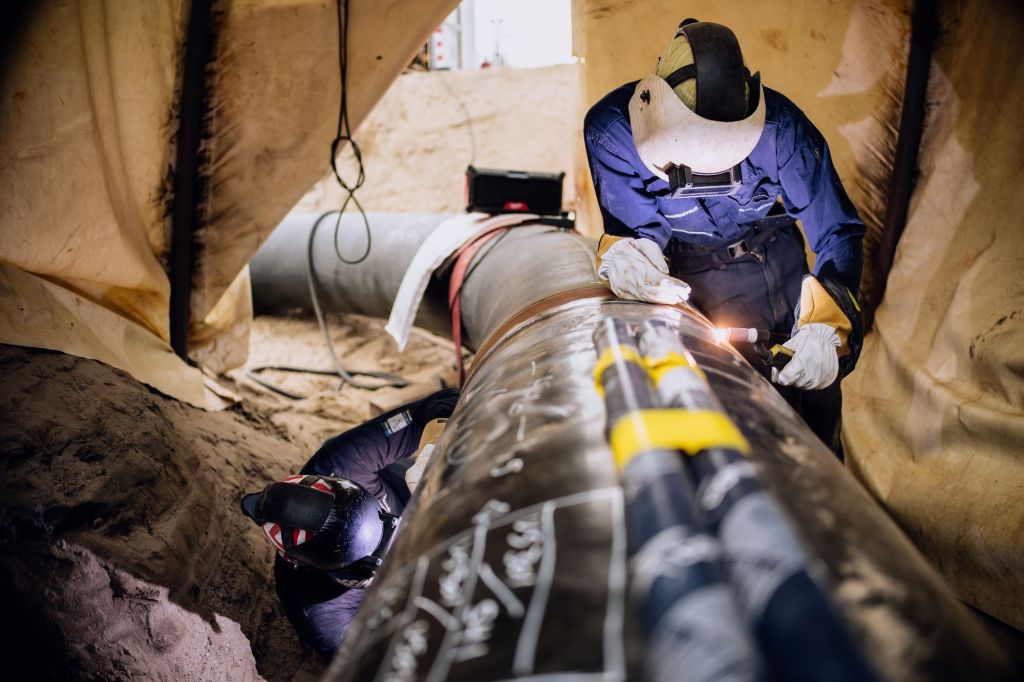
Construction of a hydrogen pipeline in Rotterdam. Source: Gasunie
Only about 4 % of respondents still see potential for converting these networks entirely to hydrogen, down from previous years, while many plan to significantly increase investment in electricity storage rather than converting gas networks. This signals a shift in priorities towards electrification and battery technologies, which are considered more attractive investments.
A survey by the German Association of Local Utilities (VKU) indicates a similar view. It found that the future of gas networks remains uncertain for 46 % of municipal and local energy companies, because there are no clear legislative rules for their conversion or decommissioning, and questions of funding and responsibility remain unresolved. Some companies are considering ending their operations entirely, while others are combining partial decommissioning with conversion for biogas or hydrogen. Strategic uncertainty, however, is holding back investment decisions.
Main problems
The expert commission's report identifies weak price signals and insufficient use of market mechanisms as the main obstacles. They fail to give investors adequate certainty and prevent the hydrogen economy from developing effectively. As a result, hydrogen technologies remain on the margins of investment interest, particularly where other technologies, such as electrification or storage, offer clearer and faster returns.
The commission also stresses that the current hydrogen strategy is not sufficiently clear or integrated into the broader policy framework, further reducing the attractiveness of investment and slowing the implementation of plans. The commission explicitly calls for a clearer, coordinated hydrogen strategy that brings market signals, the regulatory framework and expected infrastructure development together in a coherent plan.
The energy industry itself is calling for greater support. Kerstin Andreae, president of the German Association of Energy and Water Industries (BDEW), has stressed the need to accelerate the development of hydrogen-ready technologies and investment, including gas-fired power plants designed to switch to hydrogen, so that Germany does not miss the advent of the hydrogen economy. In her view, hydrogen is important not only for the climate but also for security of supply and industrial sovereignty, and Germany should strengthen European cooperation and regulation of the hydrogen market.
A vicious circle
Hydrogen's current role in Germany can be described as a "vicious circle" between supply and demand. Industry is not investing in hydrogen applications because of high prices, uncertain availability and a lack of infrastructure, while producers and investors are delaying the construction of electrolyzers and networks precisely because there is no guaranteed demand.
The key problem remains the economics of green hydrogen—its high cost compared with fossil alternatives—which the market cannot overcome without strong regulatory intervention or targeted support.
Translation disclaimer
This article is a machine translation of the Czech original and has not yet been fully reviewed. In case of any doubt, please refer to the Czech version.
Sdílejte článek prostřednictvím:
You might also like

10 October 2026, 13:19
10 October 2026, 07:37

10 October 2026, 07:02