23 October 2026, 14:38
Loading...
Second EU hydrogen auction failure continues: only 6 projects sign grant agreements

Jan Budín
6 February 2026, 11:51
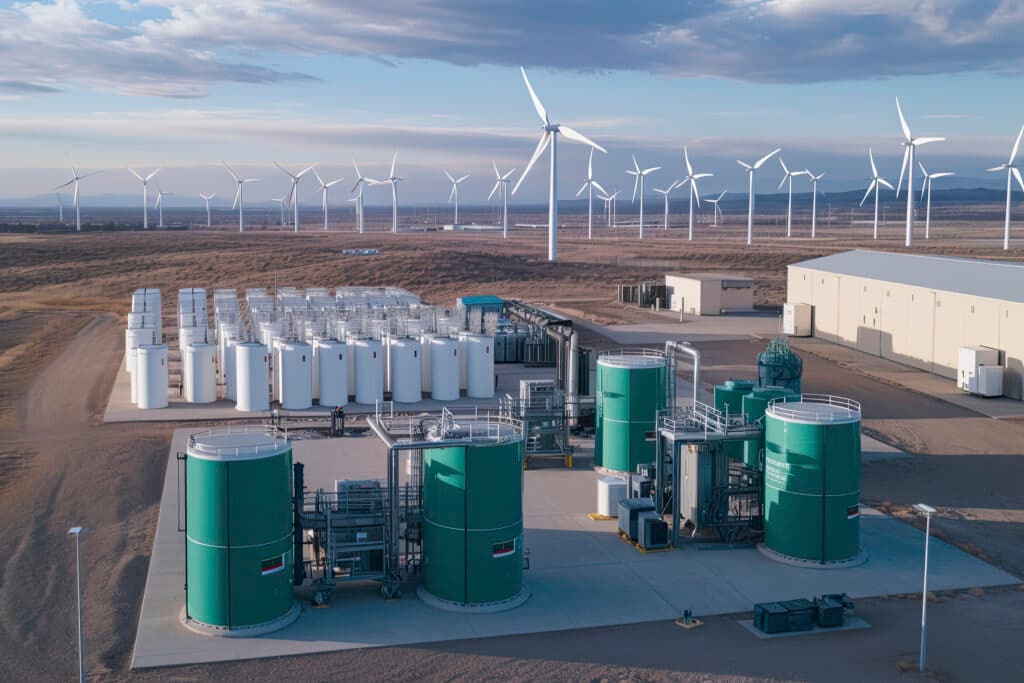
Ultimately, only 6 projects signed grant agreements under the second hydrogen auction, which took place at the turn of 2024 and 2025. If the projects are implemented, new electrolysers with a combined power rating of 380 MW will be built in the EU. This is only a fraction of the original 2.3 GW that secured operating support for the hydrogen produced in the auction.
When the European Commission published the results of the second European hydrogen auction in May last year, it appeared set to be a major success. A total of 15 projects, with electrolysers amounting to 2.3 GW of combined power rating, secured support in the auction. Many projects missed out. If all submitted projects had been implemented, 6.3 GW of electrolysers would have been built, producing more than 7.3 million tonnes of green hydrogen over 10 years.
However, the first bad news came in September. Nearly half of the successful projects (7) were withdrawn. The withdrawn projects had a combined power rating of 1.9 GW, equivalent to around 80 % of the capacity of all successful projects. The largest successful project, the 560 MW Zeevonk project, was also withdrawn. Its developers announced that the project could not currently be completed under the stipulated conditions, particularly because of the requirement to commission it by 2030. According to the company, implementation would be hampered by delays in the construction of the necessary hydrogen infrastructure, which is not expected to be available until 2032, four years later than originally planned.
The European Commission therefore offered funding to an additional 10 projects, although their combined power rating did not even reach half that of the withdrawn projects. Of the 18 projects offered grant agreements, only 6 ultimately passed this milestone, with electrolysers totalling 380 MW and allocated support of EUR 270 million.
"Looking at the final figures and comparing the submitted projects with the outcome, we can see that in the first auction, six projects signed grant agreements out of 132 bids, while in the second auction, six projects did so out of 61 bids. The success rate has therefore objectively increased. However, it is true that the support awarded fell and that a large share of the funding offered was not used,"said industry association Hydrogen Europe.
Hydrogen Europe sees the main reasons for this failure as the requirement for a bank guarantee equal to 8 % of the requested support upon signing the grant agreement, uncertain demand for hydrogen, and the requirement to commission the project within 5 years of signing the agreement.
In view of the failure of the second hydrogen auction, the association urged the European Commission to extend the deadline for projects to become operational in the third hydrogen auction. However, the Commission did not heed these calls and launched the auction at the beginning of December last year under conditions similar to those of the previous auctions. The auction's total budget is EUR 1.3 billion. The question remains, however, how much of this amount will ultimately be used.
Translation disclaimer
This article is a machine translation of the Czech original and has not yet been fully reviewed. In case of any doubt, please refer to the Czech version.
Sdílejte článek prostřednictvím:
You might also like
23 October 2026, 11:01
23 October 2026, 06:34