
23 October 2026, 14:38
Loading...
Economist: Germany will need twice the projected funding to support renewables

David Vobořil
19 August 2024, 17:07
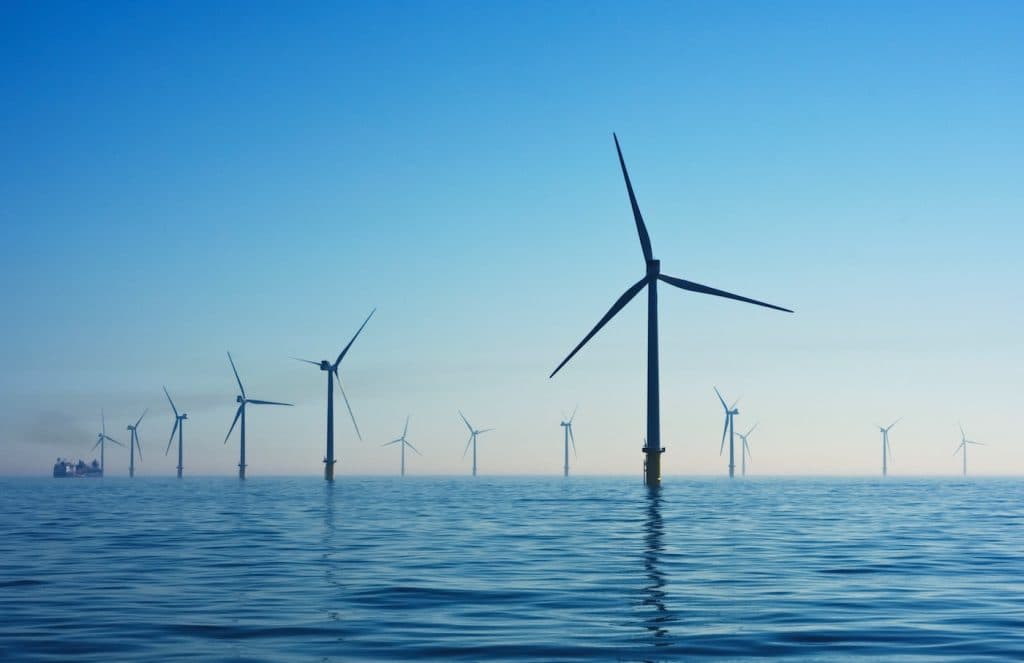
Low wholesale electricity prices during periods of renewable energy generation in Germany are significantly increasing the funding needed in 2024 to pay operators the support amounts agreed by law. According to calculations by economist Manuel Frondel of the Leibniz Institute for Economic Research (RWI), Germany will need twice the projected amount.
Frondel said the state would have to pay out approximately 23 billion euros over the whole of 2024, more than twice the amount originally projected. The government allocated approximately 11 billion euros from the federal budget to support renewable energy sources in 2024.
Renewable energy sources receiving support are paid the difference between the market value of electricity and a pre-agreed amount per unit of electricity generated. This means that the lower the market price, the higher the support payments. When renewable energy generation is high, the market price of electricity on the exchange falls, often even into negative territory.
The number of hours with negative electricity prices in Germany is rising. For this reason, Germany introduced a rule for power sources commissioned from 2016 onwards under which supported sources lose their entitlement to financial compensation if spot market electricity prices fall into negative territory for six consecutive hours. With the 2021 amendment to Germany’s Renewable Energy Sources Act (EEG 2021), Germany tightened this rule to four consecutive hours.
However, this rule applies only to power sources that secured support through an auction after the rule was introduced. There are still many renewable energy sources for which Germany must pay support even during longer periods when spot market electricity prices are zero or negative. You can read more about how renewable energy sources are supported in Germany in our series on Germany’s path to green support.
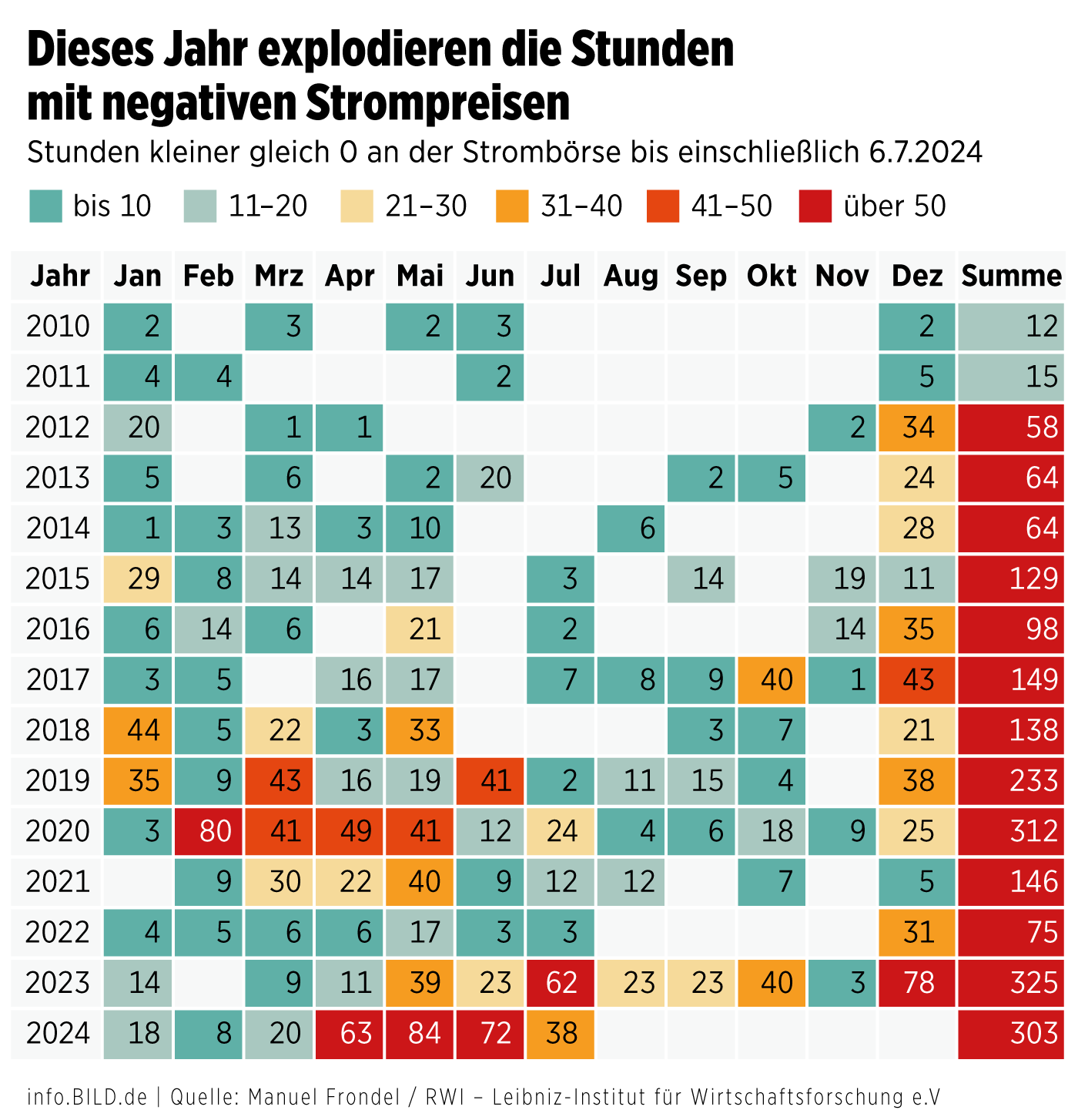
Number of hours with zero or negative electricity prices on the German spot market. Source: Bild
The difference between wholesale electricity prices and the guaranteed remuneration was previously funded by customers through a so-called renewable energy surcharge on their electricity bills. In 2022, amid Europe’s energy crisis, the government changed the funding mechanism to direct state support, with the aim of lowering electricity prices for consumers.
The substantial additional funding requirements are likely to affect ongoing talks within the coalition government on the 2025 budget. The budget was already complicated by a court ruling late last year that declared approximately 60 billion euros earmarked for climate and transformation projects illegal.
To keep within the permitted budget, the government was forced to quickly reallocate funds or cancel projects altogether. However, the government reopened talks on the 2025 budget after advisers to the finance ministry questioned the draft agreement.
Translation disclaimer
This article is a machine translation of the Czech original and has not yet been fully reviewed. In case of any doubt, please refer to the Czech version.
Sdílejte článek prostřednictvím:
You might also like


23 October 2026, 11:01


23 October 2026, 06:34