
23 October 2026, 14:38
Loading...
Energy future of the UK: Conservatives consider a return to fracking

Libor Láník
1 October 2024, 14:43
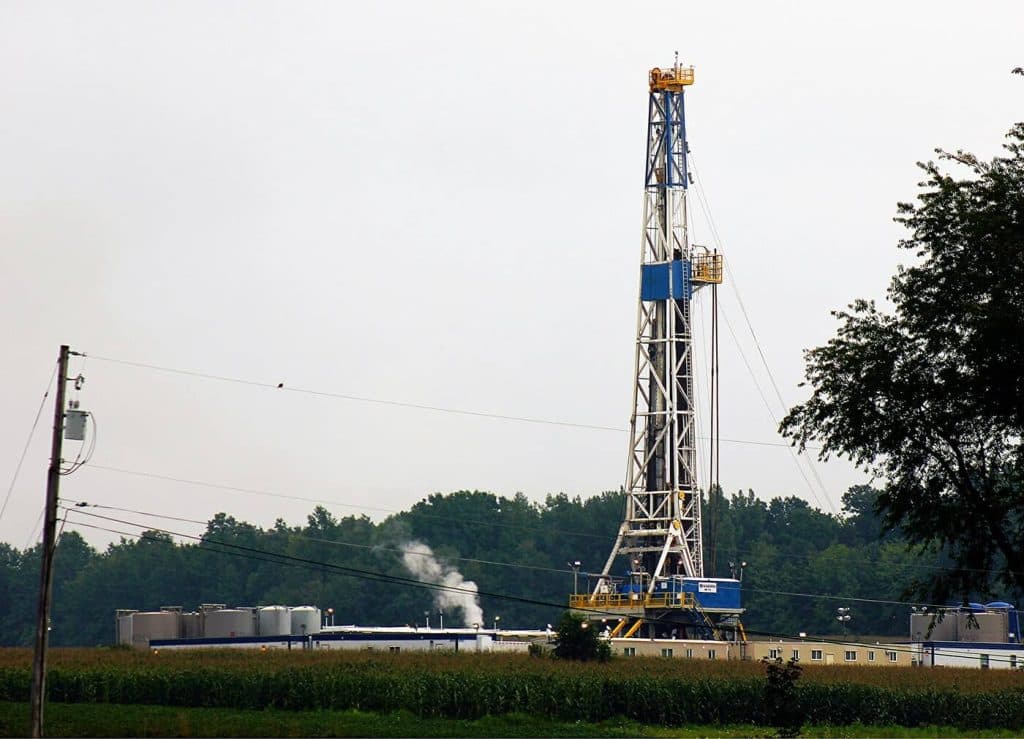
Senior figures in the UK Conservative Party are pushing to reintroduce fracking in England. They say the controversial extraction method should form the basis of party policy, the British newspaper The Guardian reported. Former party leader and Prime Minister Rishi Sunak, however, confirmed the ban on fracking in 2022.
The ongoing Conservative Party conference is discussing the reasons for the party’s recent failure in the general election. The conference is also serving as a platform for candidates vying to lead the party, one of whom will replace outgoing leader Sunak in November.
The conference is being held in Birmingham until 2 October. Among the many proposals put forward during discussions was the idea of reintroducing fracking as a possible way to reduce energy costs and ensure the country’s energy security. Supporters of the proposal point primarily to the large deposits in northern England.
One supporter is Conservative MP Andrew Bowie, who has endorsed Kemi Badenoch, a candidate for party leader and the current Shadow Secretary of State for Housing. Bowie made his position on fracking clear during the conference:
“I support fracking,” Bowie said. “I represent an oil and gas group that is entirely dependent on the oil and gas industry. I know fracking is not currently party policy, but I’m not sure what Kemi’s position will be.”
Badenoch responded: “I’m not setting out specific policies yet, but I know some colleagues want to lift the moratorium, and we will discuss this issue later.”
Shadow Energy Secretary Claire Coutinho went further, saying: “I support cheap energy, wherever it comes from. If there is evidence that fracking could provide cheap energy, we would certainly explore it.”
Fracking in the UK
Fracking, or shale gas extraction, is a highly controversial and frequently criticised process with a range of impacts. The question remains why the appetite for fracking has not waned, even after the moratorium was introduced. The key to understanding this push lies in the right wing of the Conservative Party, which wants to emulate the “shale revolution” that took place in the United States.
According to Lawrence Williams of the academic journal The Conversation, several factors are at play. One is concern about the competitiveness of energy-intensive British industry, rooted in “a long-standing sense of melancholy caused by the post-war decline of British industry”.
In the eyes of Conservatives, fracking could help ease these concerns, as well as strengthen energy security and increase tax revenues. The main idea is to create new jobs, with the largest shale gas deposits located in northern England, the regions worst affected by deindustrialisation.
Conservatives also see fracking as an opportunity it would be a mistake not to seize, and one that a sovereign power such as the UK cannot afford to miss. Extraction could also bridge the transition period between the gradual move away from coal and the expansion of nuclear power and renewables.
Finally, it should be noted that the Conservatives’ arguments run up against the widely held view that fracking represents a step backwards in the face of the climate crisis. Nor should we forget the earthquakes measuring 2.9 that extraction caused in 2019 at Preston New Road, which led to fracking being suspended in the UK.
Translation disclaimer
This article is a machine translation of the Czech original and has not yet been fully reviewed. In case of any doubt, please refer to the Czech version.
Sdílejte článek prostřednictvím:
You might also like


23 October 2026, 11:01


23 October 2026, 06:34