
8 November 2026, 13:59
Loading...
German Chancellor Scholz in Africa: a new geopolitical arena?

Libor Láník
1 November 2023, 11:26
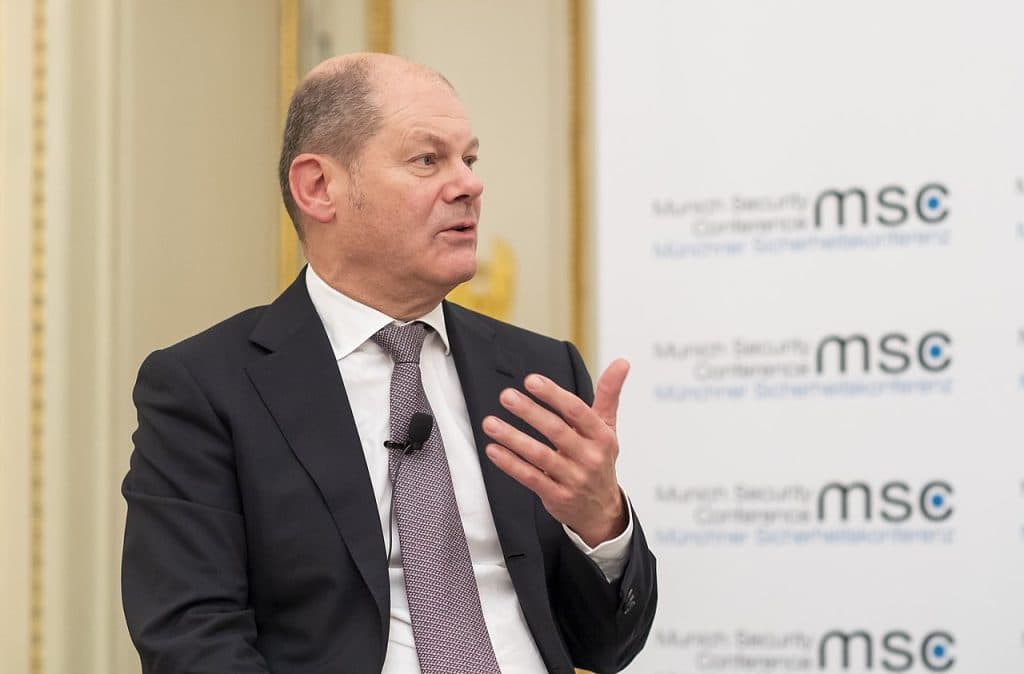
German leaders began their visits to the African continent on Sunday and Monday, respectively. This is Chancellor Olaf Scholz’s third visit since taking office, and this time he is travelling to Nigeria and Ghana. While Scholz holds talks in West Africa, German President Frank-Walter Steinmeier will visit the eastern part of the continent, namely Tanzania and Zambia. The aim of the visits is to strengthen economic ties, particularly in the energy sector. The considerable potential for cooperation, along with the context of recent global events, suggests that Berlin needs Africa more than ever.
Germany previously relied heavily on its energy partnership with Russia, a relationship reinforced by the infrastructure that had been built. Since the outbreak of the conflict in Ukraine, however, it has been forced to rethink its position and shift its focus in a much more global direction. Africa is now a very important area of engagement for Germany, with the German chancellor describing Nigeria as a key partner in the region, both economically and politically.
Germany imports Nigerian oil, but it is also eyeing the other mineral resources held by the continent’s most populous country. One reason for the visit is the chancellor’s push for natural gas supplies, which the large business delegation accompanying him would like to see secured. German funding could therefore make a significant contribution to the underinvested energy sector. Last but not least, Germany is also interested in mineral reserves that are in high demand today, namely nickel, manganese and lithium.
Fossil fuels, renewables and hydrogen
Recent developments make it clear that relations between European and African countries are changing. They are becoming much more complex, no longer consisting solely of development cooperation focused on energy poverty. More recently, we have increasingly seen an additional dimension in the form of energy diplomacy and technological cooperation.
Germany is a good example, and it is interesting to observe the two directions it is pursuing, which are to some extent contradictory. The first is the already briefly outlined focus on fossil fuels and the opportunity to tap African markets for oil or natural gas. The second is renewables and the enormous potential offered by Africa for solar and wind power. African initiatives to produce hydrogen have also emerged in recent years.
Hydrogen may be a good indicator of these newly complex and more ambivalent relationships. On the one hand, Germany sees hydrogen as a path to pursue as part of its decarbonisation efforts. It is therefore willing to invest in major green hydrogen production projects in South Africa and Namibia. On the other hand, it is also investing in projects such as HyAfrica, which aims to assess the socioeconomic impact of natural (white) hydrogen resources. Research is being conducted in promising regions of Morocco, Mozambique, South Africa and Togo, including an assessment of the potential for using hydrogen as an energy source for local communities. The hydrogen revolution could therefore connect the global North with the South.
The future of relations is uncertain
The African continent is becoming a new geopolitical arena, attracting the attention of every global power. Demand for Africa’s mineral resources will undoubtedly continue to grow, along with the attention paid to the countries themselves.
However, the question remains whether the parties involved will reach a mutual understanding, or whether their relationship will remain limited to simple imports and exports. In other words, will the global powers take mutually beneficial agreements into account, or will Africa become merely an object of interest? The ideal outcome should be the creation of a value chain that is profitable for everyone involved.
Translation disclaimer
This article is a machine translation of the Czech original and has not yet been fully reviewed. In case of any doubt, please refer to the Czech version.
Sdílejte článek prostřednictvím:
You might also like

8 November 2026, 08:10
7 November 2026, 17:23
7 November 2026, 13:37