Korean shock for nuclear energy
This year’s fall of South Korean President Park Geun-hye over a corruption scandal has come as a shock to nuclear energy. Not only in Korea, but worldwide. It could also affect the tender to build new reactors in the Czech Republic, where the Koreans have so far been among the leading favourites.
South Korea’s new president, Moon Jae-in, has decided to pursue a nuclear exit in an almost German style – no more new reactors, no lifetime extensions for existing ones, and even a suspension of the advanced construction of the two latest Shin-Kori 5 and 6 reactors.
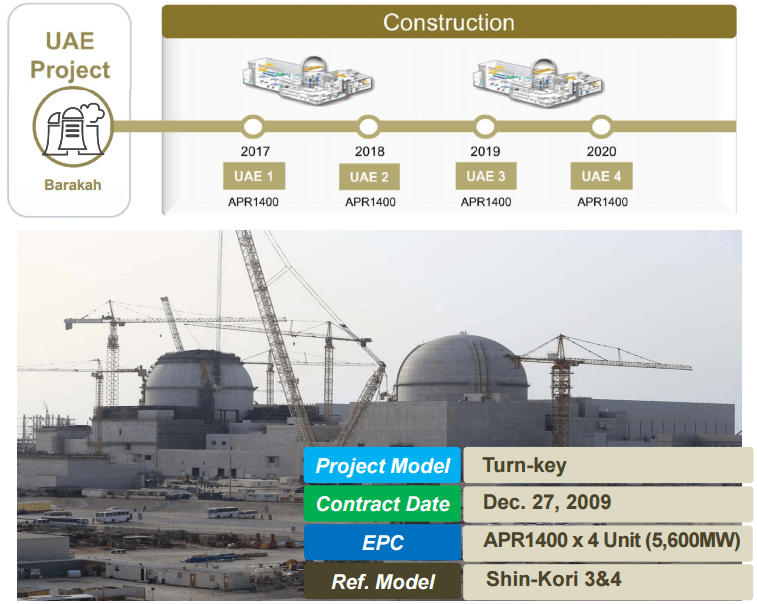
Supporters of nuclear energy have often argued that the sector’s problems in the West, particularly in the US and France, are offset by a nuclear boom in Asia. And Korean nuclear power has indeed seen strong growth over the past decade. The Koreans are building the Barakah nuclear power plant with four reactors in the United Arab Emirates, currently the largest and probably the most successful project in the world. Unlike many of their competitors, the Koreans are able to more or less keep to budget plans and schedules.
Only China and Russia left?
But now it appears that the Koreans are voluntarily giving up their role as leaders. And sceptics may argue that nuclear power development is now driven only by China and Russia – countries whose political systems are far from Western-style democracies.
Such a conclusion would be premature – the Americans, French and perhaps even Koreans have not yet had their final say in nuclear power. India is planning a major boom in new reactors, although it is not yet among the strongest drivers of technological development. Nevertheless, Korea’s retreat from nuclear power is one of the worst pieces of news for nuclear energy supporters since the Fukushima accident in Japan.
Fukushima itself has made a major contribution to the hard-line stance of Korean nuclear opponents today, with a significant share of the public not considering nuclear power safe. In this respect, parallels can be drawn with Japan and Germany. It is telling that Moon Jae-in had virtually no opponent in the election who defended nuclear energy. On the other hand, the right-wing opposition and, more or less cautiously, representatives of Korean industry are now speaking out against his anti-nuclear policy.
Grateful Arabs, but…
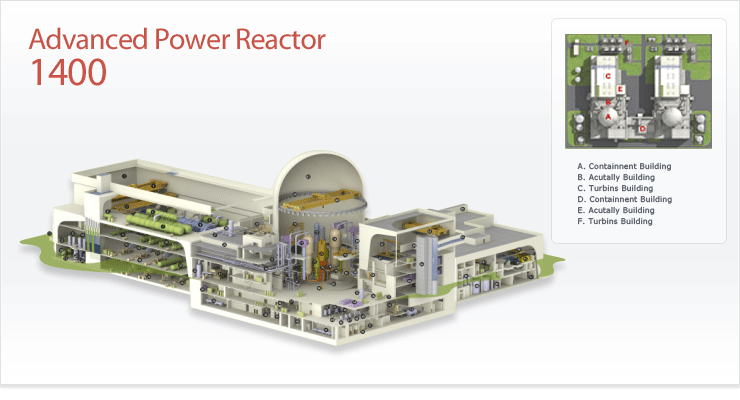
While Emirati Arabs are showing gratitude to the Koreans for helping to meet their energy needs with the latest APR-1400 reactors, Seoul shocked many people precisely by suspending already advanced construction projects for Shin-Kori 5 and 6 reactors of the same type in Korea itself. Construction began in June last year, and the two reactors were to have a total installed capacity of 2.8 gigawatts.
Whether this is merely a temporary suspension of reactor construction or their permanent closure will be decided by a kind of “citizens’ committee”, made up of prominent members of the Korean public who, according to critics, are not experts in nuclear energy. There are concerns that the panel’s task is merely to endorse President Moon Jae-in’s will.
Opponents of the president’s policy, including the opposition Liberty Korea Party, point out that cancelling the entire project would mean losing the $2.3 billion already invested and many jobs.
When speaking of the shock caused by the new Korean policy, it could affect not only the regional economy around the construction site, but also the entire industry that had been poised to carry out further projects both in Korea and abroad.
The new policy could therefore hurt both major utility KEPCO and its subsidiary Korea Hydro & Nuclear Power (KHNP, which is also interested in new reactors in the Czech Republic), as well as, for example, the world-renowned manufacturer of turbines and other equipment, Doosan.
How to revive hopes
Korean industrialists certainly still hope that they can at least temper the approach of the president and the government in Seoul. They may try to persuade politicians by pointing to the further overseas projects taking shape for Korean companies after the successful Barakah project. They can also point out that without the development of nuclear power and the related domestic nuclear industry, Koreans will find it much harder to compete on global markets.
It is paradoxical that while politicians are now doing nothing to make things easier for Korean nuclear companies at home, many Americans and Japanese would instead welcome KEPCO taking over from Toshiba the entire Westinghouse business, which is now undergoing bankruptcy proceedings. Americans would welcome the Korean company with open arms, if only to ensure that China or Russia’s Rosatom do not exploit Westinghouse’s current situation. The Koreans clearly do not appear overly eager for such an adventure, but they could take over Toshiba’s nuclear power plant construction project in the UK. They could in fact enter several projects there.
Partial relief?
Many have certainly been eagerly awaiting the stance the new rulers in Seoul would take towards Korean companies’ ambitions to export nuclear reactors around the world. As convinced opponents of nuclear power, would they also resist Korean nuclear involvement in global markets?
In this sense, Korean industrialists may have been able to breathe a small sigh of relief. When South Korea’s new Minister of Trade, Industry and Energy, Paik Un-gyu, spoke generally about conventional energy, he declared that it was necessary to “embrace the global trend towards energy without nuclear power and coal”. On the other hand, he admitted that he had no ambition to curb exports; quite the contrary. He justified this double standard by saying that South Korea already has too many nuclear reactors relative to its area (there are 24, and the new government has already managed to close one), while other countries may be in an entirely different situation.
He also confirmed that Korea’s flight from nuclear power would not be abrupt; abandoning nuclear energy is a matter for the coming decades.
Exports without a domestic base
The question, however, is whether countries – and companies from those countries – that have given up domestic development can succeed in global nuclear power. Examples from other states so far suggest that the prospects may not be great.
German companies E.ON and RWE, for instance, planned to build a nuclear power plant in the UK, but eventually abandoned the plan – apparently pushed to do so by the overall anti-nuclear climate in their home country of Germany.
Germany may be an extreme example, but doubts also concern the ambitions of Japanese companies. After the Fukushima accident, Japan shut down its nuclear power plants, and its famous companies also began focusing primarily on new opportunities abroad. In Toshiba’s case, however, many plans have foundered, not least because of problems with power plant construction in the United States, where its subsidiary Westinghouse operates.
It will be interesting to see how other Japanese companies, Hitachi and Mitsubishi, fare going forward. The latter, thanks to its joint venture with the French (Atmea), is among the bidders to build reactors in the Czech Republic.
For now, opportunities remain
The Koreans may be better placed in some respects – their rise in nuclear power has been impressive in recent years, and the Barakah project in the Emirates is a very good reference. A project in the UK also looks promising, which would give the Koreans a foothold in Europe. Other prospective markets could include Saudi Arabia, South Africa and Iran. And perhaps the Czech Republic too.
However, if we assume that nothing changes in Korea’s current anti-nuclear trend even over the longer term, it would undoubtedly affect the country’s export capabilities as well.
Korean nuclear energy expert Roh Dongseok, for example, points out that companies building new reactors cannot rely on past experience. Instead, they must continually revise and modernise their reactor designs. And that is difficult without a domestic market.
Korea’s withdrawal from nuclear power would also be problematic for suppliers focused on a limited number of individual components for power plants.
Seeking a compromise?
Nuclear supporters will now hope that construction of the Shin-Kori 5 and 6 reactors will at least not be halted completely for the time being. And that other arguments for taking a more considered approach to leaving nuclear power will also prevail. Besides the aforementioned interests of industry, these include energy security, potential import dependence, environmental impacts and the limited potential of other energy sources.
A nuclear exit may boost renewables, whose share remains very limited (a 5% share of electricity generation), but in the current situation it will primarily help gas. And gas must be imported.
One of the strongest arguments will probably be concern over the loss of Korean know-how. According to critics, a government with a five-year mandate should not destroy fifty years of know-how in nuclear technologies.
On the other hand, nuclear opponents may argue that Korea could successfully spread its know-how in renewable energy. And realists will – as elsewhere in the world – seek a compromise that ultimately provides space for all low-emission sources.
The author works as a consultant and energy project specialist for the HATcom agency.
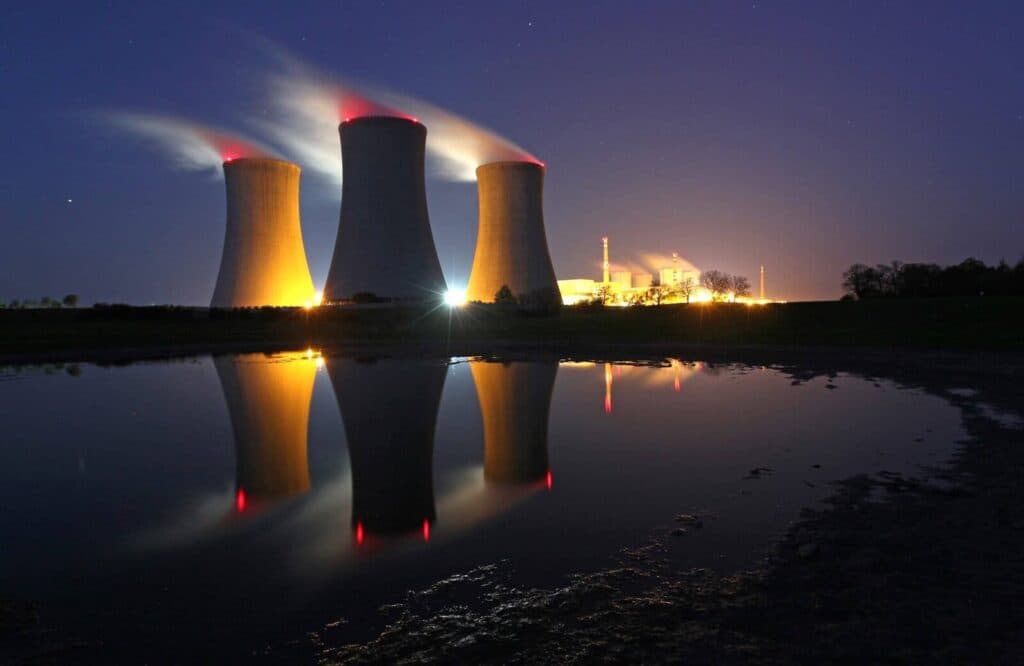
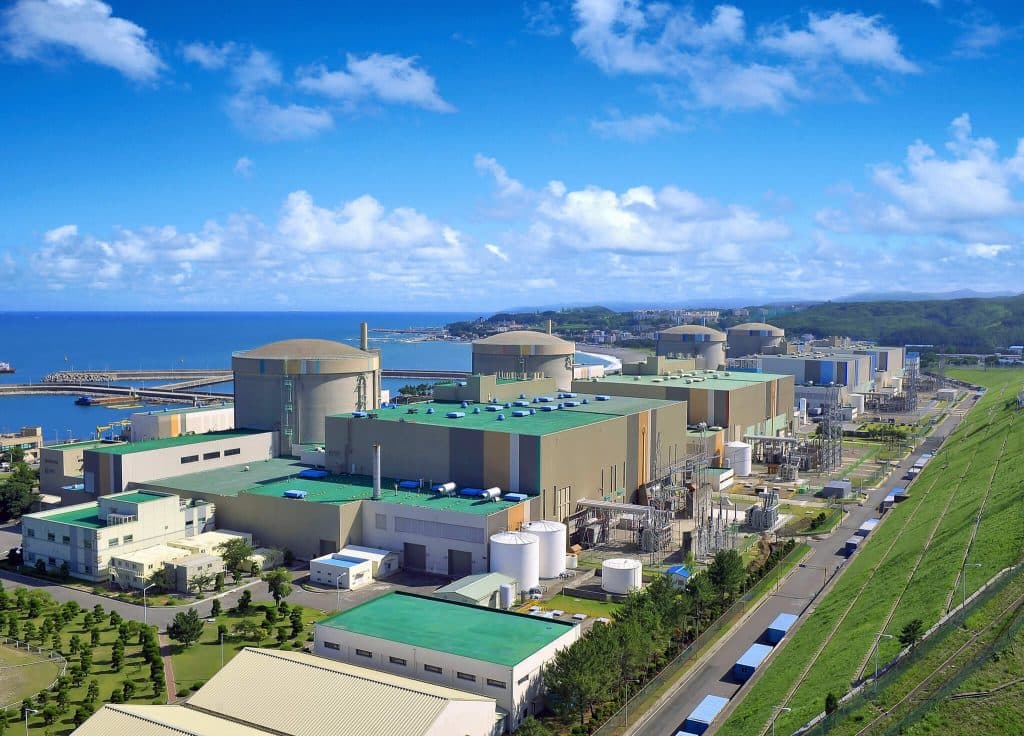
Lead photo: South Korean Wolsong nuclear power plant, source: IAEA Imagebank, Flickr
Translation disclaimer
This article is a machine translation of the Czech original and has not yet been fully reviewed. In case of any doubt, please refer to the Czech version.