
23 October 2026, 14:38
Loading...
Spain's grid is changing: How a €750m investment will help ensure safe operation

Jakub Malý
11 April 2026, 08:35
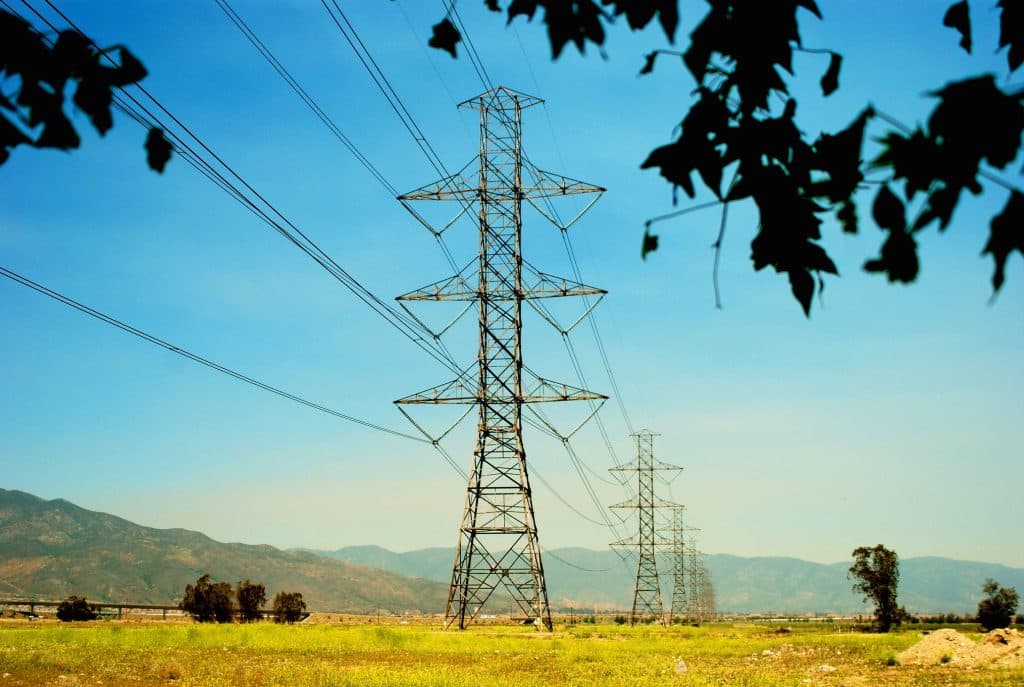
In recent years, the European energy debate has focused mainly on new installations of renewable energy sources, battery storage and the development of flexibility. Less attention is paid to what is happening “under the bonnet” of the power system itself. Yet this is precisely where significant attention is now being directed in Spain. In summer 2025, the Spanish government approved a package of 65 measures to strengthen the resilience of the transmission system, with total investment of €750 million. The package also includes the deployment of synchronous condensers, for the first time on a larger scale on the country's mainland.
Put simply, a synchronous condenser is a rotating synchronous machine that does not directly generate marketable electricity, but provides crucial system services to the grid. It helps regulate voltage, supplies reactive power, increases short-circuit strength and contributes system inertia. These are parameters that were, to a large extent, “automatically” provided by conventional synchronous power plants in the past, but are becoming scarcer in the grid with the growth of solar PV, wind and other "non-synchronous resources". The Spanish government and technology suppliers openly state that improved voltage control, greater stability during oscillations and higher system strength are among the main reasons for this investment.
According to information published so far, the first four mainland projects are being prepared at the Santa María de Grado node in Asturias, Brovales in Badajoz, Beariz in Galicia and Belinchón in Castilla-La Mancha. Deployment is also continuing in island systems, particularly in the Canary Islands and the Balearic Islands, where the need for system stability has traditionally been even more sensitive. The Spanish debate is therefore not about a marginal technological episode, but about part of a broader overhaul of the system for operation with a higher share of variable renewable energy sources.
Response to last year's blackout
The decision cannot be separated from the large-scale blackout of 28 April 2025, which affected mainland Spain and Portugal. The final report by the ENTSO-E expert panel, published on 20 March 2026, described the outage as the result of a combination of several factors: problems with voltage and reactive power control, system oscillations, rapid changes in generation and the subsequent disconnection of some resources. In other words, it was not a single error, but an interplay of technical and operational weaknesses in a system undergoing rapid structural change. In the Spanish context, synchronous condensers are therefore not a luxury addition, but a response to very specific operational experience.
Alongside the expansion of solar PV and wind power plants, the importance of system costs, grid stability and technologies that ensure its safe operation is growing. Some experts therefore point out that the power system still has a strong physical dimension that cannot be fully replaced by software, market signals or flexibility on paper, while others note that synchronous condensers alone will not be enough without a broader combination of battery storage, grid-forming inverters, better operational management and a more active role for distributed resources and demand. This is the main European relevance of the Spanish case: the debate is not over whether renewable energy sources or conventional power plants should take priority, but over what the new system architecture should look like—one that, alongside low-cost generation, also ensures sufficient stability, resilience and operational security for the entire system.
Translation disclaimer
This article is a machine translation of the Czech original and has not yet been fully reviewed. In case of any doubt, please refer to the Czech version.
Sdílejte článek prostřednictvím:
You might also like
23 October 2026, 11:01
23 October 2026, 06:34