Interview: How does energy feature in the US presidential election?

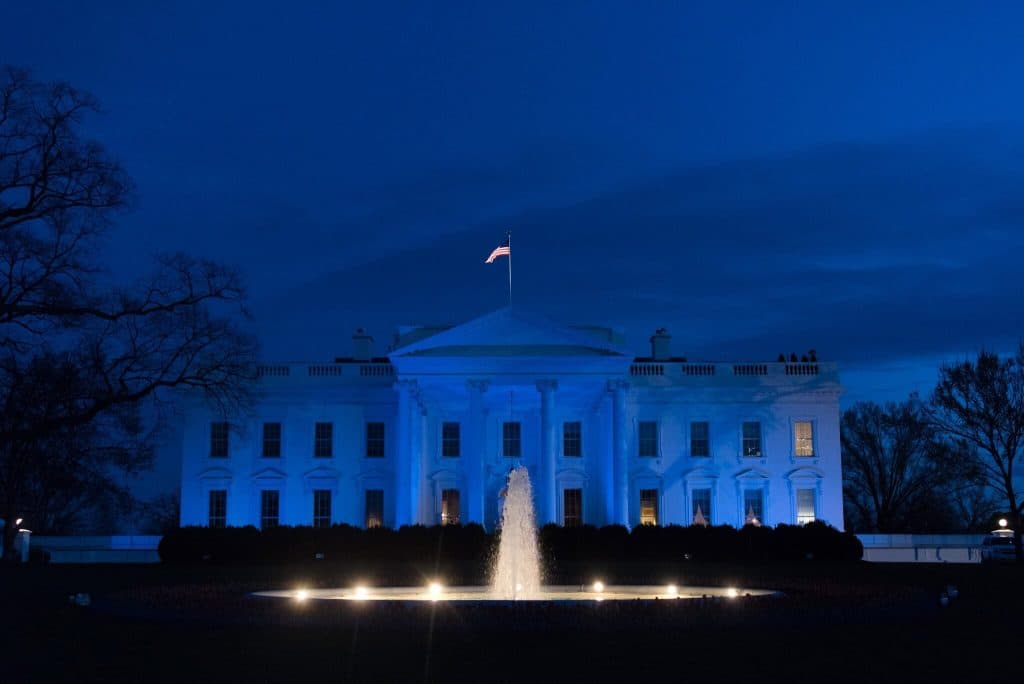
In the coming days, much of the world will be watching the US presidential election with bated breath. In this context, Martin Jirušek spoke to our website about whether energy is an issue for presidential candidates today, how the two parties approach energy issues, and whether there is still any difference between Republicans and Democrats on these issues.
Profile: Martin Jirušek, Ph.D., works at the Department of International Relations and European Studies at Masaryk University, where he has long focused on issues related to energy security and policy. He has previously published several works on specific aspects of the US energy sector.Are energy and closely related issues such as decarbonisation and climate change an issue in US elections at the national level today?
The economy has long been the foremost and most frequent issue in US elections, with energy issues naturally embedded in it. In public, however, these issues are expressed mainly through what candidates communicate. Today, they focus in particular on the impact on voters’ wallets—in other words, how much consumers typically pay for fuel. The same is true of issues such as decarbonisation and the energy transition. These are also somewhat “hidden” within economic issues, as well as foreign and security policy. A popular example of the energy transition featuring in the rhetoric of both candidates is the emphasis on domestic production and protection from imports from China. Donald Trump often talks about domestic car manufacturing, while the Democratic Party focuses on producing components for renewable energy sources.
It is important to emphasise that, just as in Europe, states retain sovereignty over the choice of their energy mix; in the US, individual states also shape their energy policies to a great extent. This is probably why the issue is approached primarily from an economic perspective. Finally, states are also largely separated by physical infrastructure. Texas is a prime example: its energy sector is almost isolated because it lacks interconnections with other states. This also helps make energy more of an issue in state-level politics.

A common stereotype casts the Republican Party as the perennial defender of the oil and gas industry and the Democratic Party as a supporter of sustainability and renewable energy. Does this perception still hold? And does it reflect today’s reality?
The main difference between the parties today concerns consumption. Republicans focus on increasing energy supply and meeting the overall consumption needs of all customers. Democrats, by contrast, promote policies that encourage savings, linking them to environmental issues, particularly environmental protection. This difference can be clearly illustrated by the contrasting approaches of the Donald Trump and Joe Biden administrations. Donald Trump sought to ease the burden on the fossil fuel industry and, for example, repealed legislation passed under Barack Obama that imposed fairly strict restrictions on fossil-fuel power generation and internal combustion engines. Under Joe Biden, by contrast, restrictions were imposed on LNG exports.
In general, however, despite these differences, the two parties’ positions have been converging in recent years. Democrats recognise that an overly restrictive approach could undermine their efforts to support domestic production.
If both parties approach energy policy primarily through economic issues, what can indicate the direction energy policy will take, along with related issues such as decarbonisation and environmental protection?
In this respect, the Democratic Party can point to the Inflation Reduction Act, the largest support measure in decades, including for the development of renewable energy sources. There is nothing comparable in the Republican Party, but much can be inferred from Donald Trump’s previous administration, which made a major effort to repeal regulations introduced by his predecessor Barack Obama, for example those limiting mineral extraction. Neither party, however, currently has an explicit plan or platform that specifically addresses any of these issues.
Inflation Reduction Act
The Inflation Reduction Act is US legislation passed in 2022, aimed at combating inflation, supporting clean energy and improving access to healthcare. The law seeks to reduce inflation by lowering government debt, increasing taxes on large corporations and making tax collection more efficient. It also invests in renewable energy sources, helping to reduce greenhouse gas emissions and combat climate change. A significant part of the budget is also devoted to supporting and improving access to healthcare, including by reducing the cost of medicines. Overall, the law is considered the largest climate action in US history and has the potential to significantly affect both the economy and the country’s environmental policy.
In recent years, energy and energy resources have become increasingly important geopolitical tools. How are the positions of the two parties and their candidates reflected in US energy policy abroad, particularly towards Europe?
The Republican line under Donald Trump is clear: maximise production and exports. This is intended not only to make the US wealthier, but also to strengthen its position among global suppliers. There is no clear-cut line among Democrats. In light of current trends, however, a victory for the Democratic candidate could lead to a review of potential limits and possibly restrictions on domestic gas production and, consequently, exports. It is difficult to say what specific steps would be taken, as this is once again largely an economic issue with many different perspectives.
Neither candidate currently has a narrative specifically focused on Europe. Although LNG deliveries to Europe have increased in recent years, European countries are just one of many buyers for the US—albeit the largest overall—on an increasingly globalised natural gas market. The amount of attention both candidates give the issue reflects this.
Nuclear energy is a highly politicised issue in the European Union today and often features in European elections. Is there a similar trend in the US?
At the national level, nuclear energy is effectively not an issue in the US. As in Europe, different approaches can be observed in individual states, but unlike in Europe, building new nuclear power plants in the US is purely an economic issue, and the economic viability of such investments is quite uncertain today. The considerable autonomy of individual states in this area is also reflected here, which is why the issue is practically absent from national politics.
Nuclear energy in the US
There are currently approximately 93 nuclear reactors operating at 56 power plants in the US, producing around 20 % of the country’s total electricity. Only two new reactors have been completed in the past 10 years (Vogtle 3 and 4 in Georgia). The Vogtle project was one of the few new nuclear projects under construction and faced years of delays and significant cost overruns. There are currently plans to build small modular reactors (SMRs), such as NuScale’s project, which aims to speed up construction and reduce costs. The main challenges facing the US nuclear sector include high construction costs, lengthy approval processes, competition from cheaper renewable energy sources and the question of how to safely dispose of nuclear waste.
Translation disclaimer
This article is a machine translation of the Czech original and has not yet been fully reviewed. In case of any doubt, please refer to the Czech version.