22 September 2026, 14:20
Loading...
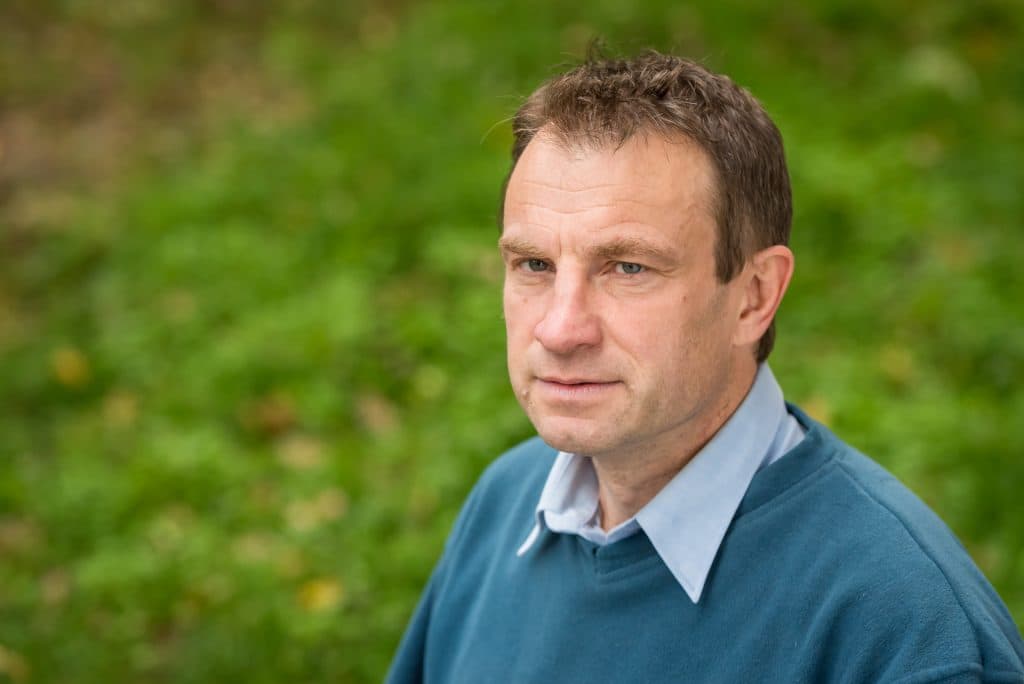
Karel Polanecký (Czech Hnutí DUHA): We had time to prepare, we can manage the coal phase-out

Jakub Malý
25 October 2024, 11:40
Reports of an early coal phase-out in Czechia have been appearing in the media recently. The end of coal was originally expected around 2033, but 2028 is now even being discussed. The main reason is simply that coal is no longer economically viable for operators. This may raise concerns about ensuring the security of heat and electricity supplies.
At oenergetice.cz, we would like to present perspectives on this issue from across the spectrum of views. In the coming weeks, we will therefore gradually publish a series of unique interviews in which representatives of different viewpoints will answer a similar set of questions concerning the coal phase-out in Czechia.The following interview with Karel Polanecký, energy expert at Hnutí DUHA, presents the views of proponents of “green” energy on the coal phase-out in Czechia.
How do you view the timeline of the coal phase-out in Czechia? When do you think it became clear that coal would cease to be economically viable, and when do you expect its final end?
Since the launch of the second phase of emissions trading in 2008, it had been clear that, unless there was a fundamental change to the emissions trading directive, coal combustion would sooner or later lose its competitiveness. During 2021, when emissions trading began to operate as originally intended, the impact of the allowance price started to play a crucial role.
We expect electricity generation at coal-fired power plants to end by 2030, although there will already be a significant decline in output and the shutdown of some facilities before then. By 2033, we expect the last coal-fired heating plants to be replaced by other sources, but here too we expect a gradual process, with only those heating plants that for some reason fail to complete their transformation earlier continuing to use coal after 2030.
Do you consider the time available to entities using coal as a fuel to have been sufficient for switching to other sources and making further preparations for its end?
Yes. Another matter is that many entities bet on a scenario in which European efforts to reduce greenhouse gas emissions would ease. Investment was therefore postponed.
In your view, what would the ideal coal phase-out scenario look like in Czechia in terms of the security of the electricity system and district heating systems?
In electricity, according to available studies and statements from representatives of the Ministry of Industry and Trade and ČEPS, no problems are expected from the shutdown of coal-fired power plants. The first plants will leave the grid at the expense of current electricity exports, while further closures will be replaced by imports. But the ideal scenario is for their closure to be accompanied by the fastest possible development of renewable sources, storage and flexibility aggregation services.
In the case of district heating, new sources need to seamlessly replace existing ones, while being optimised in terms of savings in distribution networks and, above all, in the buildings supplied. Again, the ideal solution is replacement primarily with renewable sources, although it is clear that natural gas will have to be used in efficient cogeneration. However, these sources must be fully prepared for the gradual replacement of natural gas with non-fossil gases, such as green hydrogen and biomethane.
What are the main reasons for moving away from coal? Put simply, is it really only the price of emission allowances?
The high allowance price has indeed acted as the key factor that caused electricity and heat generation from lignite to lose its economic advantage. However, it should be added that the emissions trading system was designed with this objective in mind. Its introduction internalised negative externalities, thereby levelling the playing field.
Which coal-burning facilities are most threatened by the end of coal mining in Czechia? Are they heating plants or power plants, and roughly by when can these facilities be replaced in terms of component supplies, construction and so on?
All facilities burning lignite are threatened by the end of mining, because importing it is not economically viable and there is essentially nowhere to import it from. Power plants should be shut down earlier because they have a higher emissions intensity and, unlike cogeneration, cannot count on transformation support.
We consider the transformation manageable by around 2030. In the United Kingdom, electricity generation from coal fell by approximately 90 TWh between 2014 and 2020.
How many other sectors are linked to coal? In other words, discussion focuses primarily on electricity generation and heat supply, but will this also affect other sectors, for example industry, transport, agriculture, construction or services?
In steel production, hard coal will remain an indispensable raw material for many years. The end of lignite mining will not affect this sector. In terms of jobs, the lignite mining and combustion sector is no longer nearly as large as it once was. Most people have effectively already left.
Nevertheless, we believe that targeted assistance for departing employees is necessary. For example, in our view, long-service benefits should be extended from miners to energy workers as well.
On the one hand, we hear alarmist reports from representatives of the coal sector about rising electricity and heat prices, possible blackouts and the like. On the other hand, according to Hnutí DUHA, we can manage the situation if coal-fired electricity generation ends before 2030. In your view, what is the earliest possible end date for coal-fired electricity generation, and can this claim be substantiated?
The Ministry of Industry and Trade considers the phase-out of coal-fired facilities by 2030 a realistic scenario: https://www.mpo.gov.cz/cz/rozcestnik/pro-media/tiskove-zpravy/ministr-sikela-informoval-vladu-o-opatrenich-pro-zajisteni-bezpecnosti-dodavek-i-pro-pripad-rychleho-utlumu-uhelnych-zdroju--281554/. The condition for the complete phase-out of coal-fired facilities is the development of the generation base (for example, ČEZ is planning this). Economic factors will continue to be decisive—the impact of a further increase in allowance prices, which would lead to the phase-out of coal-fired power plants by 2028, is being examined by a current study from the Fakta o klimatu think tank: https://faktaoklimatu.cz/studie/2024-vyroba-elektriny-v-cesku-bez-uhli
Do you think that reducing coal’s share in the energy mix will pose a greater threat to the security of electricity and heat supplies in Czechia, and what alternative energy sources will be used?
No, just as it has not in countries that have significantly reduced or phased out coal. In the coming years, coal-fired facilities will be replaced by a combination of renewable and gas-fired sources.
How will Czechia’s energy security be affected if electricity imports from abroad are likely to increase, and what are the risks and opportunities associated with this step?
According to ČEPS, “the availability of electricity on neighbouring markets will remain sufficient for imports into Czechia even in critical scenarios”. The only way to defend against imports from cheaper electricity sources is to build such sources in Czechia. It is therefore crucial to remove barriers to the construction of wind power plants and significantly accelerate this sector.
What are the biggest challenges and pitfalls associated with moving away from coal, at the technical, economic, social and legislative levels, and what solutions would you propose to address them?
The challenge for the state is not to accept subsidy mechanisms that would keep loss-making coal-fired power plants alive. We consider the biggest challenge in the construction of new sources to be changes to permitting processes that would enable faster construction of wind power plants. From the perspective of building new gas-fired sources in the electricity and heating sectors, the challenge will be to ensure timely supplies of the necessary technological units. From a strategic perspective, it is important to accept the fact that coal is ending and focus on replacing it.
Translation disclaimer
This article is a machine translation of the Czech original and has not yet been fully reviewed. In case of any doubt, please refer to the Czech version.
Sdílejte článek prostřednictvím:
You might also like
22 September 2026, 12:50
22 September 2026, 06:09
21 September 2026, 15:25