22 September 2026, 14:20
Loading...
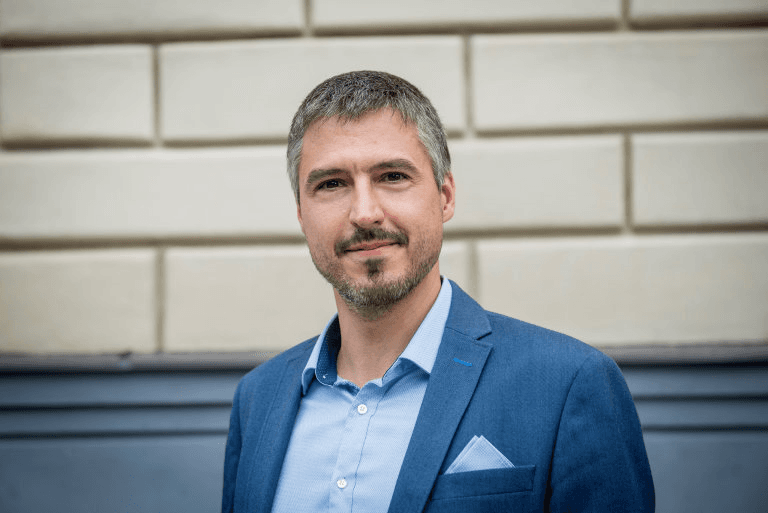
Michal Macenauer (Czech EGÚ Brno): No need to worry about electricity supply; broadly speaking, it is only a matter of the final price

Jakub Malý
8 November 2024, 11:29
Recent media reports have pointed to an earlier-than-expected coal phase-out in Czechia. The end had originally been expected around 2033, but 2028 is now even being discussed. The main reason is simply that coal is no longer profitable for operators. This may raise concerns about ensuring the security of heat and electricity supplies.
At oenergetice.cz, we would like to present views on this issue from across the spectrum of opinions. In the coming weeks, we will therefore gradually publish unique interviews in which representatives of different schools of thought will answer a similar set of questions concerning the end of coal in Czechia.The following interview with EGÚ Brno strategy director Michal Macenauer presents the perspective of an independent energy consultant on the end of coal in Czechia.
How do you see the timeline for the end of coal in Czechia? When, in your view, did it become clear that coal would cease to be profitable, and in which year do you expect its definitive end?
Which timeline? I do not know of any. I only know of a great deal of speculation. It has been clear for decades that coal would go. The only question has always been its timing. But coal will still be with us for some time. It will depend on the market situation, the price of allowances and electricity over the course of the year. I cannot say anything more than that coal will probably, in the vast majority of cases, be phased out in Czechia by 2030… but the operation of some sources after 2032 cannot be ruled out. We should realise that the market responds to every source closure through prices. Let us not worry about having enough electricity; broadly speaking, it is only a matter of the final price.
Do you consider the time available to entities using coal as a fuel to be sufficient for transitioning to other sources and preparing further for its end?
Throughout our lives, there is too little time for everything. It is inherently ingrained in life, and in the life of human society; that is what life is, in the words of a philosopher, it is immanent, unchangeable. There is too little time for the energy transition only if we view it through newspaper headlines and politicians’ bombastic slogans. Moreover, the question implicitly claims that some period is coming to an end. It is not. The energy sector continues… only the shares of different fuels and technologies are changing. Returns vary by fuel, and the price for end consumers changes. We are not at the end, but in the first fifth of the decarbonisation of the Czech energy sector.
What would, in your view, be the ideal scenario for ending coal in Czechia from the perspective of electricity system security as well as district heating systems (CZT)?
An ideal scenario is a myth. Just think of COVID or the Russian war in recent times… both have radically reshuffled the cards. Perhaps I could devise a scenario that is optimal under the given circumstances. Let us say that this is what is happening now. To a considerable extent, it is determined by the market and the market attractiveness of lignite-fired electricity and heat. Yes, of course, this is under conditions such as CO2 emissions allowances, NOx and SOx emission limits, and generally a situation in which society wants to radically reduce greenhouse gas and pollutant emissions. We have a non-market subsidy programme for energy sector decarbonisation. But otherwise, everything is happening freely.
From the perspective of the system’s operation as a whole, in addition to generation sources, reserve sources and sources for system restoration will gradually need to be replaced above all, but that is nothing unsolvable; it is happening. Replacing coal in electricity generation is only a question of market conditions. Replacing coal in district heating is similar. In Czechia alone, approximately 1.5 to 1.8 GW of electric capacity is set to replace coal with natural gas at power plants and heating plants. I would only add that for deep decarbonisation to below around 15 % of 1990 levels, we will need a large amount of new nuclear primary energy and a large amount of daily storage. Both are areas without a commercial return and should be state projects.
What are the main reasons for the coal phase-out? Put simply, is it really only the price of emissions allowances?
Yes, above all it is about an unfavourable, low Clean Dark Spread, meaning the money left from electricity revenues after paying for allowances and fuel. It is therefore a combination of allowance and electricity prices. Yes, some sources also have problems with pollutant emissions or have higher maintenance costs. Both are primarily a problem when revenues decline. Sources will therefore probably be shut down in order of their cost levels, from the highest to the lowest.
Which coal-burning sources are most at risk from the end of coal mining in Czechia? Are these heating plants or power plants, and roughly by when can these sources be replaced from the perspective of component supplies, construction and so on?
That is a very operational question, and also a very specific one. I do not want to suggest anything. In general, those with very exhausted service lives and high costs per unit of energy produced. Heating plants have plans to transition to new sources. Everything will happen when it can; there is no point in speculating piecemeal. Yes, there will be considerable temporary pressure on the speed of deliveries of turbines, boilers, engines, transformers and other equipment, but the market will cope with it.
How many other sectors are linked to coal? More specifically, there is mainly discussion of electricity generation and heat supply, but will this also affect other sectors, for example industry, transport, agriculture, construction or services?
Coal-fired electricity will be replaced within ten years by gas, renewables and, to a small extent, other sources, and in the longer term by new nuclear power. As for heat, industry is the largest consumer of centrally supplied heat and has its own plant power stations, which are preparing to switch to natural gas, biomass and other primary sources. Coal consumption among small customers is rather marginal and replacing it with other sources will not be a major problem. Apart from large industry, no other sector will be directly and significantly affected by the end of coal.
Of course, the entire decarbonisation process has costs and increases energy prices, but this is not directly linked only to the coal phase-out. We want decarbonisation and must pay for it… I reject the absurd claim that non-fossil energy will be cheaper. At EGÚ Brno, we have repeatedly quantified the increase in total costs at constant prices, and it was between 50 and 150 % from around 2020 to 2050 depending on the degree of decarbonisation. Note that all around us we see current prices, higher due to price growth associated with inflation and related phenomena; I am citing constant prices… so these are substantial increases.
On one hand, we hear alarmist reports from representatives of the coal sector about rising electricity and heat prices, possible blackouts and the like. On the other, representatives of environmental movements say that we can manage the situation if coal-fired electricity generation ends as early as 2030. Can one side in this dispute be said to be right when we look at the situation from a data perspective?
Let us not view it as a dispute. Truth is a purely philosophical category. Decarbonisation will ultimately make everything more expensive… new and more expensive facilities will simply be needed where old ones operated. But we will have fewer pollutant and greenhouse gas emissions. A blackout is the energy sector’s new yeti. Let us not scare people with it; we can prevent it to the extent that it is worthwhile, and we can deal with it if it exceptionally occurs. It will cost something. Not much. We have dozens of much more difficult problems to solve outside the energy sector. On the other hand, we can always say that we will manage the situation, but at what cost?
In the words of a fairy-tale character, we can sacrifice the left wing or the right wing, but also both wings. If we push too hard for rapid decarbonisation regardless of the consequences, we will pay for it through unnecessary costs and further losses of industry and material prosperity. By 2030, most coal-fired sources will probably cease operating, but this will come at a cost: new costs.
Do you think reducing coal’s share in the energy mix will pose a greater threat to the security of electricity and heat supplies in Czechia, and what alternative energy sources will be used?
How is energy security defined? It is a completely vague term. Do you mean the share of domestic primary sources? Do you mean price? Do you mean continuity of supply? The price will be higher, the share of domestic primary sources may even be lower, and continuity of supply will be roughly the same.
How will Czechia’s energy security be affected by the likely increase in electricity imports from abroad, and what risks and opportunities are associated with this step?
Not at all. Czechia’s energy security is not directly determined by the level of electricity imports from abroad. Let us realise that if importing is more worthwhile than investing in a new source in Czechia, then that investment would be a mistake. Let us finally forget the concept of isolated EU countries and their isolated balances. We are in the EU, the world’s largest marketplace. Following Russian aggression, European countries are converging in terms of values; we are not in danger, on the contrary, the EU strengthens our security, so there is no reason to see energy differently. Let us build the most interconnected and most flexibly interconnected market possible, including for energy.
What are the biggest challenges and pitfalls associated with the coal phase-out, at the technical, economic, social and legislative levels, and what solutions would you propose to address them?
The biggest challenge will be convincing utopians that we cannot decarbonise by the middle of the century. It is an absurd and expensive nonsense. Few people know that around 69 % of energy consumption in the EU is still supplied by fossil sources. It is absurd to think that we will be at zero by 2050 and that we will also decarbonise non-energy CO2 emissions. Let us remember that the higher the degree of decarbonisation, the higher the cost of every single percentage point of emissions reduction. It is a huge task to ensure that we proceed rationally, so that we do not destroy the EU and thereby increase global emissions. Calculations broadly show that if we move 25 % of industrial production beyond the EU’s borders to countries such as India and China, we will not reduce global emissions but instead increase them by around 16 %.
Translation disclaimer
This article is a machine translation of the Czech original and has not yet been fully reviewed. In case of any doubt, please refer to the Czech version.
Sdílejte článek prostřednictvím:
You might also like
22 September 2026, 12:50
22 September 2026, 06:09
21 September 2026, 15:25