22 September 2026, 14:20
Loading...
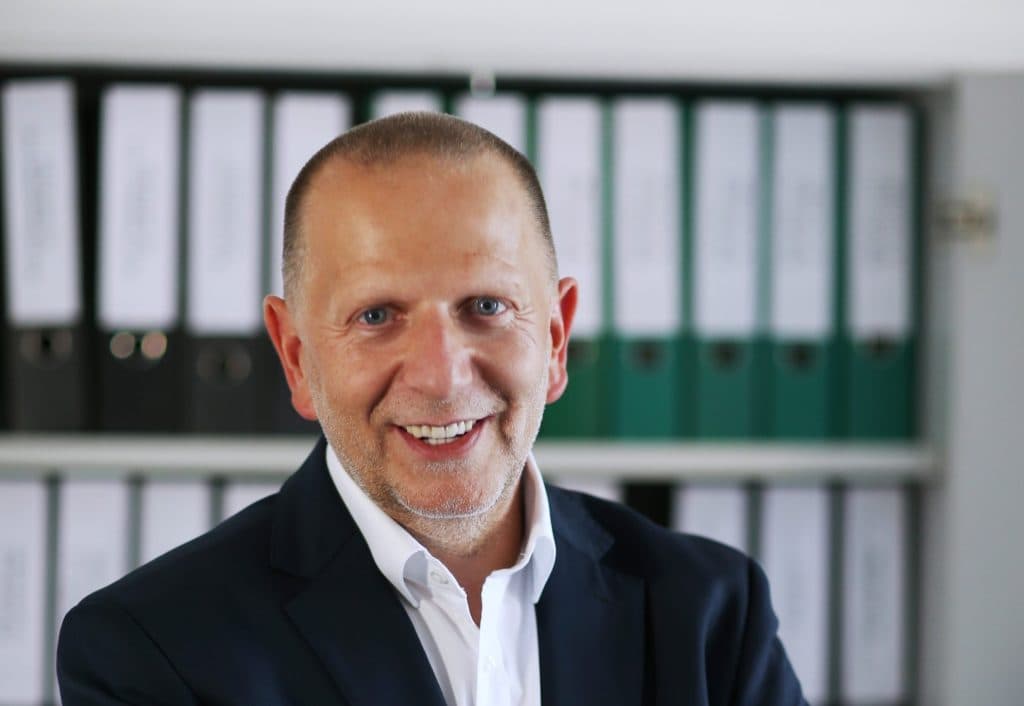
Pavel Tomek (SUAS GROUP): Moving away from coal in Czechia is an inevitable step, but a complex process

Jakub Malý
18 October 2024, 12:12
Reports of an early coal exit in the Czech Republic have recently been appearing in the media. The end had originally been expected around 2033, but 2028 is now even being discussed. The main reason is simply that coal is no longer profitable for operators. This may raise concerns about ensuring the security of heat and electricity supplies.
At oenergetice.cz, we would like to present views on this issue from across the spectrum of opinions. In the coming weeks, we will therefore gradually publish exclusive interviews in which representatives of different viewpoints will answer a similar set of questions concerning the end of coal in the Czech Republic.The views of coal companies on the approaching end of coal will be presented in the following interview with one of their representatives – JUDr. Pavel Tomek, Chairman of the Supervisory Board of the Sokolovská uhelná group and SUAS GROUP.
What is the expected timeline for SUAS GROUP's coal exit and what will it mean for the operation of its power plants and heating plants (can you list the facilities)?
First of all, it must be stressed that the operation of combined heat and power (CHP) facilities is conditional on their replacement by other sources and technologies. We are targeting a coal exit by 2030, although this depends on the availability of investment and operating support, as well as on simplifying permitting processes for the installation of new sources. It is also necessary to secure manufacturing and installation capacity, which is lacking across Europe. We have long faced problems in meeting the anticipated schedules on the part of manufacturers and suppliers.
What are the main reasons for moving away from coal? Put simply, is it really about the price of emissions allowances, and can the ageing of facilities also have an impact?
The key reason for moving away from coal is, of course, meeting European and national climate targets in the spirit of the Green Deal. In reality, however, the cost of emissions allowances, substantial costs for repairs and maintenance of technology, and staffing are reflected in the cost of coal mining and, consequently, electricity and heat generation. The spread between emissions allowances and energy prices will cease to make economic sense in the coming years.
How will SUAS GROUP be affected and what are its strategies for transitioning to other sources of revenue?
After 2020, Sokolovská uhelná significantly intensified preparations for the phase-out of coal mining and processing. A decisive role is played by laying the foundations for new opportunities and, with them, new jobs.
We have formed the sister group SUAS GROUP, whose subsidiaries are gradually establishing themselves in transport, construction, industrial development, engineering, as well as hospitality and spa services. We have successfully prepared two strategic projects in the Sokolov region: the revitalisation and social reintegration of Lake Medard, which could in future support activities related to the development of industry, leisure and sporting activities in the region, thereby attracting new residents and qualified specialists who are currently lacking in the region.
The second project is the development of industrial-zone infrastructure around Sokolov to attract new investors. We intend to develop innovative segments of the chemical industry, and we have received a grant for a feasibility study on locating a small modular reactor at the Vřesová complex. We are among the region's largest employers, and although our Group is transforming alongside the region, we remain rooted in the Karlovy Vary Region and take a responsible approach to its sustainable future in terms of energy, employment and residents' quality of life.
Can the impacts of the end of coal on the region in which your group operates be quantified, for example in terms of employment and so on?
Such an analysis should rather be provided by a macroeconomic study. For now, we are primarily dealing with the high average age of our employees and the risk that, at a certain point, we will not have enough qualified people to maintain our coal-mining and coal-processing operations.
What are the plans for the use and reclamation of former mining sites and power plants?
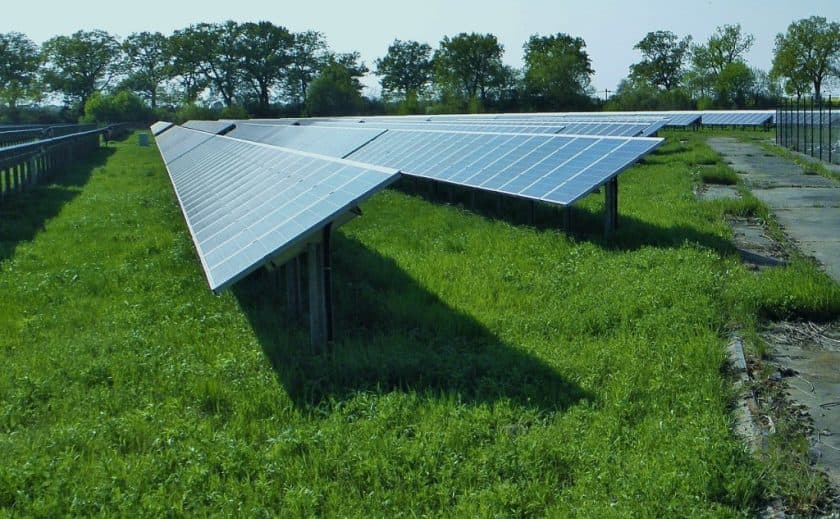
Thanks to our activities in reclamation and landscape revitalisation, former mining sites are gradually being transformed and returned to public use, or planned projects are being implemented there. Examples include the current golf course near Sokolov, the Michal natural swimming area and Lake Medard. Solar parks are being developed on mined-out land – one is currently being built near Nové Sedlo in the Sokolov region – and in future we want to implement a test range project for unmanned aerial systems at one such site.
As for the power plant complexes at Vřesová and Tisová, they will continue to supply heat, but we will add new sources to the energy mix. A new electric boiler is planned for installation in 2025, intended primarily for heat production and the provision of balancing services. At the same time, work is under way on a feasibility study for a multi-fuel boiler that would generate both electricity and heat, burning wood chips or solid recovered fuel (SRF) instead of coal. We see the project being implemented around 2029-2030. In the future, however, we are also considering a smaller combined-cycle gas turbine plant for electricity generation at Tisová Power Plant.
It has been known for at least 10 years that coal would eventually end. Do you consider this time insufficient, or why are there calls for state subsidies for the operation of coal-fired power plants?
You will certainly agree that 10 years ago, information about developments in the energy sector was substantially different from today, when attitudes and approaches are changing very rapidly across Europe. For example, mining plans had until now envisaged closing mines after reserves were exhausted. In our case, however, this would be 2040 or later. Until recently, 2033 was considered the date for the coal exit, but no date is currently defined. It will therefore probably be decided by when coal mining becomes completely economically unviable.
There are several reasons for calling for support for coal-fired power plant operations during the 2025–2030 transition period, before new sources are completed – above all, ensuring affordable heat supplies in district heating systems, particularly in the Karlovy Vary Region, which has a high number of socially disadvantaged households, and energy security at a time when the Czech Republic will not have new sources for heat production and will face an electricity supply deficit.
How many other sectors are linked to coal? The discussion mainly concerns electricity generation and heat supply, but will it also affect other sectors, such as industry, transport, agriculture, construction or services?
From our perspective, we see the impacts primarily on companies providing servicing of mining equipment, machinery repairs, and maintenance firms including suppliers. And given that, as a regional supplier of heat and electricity, we also supply companies and institutions, there is naturally a direct link.
How will the security of electricity and heat supplies in the Czech Republic be ensured as coal's share in the energy mix declines, what alternative energy sources will be used, and does your group plan to participate in these new sources?
That is more a question for the state and its energy strategy. Renewable energy sources are being built, although returns are at the limit of economic viability. Covering deficit periods with electricity supplies from Germany and France is also envisaged. However, the certainty and stability of these supplies are debatable.
As already mentioned, we operate a small solar park in Lipnice near Vintířov, with others in preparation for construction in 2025-2026. We have already mentioned the electric boiler project, as well as the plan to install a multi-fuel boiler. A small flexible combined-cycle gas turbine plant could be built at Tisová Power Plant. We will see how the permitting processes for the small modular reactor proceed, although its implementation is unlikely to be possible before 2040.
How will the Czech Republic's energy security be affected if electricity imports from abroad are likely to increase, and what risks and opportunities are associated with this step?
Germany has declared that it will build several thousand gigawatt-hours of gas capacity by 2030, but the start of massive construction is not yet visible. Likewise, France, on which we partly rely, has already disrupted the energy market in the past when it shut down part of its nuclear fleet.
What are the biggest challenges and pitfalls associated with moving away from coal, at the technical, economic, social and legislative levels, and how do you intend to address them?
First of all, it must be said that moving away from coal is an inevitable step towards a more sustainable future, but it is a complex process that must be carefully planned and managed. This includes the smooth creation of new energy capacity, ensuring grid stability, the costs of the transition, and changes in people's thinking – some professions and jobs will disappear. In this regard, cooperation is needed between the state, affected local authorities, mining companies, employees of mining operations and their families.
Coal has long been the foundation of the energy mixes of many countries, which means that infrastructure for coal mining, processing and combustion is highly developed. Moving away from coal requires extensive investment in new energy sources, including the modernisation of transmission networks and battery storage. Ensuring grid stability will require investment in energy storage technologies, such as battery systems, or in backup systems such as gas-fired power plants, which can be a very costly solution.
The transition to other energy sources also means a need to adapt and innovate technological processes in industry and mining. Mining companies must seek new revenue opportunities and adapt their business models, which represents considerable financial risk, especially in an uncertain investment environment and with highly time-consuming permitting processes.
From a legislative perspective, it is also necessary to resolve the write-down of coal reserves, which we consider one of the major question marks associated with the entire process of ending mining.
The coal industry, including the Sokolovská uhelná group and SUAS GROUP, is a major employer. Therefore, even the announcement of a move away from coal and a mining phase-out creates uncertainty among employees and the wider public in coal regions. It will be necessary to focus on retraining and employing these workers in new sectors. This is why, even when minor operational changes affect only a small number of people at Sokolovská uhelná and SUAS GROUP, we approach those who have the willingness and potential to pursue further education or retraining, and we seek to help integrate them into subsidiaries and new professions.
It should also be added that there is almost no discussion of the long history of coal mining in the affected regions, or of the fact that mining is part of local culture and identity. Miners still feel connected to the mining tradition, and are proud of their work and of the brand for which they worked. They find it difficult to accept that coal mining has been labelled "undesirable".
Translation disclaimer
This article is a machine translation of the Czech original and has not yet been fully reviewed. In case of any doubt, please refer to the Czech version.
Sdílejte článek prostřednictvím:
You might also like
22 September 2026, 12:50
22 September 2026, 06:09
21 September 2026, 15:25