China admits responsibility for damage to gas pipeline between Finland and Estonia

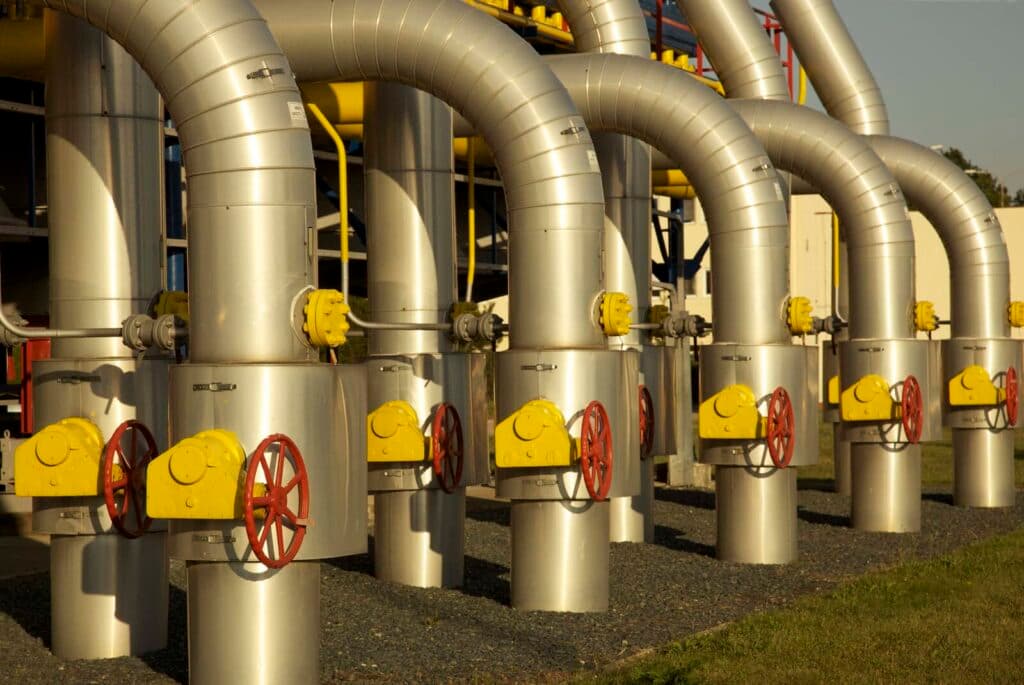
The Balticconnector gas pipeline was damaged last year, carrying natural gas between Finland and Estonia, and the Chinese government has now admitted responsibility for the damage. It says the incident was an accident, but doubts persist.
Last year, Finnish police and international investigators examined whether the damage to the Balticconnector gas pipeline between Finland and Estonia was deliberate or accidental. The pipeline and a telecommunications cable were damaged on 8 October, probably by a large anchor dragged by the Chinese vessel Newnew Polar Bear. The anchor itself was found at the site of the damage, which helped identify the ship.
The vessel sails under the Hong Kong flag and was passing through the area at the time of the incident, before later anchoring in St Petersburg. A storm was affecting the area at the time, which is thought to be one reason the damage occurred. Estonia and Finland are continuing their joint investigation into the damage to the pipeline and have urged China to respond to requests for information about the vessel responsible for damaging the infrastructure.
The pipeline carries natural gas from Finland, where an LNG import terminal is located, to Estonia. Balticconnector was brought back into operation six months after it was damaged, and the pipeline itself has a transmission capacity of 75 GWh of gas per day. Following the incident, Finland restricted access to parts of its LNG import terminal at the port of Inkoo, while Norway stepped up security at its major oil and gas facilities.
Sabotage or accident?
There are growing reports of vessels linked to Russia or China sailing in the Gulf of Finland with their transponders switched off. At the same time, these vessels are becoming more active around critical subsea infrastructure, such as gas pipelines and data cables. Other activities include joint military exercises by Russian and Chinese vessels in the area. There has also been an attempt by Russia to redraw the Baltic states’ maritime borders.
“Russia has spent years studying critical maritime infrastructure in western Europe, in the North Sea, the Baltic Sea and elsewhere. This was often done using so-called Russian research vessels,” said researcher Alexander Lott of the Norwegian Centre for the Law of the Sea.
From a maritime transport perspective, some experts say it is difficult to believe the incident was an accident, for several reasons. First, an anchor at sea must be secured in at least three ways. Second, even if all the anchor brakes were broken or unsecured, the chain unspooling to that length would have caused loud noise and vibrations. The infrastructure was also found more than a hundred metres from its original position, with a towed obstruction causing a significant drop in speed and affecting the vessel’s course. No one on board noticed any of this or reported it.
The recent sabotage of the Nord Stream pipelines is a reminder of the vulnerability of subsea infrastructure. As the war in Ukraine has shown, energy infrastructure is often a target of attacks because it enables a country to function normally. With geopolitical tensions on the rise, greater vigilance is therefore warranted in protecting critical energy infrastructure.
Translation disclaimer
This article is a machine translation of the Czech original and has not yet been fully reviewed. In case of any doubt, please refer to the Czech version.




