Chinese shipyards log record number of orders for LNG tankers as their market share grows


As demand for liquefied natural gas (LNG) grows strongly on the global market, so does demand for new tankers. While LNG tanker production has traditionally been dominated by South Korean shipyards, a sharp increase in demand has also opened the door to new orders for shipyards in China. Chinese shipyards are now reporting a record number of orders, which is also helping them increase their market share.
Chinese shipbuilders have gradually begun to penetrate the shipbuilding market in recent years, particularly in the production of crude oil and petroleum product tankers. The number of orders for bulk carriers has also grown. China, however, has so far not made a significant mark in LNG tanker production.
The largest share of the LNG tanker production market belongs to South Korea, according to S&P Global, specifically to Samsung Heavy Industries, Hyundai Heavy Industries and Daewoo Shipbuilding & Marine Engineering. South Korean shipyards are known for the high quality of their tankers, as well as for completing them on time.
Growing LNG trade volumes are also driving the need for new tankers
However, in the face of increased demand for liquefied gas, also driven by restrictions on gas supplies to Europe through pipelines from Russia, capacity at South Korean shipyards is insufficient. Higher demand for tankers has therefore opened up the market to Chinese shipyards.
China State Shipbuilding Corp. (CSSC) has the largest order book, with orders for 60 tankers as of mid-September. Company representatives say the vessels are scheduled for delivery as late as 2028.
According to Chinese news agency Xinhua News Agency, Chinese shipyards received 14 orders for large LNG tankers in the first half of the year. This volume is expected to account for a third of all orders on the market. According to S&P Global, CSSC said at the beginning of this year that it had received orders for 49 new tankers during 2022. This increased the company’s share of the global market to 30 %, up from just 7 % the previous year.
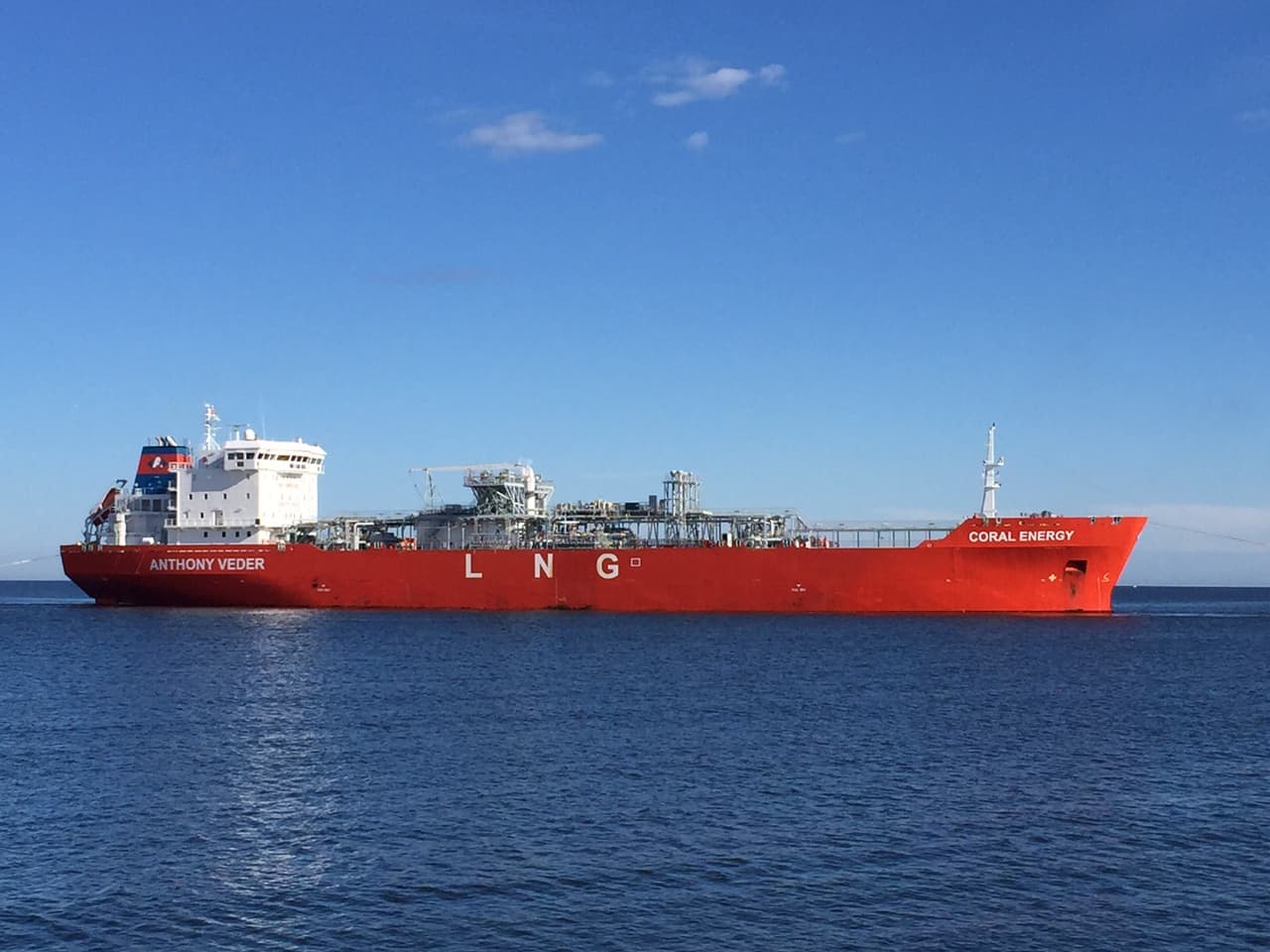
CSSC has three shipyards for building large LNG tankers. The largest is Hudong-Zhonghua in Shanghai, which accounts for around 40 orders. According to the company, Hudong-Zhonghua has been building LNG tankers since 2008, while the other two shipyards received their first orders only in March 2022. Chinese tankers typically have a capacity of between 174 and 180 thousand cubic metres, in line with the global market standard in recent years.
China vs. the competition
Company representatives also said the price of their standard tankers had risen by around 20 million dollars to 250 million dollars due to strong demand. This is still lower than prices charged by competitors: market participants say South Korean tankers cost around 285 million dollars. These prices continue to rise due to higher material costs and shipyard capacity being fully booked.
In September this year, CSSC unveiled a new tanker model with a capacity of 271 thousand cubic metres of LNG. The new model has received preliminary certification approval from four different certification companies. If the company succeeds in building and commissioning the new tanker, it would become the world’s largest by capacity. Qatar’s Q-Flex and Q-Max tankers currently lead in this respect, with capacities of 210 thousand m3 and 266 thousand m3, respectively.
New LNG contracts are also driving up demand for tankers
The strong growth in demand for new tankers is probably also related to the increasing number of new long-term LNG supply contracts, as well as their type. Since 2021, Chinese traders have signed 40 new long-term contracts for 54 million tonnes of LNG per year, according to S&P Global. Half of these contracts involve LNG terminals in the US, with delivery on an FOB (Free on board) basis. In this case, the buyer is responsible for transportation and the associated risks, taking delivery of the gas from the exporter.
By contrast, Chinese traders signed significantly fewer long-term contracts in previous years, and mostly of a different type. According to data from S&P Global Commodity Insights, they signed just 17 long-term contracts between 2016 and 2020, for a total volume of 14 million tonnes of LNG per year. Most of these contracts were on a DES (Delivered ex-ship) basis, under which the buyer takes delivery of the goods from the supplier at the agreed destination.
Translation disclaimer
This article is a machine translation of the Czech original and has not yet been fully reviewed. In case of any doubt, please refer to the Czech version.




