
28 October 2026, 15:10
Loading...
FT: The myth of cheap Russian gas in Europe
Veronika Jurcová
23 March 2024, 08:09
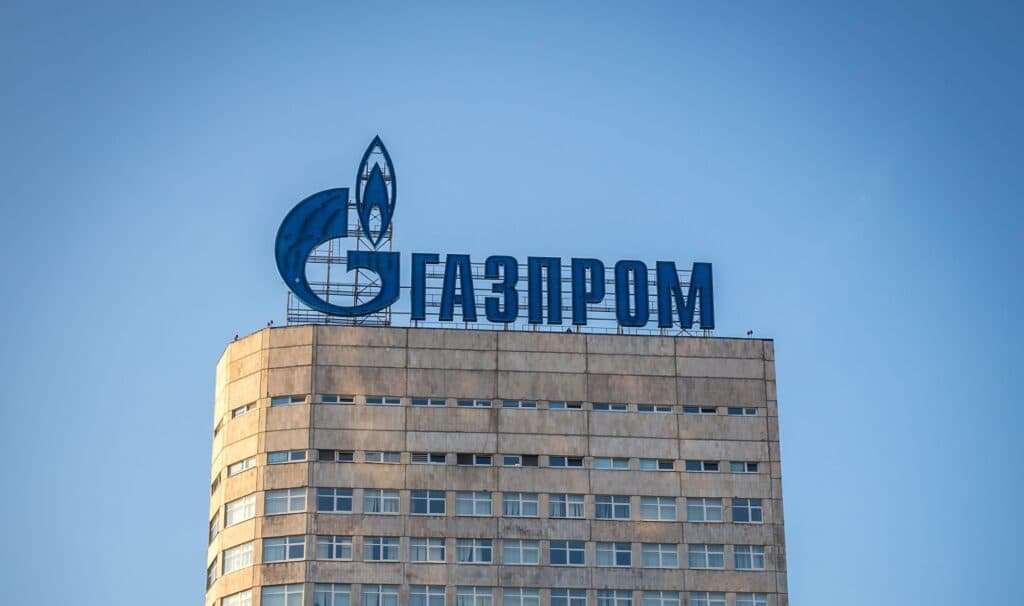
Michael Stoppard, chief gas strategist at S&P Global Commodity Insights, challenges the notion of cheap Russian gas for Europe in his article for Financial Times. Europe never had it, he argues, but China may get it in the future.
Will Europe return to Russian gas? The EU has pledged to end its dependence on Russian gas once and for all, but will it follow through? Some argue that Europe will be forced to turn back to Russia because it needs “cheap” Russian gas to revive its economy and avert deindustrialisation. But this is apparently just a myth—seductive and dangerous. According to Stoppard, it stems from a fundamental misunderstanding of how the European gas market works. Put simply, Russian gas was never cheap.
Sales of Russian gas to Europe are declining, but they are not negligible. In 2023, pipeline gas deliveries to the EU fell by 84 percent compared with 2021, before Russia’s invasion of Ukraine, exceeding many expectations. Europe is ending its second winter of the gas crisis with storage levels seasonally high. Benchmark prices are back at familiar levels. Italy, which was still buying Russian pipeline gas in 2023, has said it will finally stop doing so in 2024, as more Algerian gas and global liquefied natural gas become available.
The 2027 target still stands
Two years after Russia’s full-scale invasion of Ukraine, the European Commission is still committed to its original firm stance of bringing Russian gas supplies to zero by 2027. That means eliminating the remaining pipeline flows to central Europe and stopping imports of Russian LNG.
However, the decision is not in the Commission’s hands; individual countries have the final say. Outside Europe, there is scepticism about their position. The claim that Europe will probably be tempted to return to cheap Russian gas is repeatedly made. “Germany, Europe’s industrial powerhouse, depends on it,” some say. “Without it, Europe cannot be competitive.” And the “temporary pause” in approvals for new US LNG exports announced in January only reinforces the idea that Europe cannot abandon its relationship with Russia—problematic though the partnership is—in favour of a perhaps “unreliable” US.
These views probably underestimate the strong antipathy towards the Russian regime felt by a significant part of Europe. Moreover, given that the idea of cheap Russian gas in Europe was always more myth than reality, basing policy on this notion would be a serious mistake.
Russia did not sell its gas cheaply, but competitively
Russia certainly has plenty of cheap gas that could theoretically be delivered to Europe at a low cost. But Russia sold its gas competitively, not cheaply, just as oil from the Middle East is sold.
From the 1970s into the 21st century, the Soviet Union and later Russia priced natural gas to displace its competitor—fuel oil in industry and heating oil for homes. The price was therefore set as a percentage of the prices of these oil products. If their prices were high, the gas price rose and Moscow reaped a windfall. If oil prices were low, gas prices fell to keep gas in the energy mix, but its selling price still exceeded its costs. All producers supplying Europe used the same mechanism, whether Algeria, the Netherlands or Norway.
And it was not a bad deal for Europe either. These competitive prices gave Europeans the confidence to invest in gas infrastructure. Natural gas consequently became deeply embedded in Europe’s energy system and a major source of heating for homes and energy for industry. Oil (but not cheaper coal) was also marginalised in power generation.
The creation of a gas market brought change
Things changed towards the end of the 1990s. Europe decided to create a gas market. This meant moving away from an artificial link to oil and instead setting gas prices through trading hubs and exchanges. The hope was that this would decouple gas prices from oil prices and bring them down. The Russians initially opposed the idea. However, under pressure from European competition rules, contracts were gradually amended to reflect market prices. This did not mean Russian gas was sold cheaply; it was sold on a similar basis to all other gas.
China is taking a different approach. In response to the loss of its traditional Western markets, Russia is seeking to expand its pipelines eastwards. Russia and China are holding bilateral talks on building a huge pipeline that would connect Russian gas fields in western Siberia with demand centres near Beijing.
The problem is the price. Given that China has several alternatives while Russia has no options on a comparable scale, Beijing appears to have the upper hand in negotiations, with the Chinese insisting on a lower price. Ultimately, this could mean Russia pays for the loss of the European market. And when it comes to cheap Russian gas, China may get it in the future—but Europe did not in the past.
Translation disclaimer
This article is a machine translation of the Czech original and has not yet been fully reviewed. In case of any doubt, please refer to the Czech version.
Sdílejte článek prostřednictvím:
You might also like

28 October 2026, 13:08

28 October 2026, 11:10

28 October 2026, 09:08
